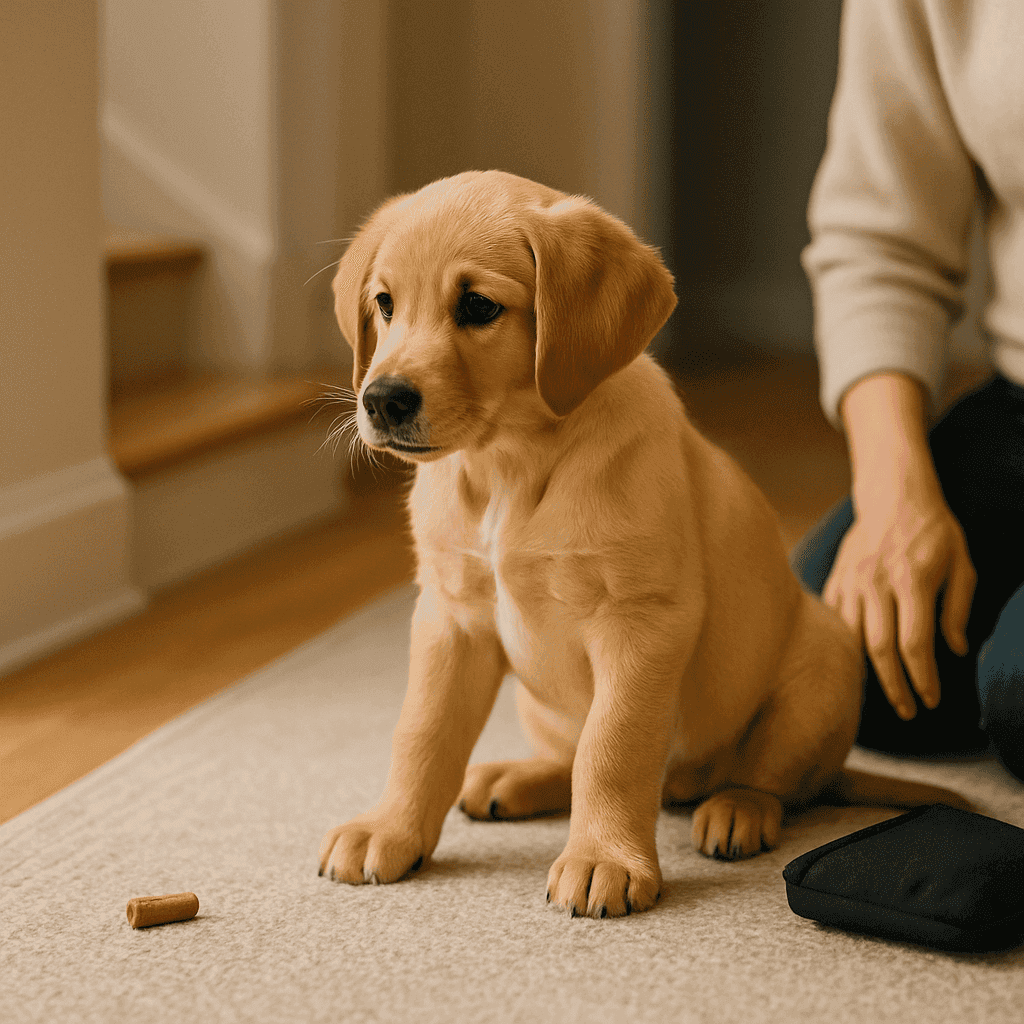
Direct answer: After your puppy is attacked by another dog, the first goal is not training, socialization, or “getting back to normal” as quickly as possible. The first goal is safety: reduce exposure, check for injury, keep the environment predictable, and let your puppy recover at a pace they can tolerate. That simple shift matters because a frightened puppy learns from repetition. If every next step feels too big, the fear can deepen. If the steps are small, calm, and consistent, many puppies do recover well.
You may be feeling shaken too. A dog encounter that ends badly can leave you second-guessing every walk, every leash, and every choice you made in the moment. That’s a normal reaction. But right now your puppy needs a steady plan more than a perfect one. Think of the next few days as a reset period: protect your puppy from more stress, gather information about what they can handle, and rebuild trust one low-pressure step at a time.
Safety note: If your puppy is bleeding, limping, yelping when touched, has puncture wounds, seems weak or dazed, is breathing oddly, or will not settle after a scary encounter, call your veterinarian or an emergency clinic right away. Physical injury can be hidden, and pain can make fear and reactivity worse. If you are unsure whether the signs are serious, it is safer to ask a vet than to guess.
Prepare for the Routine
Before you start any recovery plan, make the environment easier for your puppy to succeed in. This is the most overlooked step after a traumatic dog encounter. Owners often want to comfort, distract, or “work on it,” but the real starting point is to remove avoidable pressure.
Here is the practical question: what must be ready before your puppy can calm down? Usually it is not a special training technique. It is basic setup.
Avoid relying on a universal number or timeline; record the pattern and contact a veterinarian when the change is persistent, worsening, or accompanied by other concerning signs.
Ready versus missing prerequisites
| Essential | What “ready” looks like | If it is missing, do this instead |
|---|---|---|
| Quiet recovery space | A crate, x-pen, or calm room where your puppy can retreat without being chased or crowded | Delay active training and set up a simpler safe space first |
| Separation from unfamiliar dogs | No surprise dog visits, no playdates, no off-leash encounters | Cancel dog contact for now and keep walks very controlled |
| Low-pressure food and water | Water is available; treats or soft food are ready if your puppy wants them | Offer, but never force eating or drinking |
| Human support | Someone can stay calm and consistent with the puppy for the first evening if needed | Keep the puppy close to you or ask a familiar person to help |
| Veterinary contact plan | You know who to call if you notice injury, unusual pain, or a worsening reaction | Save the vet’s number and an emergency clinic number before moving on |
If one of these pieces is missing, do not rush ahead. A missing safety item, a missing person, or a chaotic schedule is often the reason puppies struggle after a scary event. The simpler the first 24 hours are, the better.
A helpful rule: if your puppy can only handle one thing well right now, let that one thing be feeling safe. Everything else comes later.
What to Expect at the Start
At the beginning, your puppy may look “different” in ways that worry you. They may hide, cling to you, shake, refuse treats, refuse to go outside, or startle at sounds that never bothered them before. These responses can be intense, but they are also common after a frightening encounter.
The key distinction is between expected adjustment and a plan that is failing.
Expected adjustment may include:
- brief hiding or shadowing you closely
- reduced appetite for a short time
- extra need to rest or sleep near you
- temporary regression in potty habits
- flinching at sudden noises or movement
These signs often mean your puppy is still in recovery mode.
Signs the plan may need support include:
- refusal to eat or drink for a prolonged period
- repeated panic that does not settle with quiet
- new growling, snapping, or freezing around family members
- obvious pain, limping, or sensitivity when touched
- complete inability to toilet, rest, or relax
The common mistake here is trying to restore full normal life immediately. You do not need to prove your puppy is “fine” by walking past the place where the attack happened, inviting dogs over, or pushing a training session. The first stage is smaller: keep the puppy safe, keep life predictable, and let the nervous system come down.
A human scenario helps here. Imagine your puppy is normally cheerful on leash, but now they stop and stare at every dog-shaped movement. That does not mean they are stubborn or disobedient. It means the sight of dogs has become a stress cue. Your response should be to lower the difficulty, not raise it.
Follow the Recommended Sequence
The recovery sequence should be based on dependency, not on a rigid clock. In other words, do the next step when the puppy is ready for it, not because a schedule says you should.
1. Immediate calm
Once you are home, guide your puppy into the quietest safe space available. Sit nearby if they want company, but avoid hovering, repeated petting, or excited reassurance. Calm presence is useful; pressure is not. Offer water. If your puppy is panting heavily or too keyed up to eat, wait before offering food.
2. Gentle injury check
When your puppy is still enough, look for obvious signs of injury: cuts, swelling, limping, tenderness, or unusual flinching. Do not force a full-body exam if your puppy is panicked. If they react strongly to touch in one spot, note it and contact a veterinarian.
3. First toilet break
Choose the safest, quietest bathroom spot you can manage. If your puppy normally toilets outdoors, keep the break short and boring. No social stopping, no extra walking, no chance meetings with other dogs. If the puppy refuses to go out, that can happen during stress. Stay calm and try again later. A temporary potty regression is frustrating, but it is not the same thing as bad behavior.
4. Pressure-free food offer
When your puppy starts to settle, offer food in the easiest way possible. Small pieces on the floor, soft food, or a familiar meal can work. If they do not eat, do not chase them around with a bowl or try to coax them through fear. Try again later when they are calmer.
5. Overnight setup
The first night matters. A terrified puppy usually does better when they can be near you. If possible, let them sleep in your room or within sight and sound of you. A low light, quiet background noise, and a familiar bed can help. If the crate suddenly seems scary, do not turn the crate into a struggle that night. Use the last stable sleeping arrangement first.
6. Day-two check-in
The next day, look at the basics: eating, drinking, potty habits, resting, and how easily your puppy startles. If those are moving in the right direction, you can begin a very mild routine. If they are not, keep things simple and consider professional help.
The rule at every transition is simple: if the puppy settles, continue. If they hesitate, adjust. If they panic, pause and return to the last stable step.
Use the Routine Timeline
This routine timeline is not a universal schedule. It is a decision aid for choosing the next step based on your puppy’s response.
| Current stage | What you may see | Best next action | Safe fallback |
|---|---|---|---|
| First 2 hours | Hiding, trembling, panting, not interested in food | Keep the space quiet, stay nearby, offer water | Reduce stimulation even more and wait |
| 2–6 hours | Puppy rests but startles easily | Offer one tiny treat or small meal if they seem receptive | Do not push food; try again later |
| 6–12 hours | Needs to toilet, but seems reluctant outside | Use the quietest possible potty option and keep it brief | Switch to the simpler potty setup |
| First night | Clingy, restless, wakes often | Let the puppy sleep near you if that helps them settle | Move the bed closer before changing anything else |
| 24 hours | Some appetite, some curiosity, slightly calmer body language | Repeat the same calm setup and avoid dog exposure | Keep everything predictable for another day |
| 24–48 hours | Still hiding, still refusing meals, or showing new growling/snapping | Pause progress and call your vet if pain or illness is possible | Return to the last stable step |
| 48+ hours | Puppy begins to explore, eat normally, or approach you voluntarily | Add one low-stress activity at a time | Remove the new activity and simplify |
This is where many owners accidentally make things worse: they treat recovery like a fixed timetable instead of a response-based process. But the puppy’s behavior tells you which door to open next. If they are ready, continue. If they are unsure, adjust. If they are flooded, pause.
If you want a rule of thumb, use this: never add two hard things at once. For example, do not introduce a different leash, a new walking route, and a stranger dog in the same session. Keep only one change on the table so you can see what affected the puppy.
Adjust the Plan From the Puppy’s Response
A frightened puppy often gives you useful feedback, even if it is not the feedback you hoped for. The trick is to read the response without blame.
If your puppy freezes when you reach for the leash, that is information. If they eat happily in the bedroom but not in the hallway, that is information too. The most helpful adjustment is usually small:
- change the room
- change the timing
- change the distance from the trigger
- change how long the session lasts
For example, if the front door area now seems scary, do not keep walking the puppy to that exact spot every time just to test them. Start farther away, reward calm only if they are already calm, and end the session before panic starts. You are building tolerance, not proving toughness.
Useful adjustment versus constant improvisation
Useful adjustment means one variable changes and you watch what happens. Constant improvisation means everything changes at once, so you learn nothing.
A common failure pattern is reacting to one difficult moment by scrapping the whole routine. The puppy whines once at night, and suddenly you are trying a new bed, a new room, a new sound machine, and a new routine all in one evening. That creates more uncertainty. A better response is to return to the last stable step and make one deliberate change only.
If the same transition keeps causing difficulty, that is the point to focus on. For instance, if the puppy does fine indoors but panics every time you approach the front walkway, the walkway is now the likely trigger area. Avoid flooding. Lower the difficulty, create distance, and let calm return before you increase exposure again.
Review the First Cycle and Plan the Next Step
After the first recovery cycle, stop and review what happened. You are looking for patterns, not perfection.
Ask yourself:
- Is my puppy eating, drinking, resting, and toileting close to normal?
- Is my puppy able to settle in at least one familiar place?
- Is there a specific trigger that clearly raises fear every time?
If the answer to the first two questions is yes, you can keep building slowly. Add only one low-stress activity per day. A short sniffy stroll in a quiet, dog-free area may be enough. A gentle game in the yard may be enough. The point is to create safe repetitions.
If the answer is no, or if the puppy keeps showing distress that does not improve, seek qualified help. A certified positive-reinforcement trainer with fear-based behavior experience, or a veterinary behaviorist, can help you design a better plan. If injury or pain might be contributing, start with the veterinarian first.
It is also worth saying plainly: one scary dog encounter does not automatically mean your puppy will have lifelong aggression problems. But repeated fear, rushed exposure, or a lack of recovery can make reactivity harder to unwind. Early, careful support gives you the best chance of preventing that pattern from becoming entrenched.
When the Next Step Is Veterinary Care
Can this experience cause long-term aggression problems?
Not necessarily. One frightening incident does not equal permanent aggression. But if the puppy keeps getting pushed into scary situations, or if the fear is not allowed to settle, reactivity can become more practiced over time. The goal is to reduce fear early so it does not become a habit.
Should I use treats to reward calm behavior immediately after the event?
Yes, but only if your puppy is calm enough to accept them without pressure. If they are too frightened to eat, do not force treats or try to bribe them through panic. Offer food gently and let the puppy decide.
Is it normal for my puppy to act scared and reactive after one bad encounter?
Yes. That is a common response to a frightening event. Startle, clinginess, hiding, and temporary potty regression can all happen while the puppy’s stress level is still elevated.
How do I know if my puppy is traumatized or just momentarily startled?
Time and recovery pattern matter. A momentarily startled puppy usually begins to settle within hours and shows small signs of normal behavior again. A puppy that keeps panicking, refuses to eat or drink, or shows repeated trigger reactions may need more support.
What should I do in the first 24 hours to help my puppy feel safe at home?
Keep the environment quiet, limit visitors, separate from other dogs, offer water, allow rest, and keep potty breaks simple. Do not add training pressure or flood the puppy with new experiences.
How can I rebuild trust when my puppy now seems afraid of me?
Move slowly, avoid looming over them, and let them approach you when possible. Use calm routines, hand-feed only if they are willing, and keep your actions predictable. Trust usually rebuilds through repeated safe experiences, not through big emotional gestures.
When should I consider getting a professional trainer or behaviorist involved?
If your puppy still seems deeply distressed after a few days, if the fear is getting worse, or if new snapping or growling appears, it is time to ask for help. If pain or injury could be part of the problem, start with a veterinarian before behavior training.
Final reminder
Your puppy does not need a perfect recovery plan. They need a safe one. Keep the first steps small, watch what they tell you, and change only one thing at a time. That is how you rebuild trust without accidentally making fear bigger.