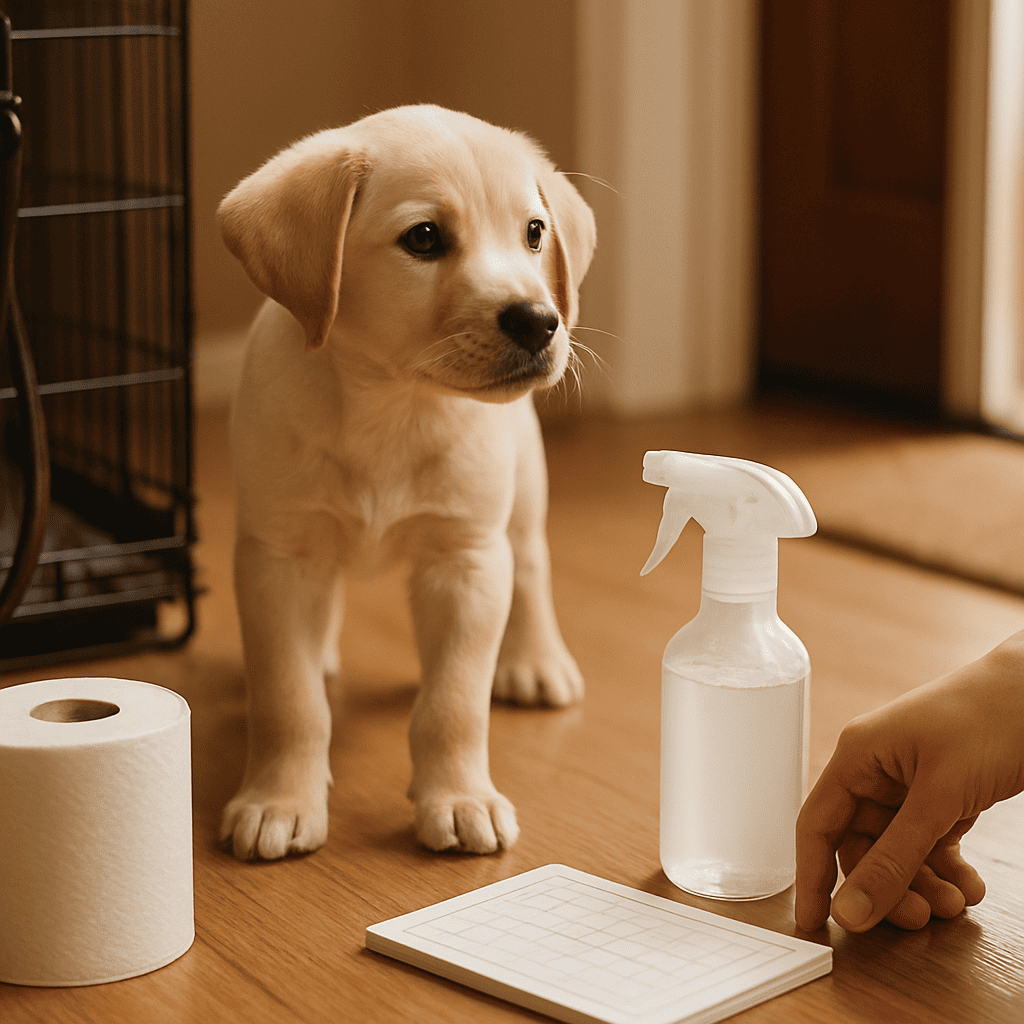
Most potty training advice starts with a clock. Take your puppy out every hour. Then every two hours. Keep repeating it and hope the floor stays dry.
That advice can help, but it misses the part that usually matters more: your puppy’s accident pattern. If your pup pees on the rug after play, near the door in the afternoon, or 10 minutes after breakfast, that’s not random. It’s a clue.
Start here: write down the exact time, location, and activity before the next accident. That one habit gives you more useful information than guessing from the couch while you scrub the same spot again.
Say it’s Wednesday afternoon, the rug’s already been cleaned twice, and your puppy has just bounced out of a game of chase. Five minutes later, there’s another puddle by the sofa. That’s frustrating, but it’s also useful. The rug may be the stage, not the cause. The cause might be the excitement, the timing, the surface, or the fact that you were right on the edge of the next potty window.
Understanding Your Puppy's Unique Patterns
No two puppies make the same mistakes for the same reason. One puppy only has accidents after drinking and playing. Another seems fine all morning, then pees near the front door every afternoon. A third can stay dry in the crate for 6 hours overnight at 12 weeks, then squat in the living room 10 minutes after breakfast.
That is why generic rules fall short. A blanket rule like “go out every hour” can help you avoid accidents at first, but it won’t tell you why they happen. Pattern-based tracking does.
Look for three things at the same time:
- Location: rug, tile, crate, mat, doorway, hallway, sofa area
- Timing: right after waking, within 15 minutes of a meal, after play, after water, after guests arrive
- Trigger: excitement, distraction, a noisy room, a slick floor, a change in routine
Those three pieces usually explain more than the raw number of trips outside. For example, a puppy that pees near the front door every afternoon may not need “more potty training” in general. She may need a break right before that time of day, plus a quieter transition when people arrive home. A puppy who has accidents 10 minutes after playing in the living room may need a potty break immediately after play, not 30 minutes later.
The main shift is this: stop asking, “How often should I take him out?” and start asking, “What was happening right before the accident?” Timing matters more than frequency because it matches the moment your puppy’s bladder is actually full or the moment excitement pushes him over the edge.
VCA Animal Hospitals’ potty training guide explains that puppies can only hold urine for limited stretches as they grow, but that window changes with age, activity, and water intake. That’s why a puppy who looks fine at 9:00 can still have an accident at 9:12 after a big drink and a zoomie session.
Creating the Puppy Accident Detective Map
A good log should be simple enough that you’ll actually use it. The Puppy Accident Detective Map is just a structured way to connect the dots.
Copy this into a notebook or notes app:
| Date | Exact time | Location | What happened right before | Meal/water timing | Floor/weather | What the accident looked like | What you did next |
|---|---|---|---|---|---|---|---|
Fill it in every time you catch an accident. Don’t skip the boring details. The boring details are usually the clue.
A useful entry might look like this:
- Date: Tuesday
- Exact time: 9:00 a.m.
- Location: kitchen, beside the water bowl
- What happened right before: breakfast, then 5 minutes of tug
- Meal/water timing: breakfast at 8:45, drank water at 8:55
- Floor/weather: tile, bright morning, door closed
- What the accident looked like: medium puddle, normal squat, no straining
- What you did next: cleaned with enzyme spray, took puppy outside after cleanup
After three days of logging, patterns usually begin to show. Maybe accidents happen within 15 minutes of meal time. Maybe they happen after morning playtime outdoors. Maybe they happen only in one room because that room has a soft rug and a lot of excitement.
If the entries start to point in one direction, adjust one variable at a time. That’s how you learn what actually changes the outcome. If accidents happen after a full water bowl, you don’t need to panic and remove water all day. You may need to keep fresh water available and schedule a potty trip after drinking.
If you want a more guided version of the same idea, Find your puppy’s potty pattern with the Puppy Potty Pattern Tracker.
Timing and Environment: Keys to the Puzzle
Once you’ve got a few entries, look at the clock and the room together. That combination is usually where the answer lives.
A puppy that has no accidents in a nighttime crate for 6 hours by 12 weeks may still have trouble during busy daylight hours. That doesn’t mean the puppy is “choosing” to misbehave. It means the crate is calm, predictable, and boring, while the living room is full of movement, noise, and stimulation.
Think through these common timing and environment links:
- After meals: many puppies need a potty trip soon after eating, especially if they drink right afterward.
- After play: excitement and movement can trigger a quick accident within 10 to 15 minutes.
- After waking: some puppies need to go immediately, before they even start sniffing around the room.
- At the door: a puppy may associate the front door with going outside, or may get so excited by arrivals that he forgets to hold it.
- On soft surfaces: rugs, bath mats, runners, and folded blankets can feel similar to grass or puppy pads.
The environment matters too. A puppy may do better with outdoor potty access that feels safe and easy to reach. Even something simple, like a less crowded path to the yard or a consistent leash walk to the same spot, can cut down on confusion. If your puppy keeps missing on the rug but stays dry on tile, that doesn’t mean the rug is cursed. It usually means the soft surface is part of the habit.
Your goal isn’t to make the day rigid. It’s to line up potty breaks with the conditions that predict a mistake. If accidents cluster within 45 minutes of meals, then the meal-to-potty window deserves your attention. If morning play almost always leads to a puddle, the fix is a short trip outside immediately after play, not a later trip when you remember it.
Common Mistakes and How to Avoid Them
A few habits make puppy potty accidents linger longer than they need to.
Punishing after the fact. If you scold a puppy after you find a puddle, he won’t connect it to the earlier moment. He may only learn that you get upset near messes. That can make him sneak off to hide accidents instead of showing you when he needs to go.
Using the wrong cleaner. Regular household spray may make the spot look clean, but your puppy’s nose can still smell the old accident. Use an enzymatic cleaner after every cleanup so the area doesn’t keep inviting a repeat visit.
Treating all accidents the same. A puppy who pees once after a long nap needs a different response than a puppy who squats three times in one hour with little output. One is probably a training timing issue. The other may be a health issue.
Changing too many things at once. If you move the water bowl, cut back the playtime, switch rugs, and change meal times all in the same day, you won’t know which change helped. Pick one likely trigger from the log and test that first.
Ignoring the repeat spot. If the same area keeps getting hit, block access for a few days, clean it thoroughly, and increase supervision near that spot. A room with one favorite accident zone needs management, not guesswork.
A small pattern change can make a big difference. If the log shows accidents 10 minutes after play, you don’t need to overhaul the entire day. You just need a potty trip right after the game ends, before the puppy settles back onto the rug.
How do I know if it’s a UTI or just bad timing?
Safety note: Some potty accidents are training problems, but others are medical. If your puppy is straining, producing only tiny drops, seems uncomfortable while peeing, has bloody urine, or is suddenly drinking much more than usual, call your veterinarian.
A puppy with a possible urinary tract infection may squat often, seem restless, or have accidents even when the timing doesn’t fit the usual pattern. If your log shows accidents happening very frequently over a short period, or your puppy keeps trying to pee with very little coming out, that’s not something to wait out. Use the log, but also call the clinic.
The same goes for an increase in thirst that doesn’t make sense. If you’re refilling the bowl far more than usual and the accidents are becoming more frequent, that’s worth a vet call. VCA Animal Hospitals’ potty training guide can help with the training side, but medical signs belong with a vet visit.
If you’re stuck between “maybe this is training” and “maybe this is urgent,” Use the Puppy Panic Button to sort out the next step.
What if I can’t find any pattern after three days?
That happens. Three days is often enough to show a clue, but not always enough to show the whole picture.
First, check whether your log is detailed enough. “Accident in living room” isn’t very helpful. “10:20 a.m., living room rug, 12 minutes after tug, after breakfast and a bowl of water” is much better.
Second, watch for smaller triggers. A visitor at the door, a change in lighting, a vacuum running, or an older dog pacing past can all be enough to push a puppy over the edge. Those little moments are easy to miss if you’re only looking at meals and naps.
Third, keep logging for five to seven days if your puppy’s routine changes a lot between weekdays and weekends. A puppy who is dry during a calm morning might fall apart during a busy afternoon with kids in and out of the room.
If the pattern still isn’t clear after a week, try one focused change. Move the next potty trip to 5 or 10 minutes earlier than usual after the event you suspect is causing the accident. Watch the next two days closely. If the puddles stop or move to a different time, you’ve found something useful.
And if nothing lines up, ask a trainer or vet to look at the routine with fresh eyes. Sometimes the issue isn’t your effort. It’s that you’re too close to the mess to see the pattern.
How long until I see real progress with this method?
You can usually see the first usable clues within three days. Real behavior change often takes longer, because the point isn’t just to spot the pattern. It’s to change the trigger and then watch whether the next accident disappears.
A realistic sign of progress looks like this: your puppy used to pee on the rug after breakfast, but now you take him out right after eating, and he starts peeing outside instead. Then the afternoon puddle near the door shows up less often because you’ve learned to open the door and go straight out before the excitement starts.
Progress can look uneven. One day may go perfectly, then the next day there’s another accident after visitors arrive. That doesn’t mean the method failed. It means the pattern has more than one trigger.
Keep the log for a full week before you decide the new plan isn’t working. Reassess it every week after that. Puppies change fast. Their schedules, bladder control, and habits all shift as they grow.
Corrective Actions for Your Puppy’s Potty Patterns
Use this checklist as your working plan:
- Record every accident with the exact time, location, and activity before it
- Add meal, water, weather, and floor surface notes
- Use the Detective Map to look for repeat triggers after three days
- Clean every accident spot with an enzymatic cleaner
- Adjust the potty break to match the pattern you found
- Watch for strange signs like straining, blood, or unusual thirst
- Reassess your notes each week and update the plan as your puppy grows
If you need a fresh routine to support the new pattern, the Puppy Routine Builder can help you line up meals, play, naps, and potty breaks without guessing.
Quick answers to the questions people ask most
Why does my puppy pee on the rug but not the tile?
Rugs can feel softer, smell more familiar, and hold scent better than tile. That can make the rug a repeat target if the spot was never cleaned with an enzymatic cleaner. Check whether the rug accidents happen after the same activity or at the same time of day, then block access or supervise more closely around that trigger.
Should I take him out every hour even if he just peed?
Sometimes yes, sometimes no. If the log shows accidents after meals, after play, or after waking, the timing matters more than the hourly habit. Instead of adding random trips, try matching the break to the trigger that keeps showing up.
How do I know if it’s a UTI or just bad timing?
Bad timing usually follows a repeatable pattern, like after meals or after zoomies. A possible UTI can look more urgent, with straining, frequent attempts, blood, or unusual discomfort. If the signs feel off, call your vet rather than waiting for the pattern to sort itself out.
What if I can’t find any pattern after three days?
Keep tracking for a few more days and get more specific about the moments before the accident. Small things like a doorbell, a guest, or a sudden burst of play can matter. If the pattern still won’t show itself, ask a vet or trainer to review the routine with you.
How long until I see real progress with this method?
Many owners can spot the first pattern inside three days, but progress usually shows up over one to two weeks as the new potty timing starts to stick. You’ll know it’s working when you stop guessing and start catching the accident before it happens.
The goal isn’t perfection. It’s getting enough clarity to stop cleaning the same rug on repeat and start making changes that fit your puppy’s actual habits.