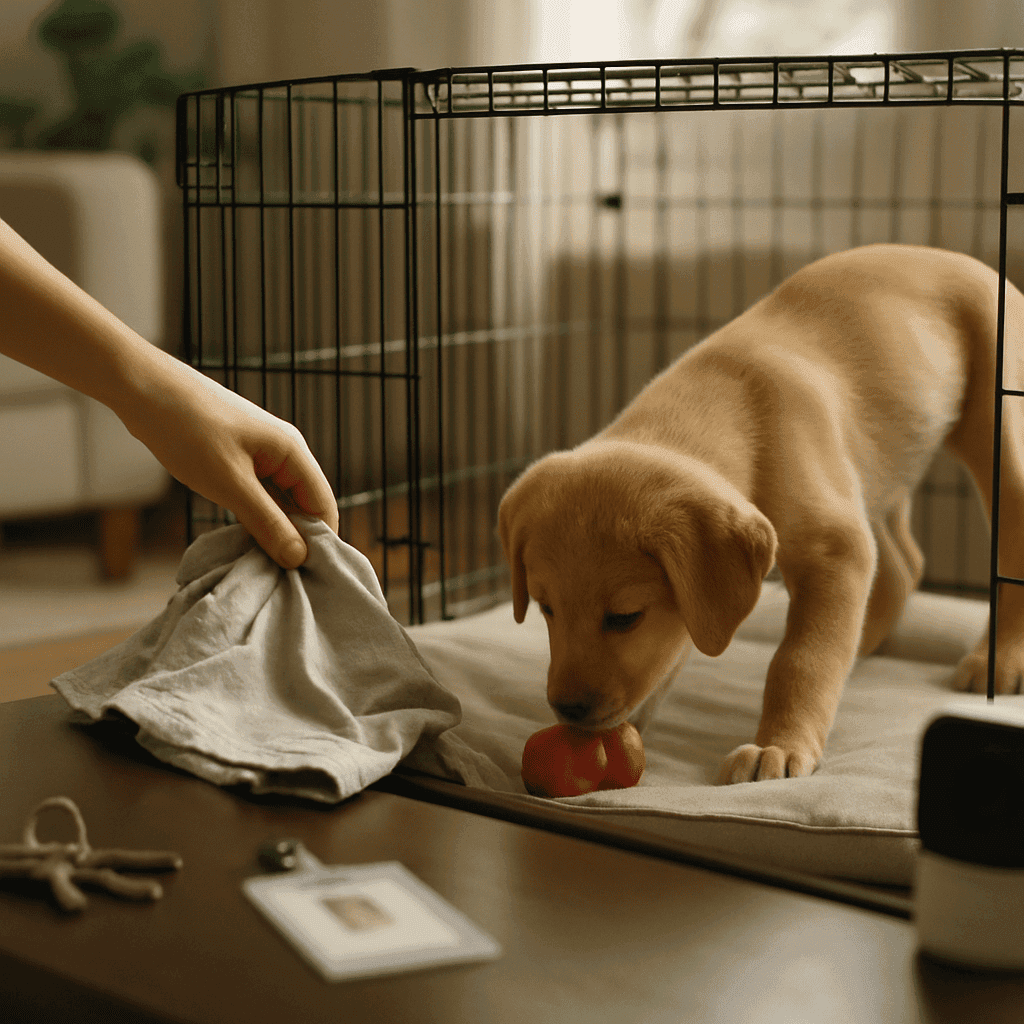
That first morning back at work after bringing a puppy home can feel like a countdown. You check the safe area, you check the camera, you check the hallway, and then you stand there with your keys in your hand wondering if you are doing something wrong. The guilt can be sharp. The fear is usually three questions: Will she cry? Will she hurt herself? Will I come home to a disaster?
This guide removes some of the guesswork. You will get a night-before setup, a morning sequence, a realistic first-week schedule, clear ways to tell normal fussing from true distress, and a copyable morning checklist. The goal is not total silence. A few minutes of protest can be part of adjustment. The goal is a safe, structured shape to the day so leaving your puppy alone while at work does not become a daily panic.
Fast Answer: How Long Can You Leave a Puppy Alone? (Age Chart Included)
The safe maximum alone time for a puppy depends mostly on bladder control and emotional maturity. A common rule is that a puppy’s age in months roughly equals the maximum hours they can manage alone. But for young puppies, the ceiling is lower, and these numbers are a rough guide, not a challenge.
Use this as your guardrail while building the schedule that follows.
| Puppy Age | Maximum Alone Time Per Stretch | What This Usually Looks Like |
|---|---|---|
| 8–10 weeks | 1 hour | Short crate or pen sessions with frequent potty breaks and human contact |
| 10–12 weeks | 2 hours | Needs a midday break if you work a full day |
| 3–6 months | 3–4 hours | Can often manage one solid lunchtime visitor or dog walker break |
| 6+ months | 4–5 hours | Still needs exercise and potty breaks before and after; not an 8–10 hour stretch |
Notice that these are maximum time chunks, not whole workdays. A 10-week-old puppy should not be alone from 8:00 to 5:00 even if the house is quiet. That is too long for both bladder and brain. But a 10-week-old puppy can often manage a morning block from 8:30 to 12:30, a midday break, and an afternoon block from 1:30 to 5:30. The break is non-negotiable at that age, not just for potty needs, but for movement and human contact.
The biggest mistake here is thinking your puppy will learn to hold it. Leaving a 3-month-old alone for six hours straight can create accidents, distress, and bad associations with the safe space. That is not independence training. That is too much, too soon.
What to Do First: The Night-Before & Morning-Of Setup That Prevents Problems
Anxiety spikes the night before and the morning of. Without a script, owners either overdo goodbyes or skip critical preparation steps. This sequence is designed to reduce your puppy’s arousal, set up the environment, and create a calm exit.
The Night Before
- Set up the safe space completely so you are not fumbling with latches at 7:50 a.m.
- Place an unwashed worn t-shirt inside the crate or pen. Use one with no buttons, no loose strings, and no zippers.
- Prepare a frozen Kong or similar rubber food toy with moist puppy food, pumpkin, or a small smear of xylitol-free peanut butter.
- Set up a puppy camera facing the safe area. Confirm the phone alerts work before you go to bed.
- Write down the potty break times and midday visitor plan so the morning is not a debate.
The Morning Of
| Time | Action | Why It Helps |
|---|---|---|
| 6:50 | Wake up calmly. Leash the puppy immediately and go straight to the potty spot. | Emptying the bladder first prevents an early accident and starts the day with a clear task. |
| 7:00 | Five to ten minutes of mild play or a short sniff walk. | Takes the edge off without making the puppy over-aroused and frantic. |
| 7:15 | Feed breakfast inside a puzzle toy, slow feeder, or frozen Kong in the safe space. | Food inside the safe area builds a positive association and gives the puppy something to work on after you leave. |
| 7:35 | Place fresh water in a clip-on bowl or heavy bowl that cannot tip easily. | Hydration matters, but the bowl needs to be stable. |
| 7:40 | Final quiet potty trip. | This is the last chance to empty out before alone time. |
| 7:50 | Put the puppy in the safe space with the Kong. Start white noise, a fan, or calming music. Say I’ll be back soon in a matter-of-fact voice. Walk out without lingering. | A calm, predictable exit tells the puppy this is not an emergency. |
| 8:00 | Leave. Check the camera from outside for a few minutes. | You can see if the puppy has settled or needs an early return. |
The order matters. If the puppy is already sniffing or licking the Kong when you leave, the departure feels less important. If she is barking at the door, do not rush out while she is frantic. Wait for a pause, but do not make a big production of leaving.
If your puppy refuses breakfast in the puzzle toy, try a higher-value filling such as wet food or a tiny bit of peanut butter. Feed a smaller amount at night and keep the breakfast portion reserved for the safe space. If she still will not eat, do not force it. Some puppies eat less on an anxious morning. Focus on the potty routine and safe setup, then offer food later.
Your Puppy’s Alone-Time Schedule: The Step-by-Step First Week Plan
Most advice says to build up gradually, but it rarely shows what that looks like around a typical 9–5 day. This first week gives you a concrete frame. Treat it as a starting point, not a rigid force field.
| Day | Work Block 1 | Midday Break | Work Block 2 | Evening Alone Practice | Notes |
|---|---|---|---|---|---|
| Monday | 8:00–12:00 | 12:00–12:30 potty, drink, short play | 12:30–5:30 | 5–10 minutes with Kong while you step outside | Baseline day. Watch the camera but do not react to every whine. |
| Tuesday | 8:00–12:00 | 12:00–12:30 | 12:30–5:30 | 5–10 minutes | Same structure. Notice whether she settles faster after the midday break. |
| Wednesday | 8:00–12:00 | 12:00–12:30 | 12:30–5:30 | 10–15 minutes if Monday and Tuesday were not concerning | If there was screaming, do not extend alone time. Reduce the next block. |
| Thursday | 8:00–12:30 | 12:30–1:00 | 1:00–5:30 | 10–15 minutes | Only stretch the morning block if the puppy settled reasonably on camera. |
| Friday | 8:00–12:30 | 12:30–1:00 | 1:00–5:30 | 15 minutes | Keep the consistent rhythm. |
| Saturday/Sunday | Short alone sessions of 15–20 minutes while you are home | No work block needed | No work block needed | Practice separation in another room or step outside | Weekends maintain the routine so Monday is not a shock. |
If you can come home at lunch, keep the visit brief and calm. Potty first, then water, maybe a short play session. Do not turn the midday visit into a frantic party that makes the afternoon departure harder.
If you cannot come home, arrange a dog walker, neighbor, or family member for a 20–30 minute midday visit. This is especially important for puppies under six months. Give that person a simple bag: leash, treats, potty spot directions, clean-up supplies, and your cell number. Ask them not to force interaction if the puppy is shy. Potty, a little fresh water, and a calm presence are enough.
Evening alone practice matters more than many owners think. This is how to leave puppy for work without making alone time a Monday-only event. Five to fifteen minutes after dinner, place the puppy in the safe area with a stuffed Kong, step outside, and return the moment she is calm or close to it. The point is repetition, not perfection. If your work schedule is irregular, use the Puppy Routine Builder to turn these blocks into a daily rhythm that fits your hours.
How to Create the Safest Alone-Time Space for a Puppy Without Breaking the Bank
Owners often imagine worst-case scenarios: choking, getting stuck, chewing an electrical cord. The safest setup for most young puppies is a crate or a crate attached to a playpen. A full puppy-proofed room is usually too much freedom. Too much space can lead to potty accidents, destruction, and a puppy who paces instead of rests.
Safe Setup Options
- Crate only: Best for short stretches and puppies who accept the crate. Use a divider if the crate is too large so the puppy does not potty on one side and sleep on the other.
- Crate attached to a playpen: Best for longer workdays with a midday visit. The crate can hold the bed, the pen can hold a water bowl and a safe potty area if you are using pads. This does not replace a potty schedule, but it gives more room to move.
- Puppy-proofed room: Only for older puppies who are reliably house-trained and not destructive. Leave this option alone for the first few months.
What to Put Inside
- Fresh water in a clip-on bowl or heavy bowl.
- A safe long-lasting chew such as a classic Kong, Toppl, or other durable rubber toy.
- A worn t-shirt with your scent if it has no buttons or strings.
- A hard-wearing pad or vet bedding that can be washed easily.
- A light blanket over three sides of the crate, out of reach, to create a den-like feel.
What to Never Leave Alone with a Puppy
- A regular collar or harness that can snag on crate bars.
- Rawhide chews, bully sticks, or anything that can be snapped into sharp pieces.
- Stuffed toys with small parts, squeakers, or loose fabric that can be swallowed.
- Retractable leashes, cords, or anything electrical within reach.
- Loose blankets with frayed edges for young chewers.
Before the first full workday, do a fifteen-minute trial run while you are home. Put the puppy in the setup, go into another room, and watch the camera. Check whether she tries to escape, chew the crate bars, or panic immediately. This test shows you what needs to be removed or adjusted.
A simple setup might be: wire crate with divider, clip-on water bowl, frozen Kong, durable rubber chew, waterproof crate pad, and a light sheet covering three sides. A safe playpen arrangement uses a hard floor, no access to blinds or cords, and only approved toys. If the puppy soils the pad, switch to easy-to-wash fleece or a rubber-backed bath mat until potty training is more reliable.
Normal vs. Not Normal: When Your Puppy Cries When Left Alone and What Silence Really Means
Owners hear crying on the camera and panic. That is normal. The key is learning the difference between brief protest and real distress. Crying alone is not automatically separation anxiety, and silence is not automatically peace.
What Normal Alone-Time Fussing Looks Like
- Whining or soft barking for 5–15 minutes, then settling down to sleep or chew.
- Brief restlessness after waking, then lying back down.
- Occasional barking followed by silence.
- Chewing on a designated safe toy.
- A potty accident during the first 3–5 days while adjusting.
A typical camera clip: the puppy whines for seven minutes, paws at the crate a little, then flops down with the Kong. That is normal. You can wait and watch.
What Concerning Distress Looks Like
- Continuous high-pitched crying, screaming, or howling for more than 20 minutes without a pause.
- Frantic escape attempts causing injury, such as bleeding paws, bent crate wires, or torn flooring.
- Excessive drooling, heavy panting, or self-mutilation like chewing her own paws.
- Refusal to eat even high-value food left in the space.
- Silence combined with later damage to bedding, crate bars, or the floor. That can be quiet stress that still needs attention.
A red-flag camera clip: the puppy screams for 25 minutes straight, claws at the door, pants heavily, and ignores a Kong she normally loves. That needs a shorter session, a vet check, and possibly a certified trainer or veterinary behaviorist.
Avoid relying on a universal number or timeline; record the pattern and contact a veterinarian when the change is persistent, worsening, or accompanied by other concerning signs.
Troubleshooting: What to Do If Your Puppy Won’t Settle, Destroys Things, or Cries Nonstop
Even a solid plan hits snags. If this happens, do not label your puppy as bad or broken. Adjust the plan.
| Problem | Likely Cause | Immediate Fix | Long-Term Adjustment |
|---|---|---|---|
| Crying for more than 20 minutes | Over-arousal, too much alone time, unmet potty need, or distress | Check the camera. If no injury, wait another five minutes. If crying continues or escalates, return calmly, potty, then try again later with a shorter duration. | Reduce alone time, practice separations while you are home, and rule out medical issues. |
| Potty accidents in the safe space | Space too large, midday break too late, or incomplete potty routine | Clean with enzyme cleaner. Re-evaluate break timing and space size. Use a waterproof pad. | Tighten the potty schedule and track when accidents happen. |
| Destroying bedding or crate pad | Stress, boredom, or teething | Remove fabric bedding immediately. Use a rubber-backed bath mat or nothing for short periods. Give a frozen Kong. | Provide more mental enrichment before departure and practice shorter departures. |
| Refusing food or toy | Anxiety, overfeeding before departure, or low-value filler | Try higher-value fillings such as wet food, peanut butter, or pumpkin. Feed all meals in puzzle toys during alone time. | Make the food toy a normal part of the day, not just when you leave. |
| Escape attempts | Panic, poor crate fit, or weak latches | Ensure the crate door and playpen are secure. Add carabiner clips to crate doors. Do not use escape as a test of will. | Contact a positive-reinforcement trainer or veterinary behaviorist if escape attempts are frantic or injurious. |
If your puppy screamed for thirty minutes on Tuesday, do not repeat the same thirty minutes on Wednesday. Shorten the alone time to one hour after a solid walk and a high-value Kong, and see if she settles in five minutes. That tells you whether the duration was the issue. If the distress continues even in short sessions, get professional help rather than pushing through.
Do not yell at the puppy when you come home, rub her nose in accidents, or punish barking. These responses increase fear and make alone time harder. Clean the accident quietly, adjust the schedule, and keep the next session smaller.
Common Mistakes That Make Leaving a Puppy Alone Harder (and How to Fix Them)
Many well-intentioned habits work against you. Here are the most common mistakes and the better alternative.
| Mistake | Why It Backfires | Fix |
|---|---|---|
| Long, emotional goodbyes | The puppy picks up on your nervous energy and becomes more aroused. | Use a calm, consistent exit phrase and do not linger. |
| Leaving the puppy in total silence | Outside sounds can startle a dozing puppy and make alone time feel spooky. | Use white noise, a fan, or calming background music. |
| Trying to exhaust the puppy before you leave | Over-tired puppies often become overtired and more frantic, not calmer. | Moderate exercise plus mental enrichment is more soothing. |
| Giving too much freedom too soon | A large space can trigger pacing, accidents, and destruction. | Start with a crate or crate-and-pen setup. |
| Not using a camera | You guess instead of knowing, and that uncertainty makes you anxious. | Even an affordable pet camera or tablet setup helps you make informed decisions. |
| Inconsistent weekends | A puppy who sleeps in Saturday and Sunday may struggle Monday. | Keep wake-up, potty, and alone-time rhythms similar on weekends. |
One Friday morning, an owner holds the puppy, speaks in a high-pitched voice, cuddles longer, and then rushes out. The puppy is now worked up and confused. That is the exact opposite of a calm separation. A better scene: potty, short play, food toy, quiet goodbye, leave.
Frequently Asked Questions About Leaving a Puppy Alone While at Work
How long can I realistically leave a puppy alone at home while at work?
Use the age chart at the top. A puppy under three months generally should not be left alone for a full eight-hour workday without a real midday break. A more realistic plan for a 10-week-old is two blocks around a lunch visit, not one continuous stretch. Think two to three hours, then a break, then two to three more hours.
What’s the difference between normal fussing and separation anxiety when my puppy cries when left alone?
Normal fussing usually fades within 5–15 minutes and includes whining, soft barking, or crate scratching before settling. Concerning signs include continuous screaming for more than 20 minutes, panting, drooling, self-injury, or frantic escape attempts. If you see those red flags, shorten sessions and consult a vet or certified behavior professional. A camera helps you judge what is actually happening.
Should I use a crate, playpen, or puppy-proofed room when leaving my puppy alone?
For most young puppies, a crate or a crate attached to a playpen is the safest choice. It supports potty training and prevents chewing hazards. A full puppy-proofed room is only safe for older puppies who are reliably house-trained and not destructive. Skip the full room for the first few months.
Do I absolutely need to come home at lunch or hire a dog walker?
For puppies under six months, yes, a midday visit matters. It is not about luxury. It meets potty and social needs. A family member, neighbor, or dog walker can do this if you cannot. The visit should last at least 20–30 minutes and include a potty trip, water check, and a calm human presence.
What if my puppy refuses to eat or drink while I’m gone?
Some puppies eat less during the first day or two of alone time. Try higher-value food such as wet food, pumpkin, or a small smear of peanut butter in a Kong. Feed all meals inside the safe space so the environment gains value. Always leave water. If refusal to eat or drink continues for more than 24 hours, call your veterinarian.
Can I leave my puppy alone with a toy or puzzle feeder all day?
No. Leave only durable, supervision-tested toys such as rubber Kongs or Toppls. Puzzle feeders are fine for breakfast, but they are not all-day entertainment. Avoid anything that can be shredded, swallowed, splintered, or choked on. When in doubt, remove it before you leave.
Is it okay to leave a puppy with a worn shirt or blanket with my scent?
A worn t-shirt can be comforting if it has no buttons, loose strings, or zippers. Avoid soft blankets that can be chewed apart and swallowed. Monitor the camera during the first few sessions to see if the puppy is chewing the shirt instead of soothing with it. If she is shredding it, remove it.
Your ‘Leave Without Worry’ Morning Checklist + Next Steps
Do not try to hold all this in your head tomorrow at 7 a.m. Copy this checklist into your notes or write it on an index card near the door.
Copyable Morning Checklist
- Potty break immediately after waking.
- Short on-leash walk or play session for 5–10 minutes, not a frenzy.
- Feed breakfast inside a puzzle toy, slow feeder, or frozen Kong in the safe space.
- Do a 5-minute calm settle practice: sit or down, then chew on a mat.
- Set up the safe area: fresh water, long-lasting safe chew, worn t-shirt, safe pad.
- Turn on white noise, a fan, or calming music.
- Final quiet potty trip.
- Place the puppy in the safe space with the chew. Say I’ll be back soon and leave calmly.
- Start the camera and verify it works before you drive away.
- Double-check doors, cords, and that the midday visitor or dog walker is confirmed.
If you are not sure whether a behavior you see on camera is normal alone-time fussing or a true red flag, use the Puppy Panic Button as a safety helper. It can help you decide whether to wait, adjust, or call your vet. Trust the plan, but trust your instincts too.