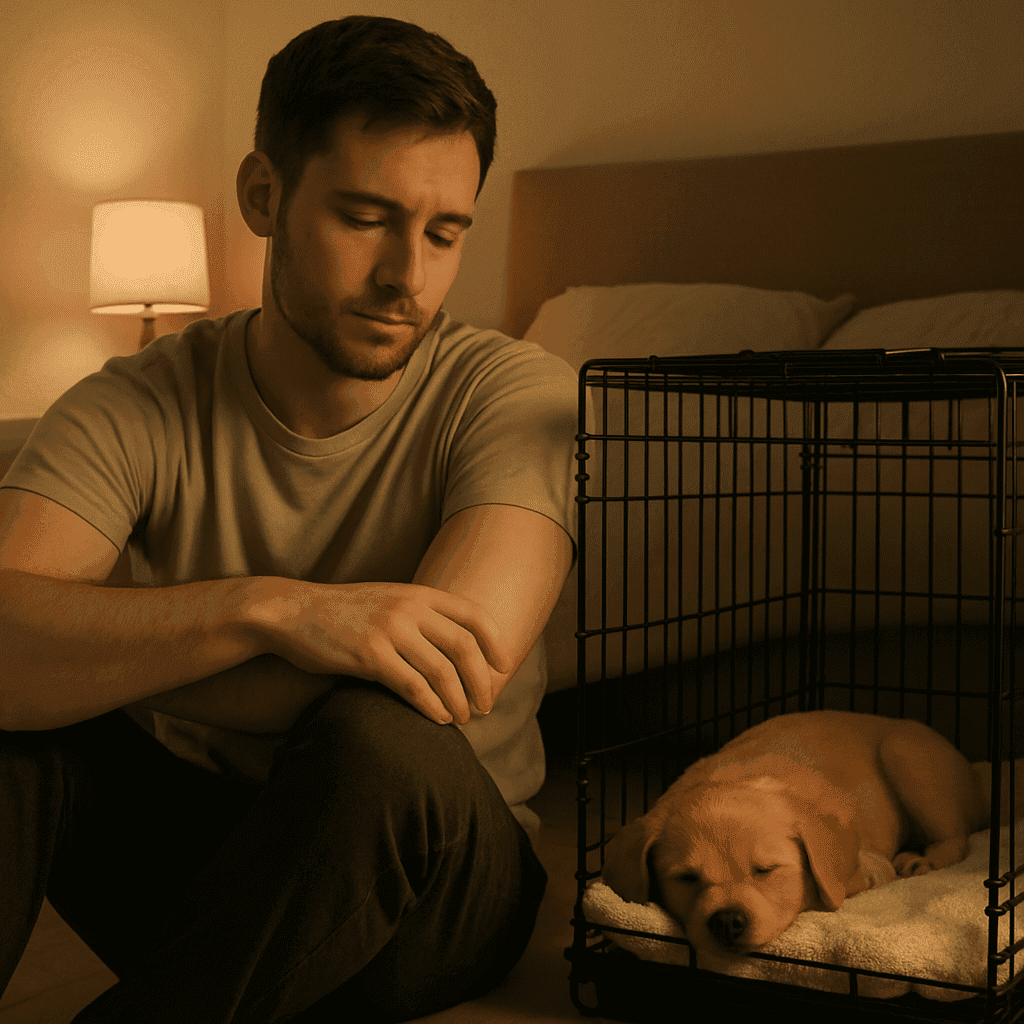
Puppy Crying at Night: The First 7 Days Survival Plan (Printable Nighttime Routine Schedule)
18 min read · Practical PuppyLaunch guide
It’s 3:17 a.m. You’re standing in your dim kitchen, pajamas on inside out, holding a squirming ball of fur that won’t stop whimpering. Your phone glows with the search you just typed: “puppy crying all night how long does this last.” You’re exhausted, worried you’re doing everything wrong, and already questioning whether you’re cut out for this. Take a breath. This is normal, and you are not failing. That tiny puppy isn’t broken, and neither are you.
This 7-night survival plan is designed exactly for this moment. It takes the guesswork out of midnight decisions and gives you a clear, hour-by-hour schedule—from 8 p.m. to 6 a.m.—that adapts as your puppy’s bladder and confidence grow. By the end, you’ll have a printable routine tracker, a simple cry-decoding reference, and a realistic path to longer sleep stretches.
If you need to know what to do right now, here’s the bottom line: Crying is biologically normal for a puppy in a new environment and with a tiny bladder. Do not ignore the cries completely, but don’t rush into full play or comfort that teaches the puppy to cry for attention. The safe nightly rhythm is: potty check (quick, quiet, no lights), then brief reassurance (soft voice, stay beside the crate, back turned if needed), then return to the same sleep setup. Stick to a predictable potty schedule, gradually stretch the sleep windows, and understand that crying typically eases significantly by Night 5–7. You need a plan, not panic—this article gives you the exact hour-by-hour sequence.
Before tonight, use this checklist to turn your bedroom into a calm, safe den. Each item prevents a common crying trigger before it starts.
- Place the crate in your bedroom, on a sturdy chair or nightstand at bed height so the puppy can see and smell you.
- For the first 3–4 nights, keep the side of the crate facing you; do not isolate the puppy in another room.
- Line the crate with a washable mat or towel plus something that smells like you (a worn t‑shirt tied in a knot).
- Add a snuggle toy with a heartbeat simulator if your puppy seems especially lonely (not required, but helpful).
- Set up a white noise machine or a calm‑tone noise app to mask startling household sounds—external sounds often trigger sudden crying.
- Do a 20‑minute pre‑bed wind‑down: dim lights, quiet voices, a gentle massage or chew on a safe toy. No exciting chase games.
- Offer the last meal 3 hours before crate time, and remove the water bowl 1–2 hours before your final potty trip, so the puppy has time to empty the bladder.
- Do one final, boring potty trip 5–10 minutes before tucking the puppy in. Stand still, whisper “go potty,” wait 3–5 minutes. No sniff‑walks.
- Secure the crate door, but before you settle, double‑check that the collar is off (neck collar inside a crate is a choking hazard).
If you follow nothing else tonight, follow the final potty trip and the bedroom‑crate placement. Those two actions alone reduce a huge fraction of first‑night screaming.
What To Do First: Set Up Your Puppy’s Nighttime Space
Even the best midnight heroics can’t fix an environment that works against your puppy’s instincts. Think of the crate as a den, not a cage. In the wild, a den is a small, safe, warm spot close to family. Replicate that.
Crate placement and cover rules
For the first 3–4 nights, the crate belongs in your bedroom, as close to your sleeping spot as practical—on a chair or sturdy table works because the puppy can see your face. This isn’t “spoiling.” A tiny puppy separated from its littermates has a genuine need for proximity. If you start the crate in a distant room, you get panic‑driven howling, not training.
A crate cover can help reduce visual stimulation if the puppy startles easily, but not every puppy likes full darkness. Many puppy‑care guides suggest covering the top and two sides while leaving the front partially open, which creates a cozy cave without triggering isolation panic. If your puppy screams louder when covered, lift the front flap and use a dim nightlight.
The essential evening timeline
Here’s a sample pre‑bed schedule for an 8‑ to 10‑week‑old puppy. Adjust the exact clock times to match your household, but keep the order the same every single night—consistency is what tells your puppy’s brain “it’s time to wind down.”
- 6:00 p.m. – Last meal.
- 7:30 p.m. – Remove water bowl (provide water freely during the day; you are only delaying nighttime access).
- 8:00 p.m. – Quiet indoor play, gentle handling, or a stuffed frozen Kong. No zoomies.
- 8:45 p.m. – Final potty trip. Extremely boring: no talking, no play, no treats.
- 9:00 p.m. – Into the crate. Soft “goodnight” cue, white noise on, lights dim or dark.
- If you want to offer a small, safe distraction, a washable mat with a smear of dog‑safe peanut butter or a stuffed Kong can help the first 10 minutes of settling. Always supervise the first few uses to ensure the item is safe.
Hidden triggers owners miss
Even with a perfect setup, small discomforts can cause repeated crying. Check for:
- A cold draft blowing across the crate at floor level.
- A collar still on (serious choking risk inside a crate).
- Tag noise jingling each time the puppy shifts.
- Too much bedding that makes the crate hot.
- Teething pain (around 12–16 weeks) – a frozen washcloth tied in a knot can soothe gums, under supervision.
Set the stage, and you give your puppy a reason to settle instead of scream.
The 7‑Night Step‑by‑Step Survival Plan (Hour‑by‑Hour Schedule)
Generic advice like “take the puppy out frequently” doesn’t help when your alarm clock isn’t set and your brain is foggy. This night‑by‑night schedule gives you exact potty‑break times, settling windows, and wake‑up targets. Because bladder capacity depends on age and breed size, the times below assume an 8‑week‑old medium‑sized puppy. If your puppy is a tiny breed (e.g., Chihuahua‑size), shorten stretches by 30 minutes. If a large breed at 10+ weeks, you may stretch slightly faster, but never force a bladder beyond its ability. The priority is clean, safe sleep—not racing to a full night.
Night 1: Building Trust (Potty Every 2 Hours)
- 9:00 p.m. – Final potty break, crate with soft word, white noise on. You stay in the room.
- 11:00 p.m. – Potty break (quiet, no lights, straight back to crate).
- 1:00 a.m. – Potty break.
- 3:00 a.m. – Potty break.
- 5:00 a.m. – Potty break.
- 6:30 a.m. – Up for the day. Immediate potty trip, then breakfast.
If the puppy cries within 30 minutes of returning from a potty trip, use the 2‑minute silent presence rule: sit beside the crate, back turned and quiet, for up to 2 minutes. If the puppy settles for 10 seconds, stand and return to bed slowly. Do not lift the puppy out unless you suspect a genuine elimination need (frantic barking, circling). This teaches settling without creating a “cry = get picked up” loop.
Night 2–3: Stretching the Window Slightly
Shift to a 2.5‑hour rhythm unless the puppy signals earlier.
- 9:00 p.m. – Final potty, crate, white noise.
- 11:30 p.m. – Potty break.
- 2:00 a.m. – Potty break.
- 4:30 a.m. – Potty break.
- 6:30 a.m. – Wake up.
Start practicing a settle timer: if the puppy whimpers 20‑30 minutes after a potty trip, wait 5 minutes before a brief verbal “you’re okay” from your bed. Gradually increase the wait over the next nights.
Night 4–5: One Middle‑of‑Night Break
Bladder control is improving. Many medium‑breed puppies can now manage a longer stretch after midnight.
- 9:00 p.m. – Final potty, crate.
- 12:30 a.m. – Potty break.
- 4:00 a.m. (or when the puppy stirs) – Potty break.
- 6:30 a.m. – Wake up.
If the puppy stays asleep at 4:00 a.m., do not wake them. Let sleep continue until they signal or until your target wake time. Note: some toy breeds may still need two breaks; honor the puppy you have, not the schedule on paper.
Night 6–7: Bridging Toward a 5–6 Hour Stretch
By now the puppy understands the rhythm, and the bonding proximity has reduced panic crying. Aim for a single overnight potty trip, then straight sleeping until 6:00–6:30 a.m.
- 9:00 p.m. – Final potty, crate.
- 2:30 a.m. (approx) – Potty break if puppy wakes and signals need.
- 6:00 a.m. – Wake up.
If the puppy still wakes earlier, move the 2:30 a.m. break closer to 3:00 a.m. and ensure the pre‑bed water cutoff is earlier (yet still safe). The goal by Night 7 is a predictable pattern, not perfect silence. Most puppies will stir, maybe whimper once, then resettle.
How to Do Each Nighttime Potty Trip
Be utterly boring. It’s dark, it’s quiet, it’s all business.
- When the puppy cries, wait 30 seconds to see if it’s a resettling noise or genuine need.
- Go to the crate calmly. Scoop the puppy up without high‑pitched greetings.
- Carry the puppy to the designated potty area (outdoors or, if not fully vaccinated, a safe indoor potty pad zone). Use a single quiet cue: “go potty.”
- Stand still for 3–5 minutes. No walking, no playing, no treats.
- When the puppy eliminates, a soft “good” and straight back to the crate.
- If no potty after 5 minutes, return to the crate anyway. Do not extend the trip.
Bladder‑capacity reality check
These numbers come from general veterinary extension guidance. For an 8‑week‑old puppy, a medium‑sized breed can typically hold their bladder for roughly 2 hours during the day and maybe slightly longer at night when resting. Small breeds often need more frequent breaks; giant breeds may stretch a bit quicker, but never push a puppy past the point of distress. If your puppy soils the crate before the scheduled break, shorten the interval—don’t blame the puppy. Consistent soiling might indicate a urinary tract issue, so consult your vet.
Normal vs Not Normal: Understanding Your Puppy’s Cries
The sound of a puppy crying at 2 a.m. can feel physically painful. Your job is to learn the language so you know when to follow the plan and when to make a different call.
| Type of Cry | Most Likely Meaning | What to Do |
|---|---|---|
| Soft, rhythmic whimpering that fades and restarts | Normal loneliness or settling discomfort | Wait 2–5 minutes. If it continues without urgency, use quiet voice reassurance from your bed. |
| Intermittent barking that escalates abruptly | Demand for attention or mild frustration | Wait for a 5‑second quiet pause, then offer a brief, dull reassurance. Do not lift the puppy out. |
| Prolonged howling after a potty trip | Separation distress or fear of isolation | Check the crate cover, add a worn t‑shirt, sit beside the crate silently. Ensure the puppy can sense you. |
| Frantic, non‑stop barking within scheduled potty windows | Likely a potty emergency | Take the puppy out immediately. Do not wait. This is genuine need, not acting out. |
| A sharp, high‑pitched yelp or scream | Possible pain or injury | Investigate immediately. Gently examine the puppy. Check for tangled limbs, a pinched paw, or a tight collar. |
| Crying accompanied by trembling, hiding, or panting even outside the crate | Fear triggered by an external event (loud noise, sudden light) | Remove the trigger if possible. Comfort with a calm presence. This is not training time. |
Stop the routine and contact your vet if crying is paired with any of these:
- Vomiting or diarrhea, especially if repeated
- Lethargy during the day, not wanting to play or move
- Collapse or inability to stand
- Labored breathing or panting that doesn’t settle
- Swelling of the belly or limbs
- Complete refusal to eat or drink earlier in the day
- A sudden shriek when touched, with no obvious cause
- Crying that continues non‑stop for more than 30 minutes despite potty breaks and calm proximity
These are not training problems. Trust your instinct if something feels physically wrong, and seek professional help.
Common Mistakes That Make Nighttime Crying Worse
Even well‑meaning owners accidentally prolong the crying by reacting in ways that teach the puppy the wrong lesson. Look for your own habits in this list.
1. Letting the puppy “cry it out” for hours
The old advice said ignore all crying so you don’t reinforce it. For a tiny puppy with a full bladder or genuine terror, that approach is both unkind and potentially counterproductive—prolonged distress can increase fear and make settling harder. Fix it tonight: Always check for a potty need first. For non‑urgent cries, use graduated waiting (start at 5 minutes) and calm proximity, not total abandonment.
2. Picking the puppy up and cuddling on the couch
It feels natural to scoop up a crying baby. But when you carry a puppy to the sofa for a sleepy snuggle, you teach them that crying leads to the warmest, most rewarding experience possible—and they’ll cry longer next night. Fix it tonight: Provide comfort right beside the crate. Sit quietly, back turned, no lifting. Let the puppy see you are present without making it a social event.
3. Using the crate as punishment
If the crate is ever used for time‑outs during the day, the puppy will associate it with isolation and dread. Nighttime crying then becomes a plea to escape. Fix it tonight: Crate = calm den always. Feed a couple of meals in the crate, hide treats there, and keep the door open during daytime rest so the puppy chooses it freely.
4. Giving dinner or water too close to bedtime
A puppy fed at 8 p.m. will need to eliminate around 10–11 p.m. and again in the early hours, competing with your desired schedule. Fix it tonight: Shift the last meal to 3 hours before crate time. For water, provide it freely all day, but pick up the bowl 1–2 hours before the final potty trip. If the weather is very hot or your vet has given specific hydration instructions, adjust accordingly.
5. Being inconsistent between family members
One person follows the plan, another gives in and takes the puppy into bed. Mixed messages confuse the puppy and often make crying worse on subsequent nights. Fix it tonight: Hold a 5‑minute family meeting. Agree that everyone will follow the same settling protocol. Write the schedule on the refrigerator.
6. Turning on lights or playing during nighttime potty trips
If the hallway light flashes and you whisper excited “good boy!” in a playful tone, the puppy’s brain switches to daytime mode. Fix it tonight: Use a dim nightlight or a red‑light headlamp if you must see. Keep your voice flat and quiet. The entire potty break should feel like a sleepy dream.
7. Moving the crate too far away too soon
Some owners think moving the crate to the laundry room on Night 2 will build independence. For a puppy still adjusting to life without littermates, that distance causes panic. Fix it tonight: Keep the crate in your bedroom through Night 5 at minimum. Then inch it a few feet farther each night toward its permanent spot—a gradual slide, not a cold‑turkey exile.
Troubleshooting: 5 Crying Scenarios and What to Do Next
Real nights don’t read the schedule. Use these if‑then flows when things stray off‑script.
1. “My puppy cries immediately after I put them back in the crate from a potty trip.”
You’ve just returned from a successful potty break. The crate door closes, and the whimpering starts within 30 seconds. Likely cause: loneliness or restlessness, not physical need.
Do this: Sit on the floor beside the crate, back turned, for up to 2 minutes. Don’t make eye contact. If the puppy falls silent for even 10 seconds, stand quietly and return to bed. If crying escalates to frantic barking, run the potty‑need check again—sometimes puppies pee twice in a short burst.
2. “Crying escalates 45 minutes before the scheduled potty break.”
Ignore the clock. If the puppy is frantically barking, circling, or pawing the crate door, they may genuinely need to go earlier than the schedule says. Do a potty trip, then adjust the next night’s schedule to shorten the interval by 30 minutes. Better to break a schedule than force a puppy to soil their bed.
3. “The puppy soils the crate within an hour of the last break.”
This can happen if the crate is too large (the puppy uses one corner as a toilet) or if the bladder capacity is smaller than expected. A properly sized crate should be just big enough to stand up, turn around, and lie down—no extra space. If the crate already fits well, reduce the overnight interval to 90 minutes for a couple of nights and ask your vet if a urinary tract issue is possible, especially if the puppy urinates frequently in small amounts.
4. “The puppy screams the moment I pull the crate cover down.”
Some puppies panic in full darkness. Remove the cover entirely and try again with only the back and top draped, leaving the front open. Add a dim plug‑in nightlight near the crate. After two nights of calm, you can gradually extend the cover forward, but never force full coverage if it triggers panic. A white noise machine often helps these puppies more than visual blocking.
5. “Crying continues for more than 20 minutes of my calm presence.”
The puppy may be overtired—like a toddler who can’t turn off their brain. Create a deeper sensory calm: double‑check the room temperature (not too hot), increase the white noise slightly to mask more environmental sounds, and sit a bit farther away. If you’ve tried three cycles of the 2‑minute presence rule and the crying persists, do a final, very boring potty check and then return to the settle sequence. If this happens repeatedly, consider whether the final meal time or water cutoff needs adjusting, or whether an underlying discomfort (teething, tight collar, scratchy bedding) is at play.
Free Printable: 7‑Night Routine Tracker & Checklist
When you’re exhausted, memory fails. A printed tracker removes the “did I already take him out?” confusion and shows you real progress.
Here’s the nightly routine printed on our tracker. Fill it out to stay on course.
Pre‑Bed Checklist (every night)
- Last meal finished at least 3 hours before crate time.
- Water bowl picked up 1–2 hours before final potty trip.
- Crate placed in bedroom, with washable bed and scent item.
- Collar removed.
- 20‑minute calm wind‑down completed (no rough play).
- Final boring potty trip done 5–10 minutes before crate.
- White noise or calming sound activated.
During the Night
- For each potty break, record the time, whether the puppy eliminated, and how long settling took.
- Use a simple mark: “ꙩ” for potty trip, “✓” for settled quickly, “!” if there was prolonged crying, and “R” if you needed the 2‑minute presence rule.
Morning Check‑In
- Did the crate stay clean? (Yes/No)
- What was the longest unbroken sleep stretch?
- Any unusual sounds or behavior overnight?
- Space for a vet emergency number at the top.
When you track this, patterns emerge. You might notice that Night 4 stretched longer, or that a 7:00 p.m. dinner triggers a 1 a.m. crying bout. That data lets you tweak the plan intelligently.
Frequently Asked Questions & What’s Next
Should I ignore my puppy’s crying at night?
Do not ignore it completely. Always verify potty need first. Then apply a graduated comfort approach: brief, boring reassurance without picking up. Ignoring a tiny puppy crying for hours can increase stress and fear, and in rare cases a puppy with a full bladder may develop discomfort. A quick check ensures safety, then you can allow short settling windows.
Is it normal for a puppy to cry all night the first week?
Yes, it’s very common. Puppies have small bladders, are in an unfamiliar environment without littermates, and need to adjust to sleeping alone. Expect crying to reduce noticeably by Night 5–7 with a consistent schedule. If by Night 7 the crying is still non‑stop for hours despite your presence, revisit the troubleshooting scenarios.
When does nighttime crying stop completely?
Most puppies stop prolonged, distress‑based crying after the first week if a predictable routine is in place. By Night 7, many only vocalize briefly for potty needs. True full‑night silence without needing any potty break typically arrives around 12–16 weeks when bladder capacity grows. Small‑breed puppies may take a few weeks longer.
What if my puppy won’t settle even after a potty break?
Use the 2‑minute silent presence rule: sit or lie beside the crate, back turned, quiet. If