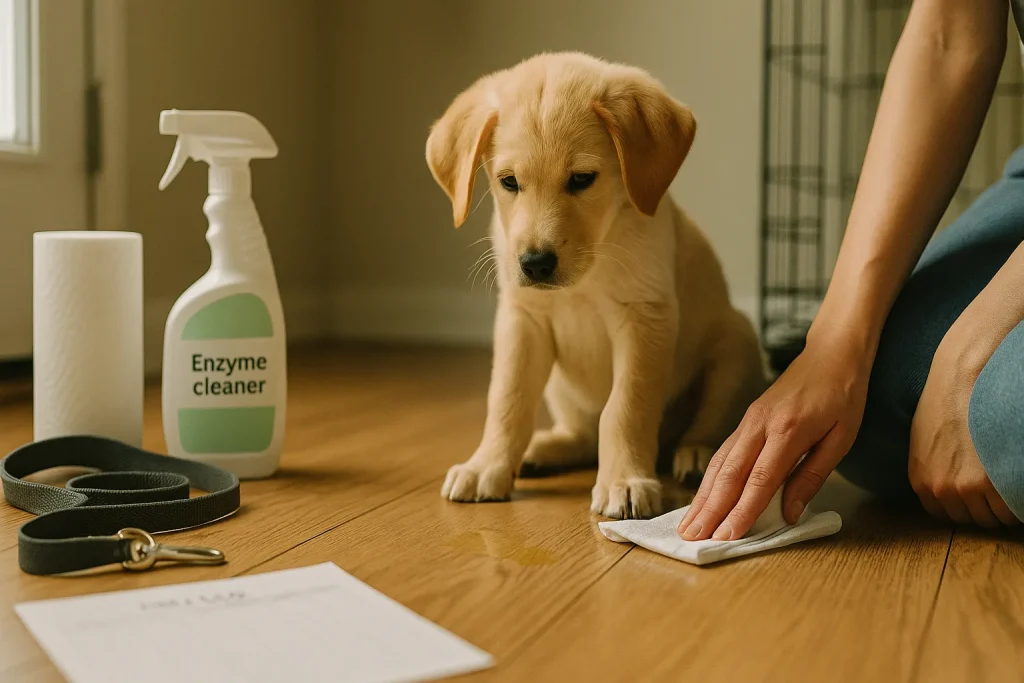
Puppy Vomiting After Eating: Safe First Steps And Vet-Warning Signs
You’re standing in the kitchen at 7 p.m., staring at a small puddle of kibble and white foam. Your puppy just ate dinner 10 minutes ago, ran a victory lap around the coffee table, and then—puke. Your heart is hammering. Is this normal? Should you panic-call the vet? Do you take the food away? The water? Will your puppy be okay?
First, take a breath. You are not a bad owner. Puppies vomit. A lot. Many times it’s harmless, but sometimes it signals a real emergency. Right now, you need a clear, step-by-step way to tell the difference—before you do anything you might regret.
This guide is your calm, practical triage system. In the next few minutes, you’ll learn how to check your puppy, sort the situation into a Green, Yellow, or Red zone, and know exactly what to do next. No vague “watch them closely,” no unnecessary panic, and no dangerous home remedies.
Before You Panic: The First 5 Things to Check Right Now
The seconds after vomit hits the floor feel chaotic. Instead of grabbing your phone to frantically Google, do these five things in order. They take less than two minutes and give you life-saving information.
- Check your puppy’s alertness and gum color. Crouch down, say their name. Do they lift their head, make eye contact, wag? Gently lift their upper lip and press a finger against the gum above a canine tooth. Normal gums are bubblegum pink and turn white briefly when pressed, then pink again within 1-2 seconds. Pale, white, grey, or brick-red gums mean poor circulation—an immediate Red Zone emergency, no matter what else you see. If your puppy seems wobbly, confused, or doesn’t respond at all, go straight to Red.
- Inspect the vomit (without touching it). Get a paper towel or use your phone flashlight. What does it look like? Undigested, whole kibble formed into a tube? That’s likely fast-eating regurgitation. Yellow, foamy liquid (bile) often means an empty stomach. Partially digested food with slime suggests actual stomach upheaval. Grass and a little foam? Common but worth noting. Look for any red specks (fresh blood), dark brown or black granules that look like coffee grounds (digested blood), or a tarry, black liquid. Any blood moves you to Red Zone immediately.
- Time it. Did the vomit happen seconds after the last gulp of food, or an hour later? Was it during a burst of post-meal zoomies? Write down the exact time now, even if it’s just a note on your phone. You’ll need this to track patterns.
- Prevent access to more food or water (temporarily). Don’t offer a refill or a big bowl of water. Pick up any remaining food. We’ll discuss when to reintroduce tiny sips later—but right now, more sloshing in the belly can trigger another round. Never punish or scold; a puppy has no idea why they vomited and punishment can create lifelong food anxiety.
- Separate other pets, but keep your puppy in sight. If there are other dogs who might hoover up the vomit (gross but true), shoo them away gently. Don’t banish your puppy to a crate alone in another room. You need to watch them.
If the vomit is purely undigested kibble, your puppy is bouncing around, and gums are pink, your stress can drop from a 10 to a 3. But don’t jump to “it’s nothing” yet. Let’s learn to separate spit-up from a true vomit emergency.
Spit-Up or Vomit Emergency? Normal vs. Concerning Signs (With Timing Thresholds)
Many first-time owners can’t tell the difference between harmless post-meal spit-up and vomiting that needs a vet. That confusion causes both overreaction (racing to the ER at midnight for a single kibble tube) and under-reaction (waiting too long when something is seriously wrong). Here’s how to read the signals.
Regurgitation (spit-up) is passive. It happens minutes after eating, often without warning heaving. The food comes up in a tube-like shape, undigested, and the puppy may try to re-eat it immediately. They might look surprised but then return to playing. This is usually from eating too fast, swallowing air, or drinking water immediately after dry food.
True vomiting involves active abdominal heaving. You’ll see the puppy’s sides contract, hear retching, and the material is partially digested, often mixed with yellow bile or slime. The puppy may drool, lick their lips, or hide beforehand. True vomiting can signal anything from a mild stomach upset to a serious illness.
Now let’s line up what’s normal and what’s not, with clear timing thresholds you can use right now.
Normal Post-Eating Scenarios (Monitor at Home)
- A single episode of undigested kibble within 10 minutes of finishing a meal, puppy alert and playful afterward.
- Vomiting a small wad of grass plus a bit of foam after outdoor zoomies, then normal potty and eager for next meal.
- One bout of yellow bile first thing in the morning before breakfast, puppy active and hungry once fed.
- Puppy vomits once, maybe due to a new treat, but acts completely normal within 30 minutes and keeps water down an hour later.
Concerning Patterns That Need Action
- Two or more vomiting episodes within one hour—even if your puppy seems okay between them.
- Vomit that contains blood (bright red streaks or dark, coffee-ground specks) or looks like black tar.
- Projectile vomiting—liquid shooting out forcefully, not just falling passively.
- Vomiting accompanied by diarrhea, especially if bloody or foul-smelling, and doubly concerning if the puppy is unvaccinated.
- Lethargy: your puppy doesn’t respond to a favorite squeaky toy, lies flat, or hides under furniture.
- Dehydration signs: gums feel sticky or tacky rather than wet; when you gently pinch the skin between the shoulder blades, it stays tented or slowly sinks back instead of snapping down quickly.
- A puppy who vomits multiple times and then tries to drink furiously, only to vomit the water right back up—this can spiral into dangerous dehydration.
Timing Thresholds to Act On
- Single vomit over 1 hour ago, puppy bright = Green Zone. Continue monitoring.
- Two vomits within 1 hour, or one vomit with mild lethargy = Yellow Zone. Call your vet for guidance.
- Vomiting every 15–20 minutes for more than an hour, or any blood, collapse, or known toxin = Red Zone. Go to the emergency vet now.
If you’re unsure, the next section turns these signals into a simple color-coded decision tool.
The 3-Zone Puppy Vomit Triage: Green, Yellow, Red – When to Call Your Vet
This is the heart of the guide. The zones below translate your puppy’s symptoms into immediate actions. Start with one question: “How is my puppy acting right now?”
Green Zone – Monitor at Home
- What you see: One vomit (regurgitation or true), undigested food or grass, no blood, puppy alert and responsive, gums pink and moist, no known toxins.
- What to do: Remove food for 1-2 hours. After 30 minutes of no further vomiting, offer 1 teaspoon of water per 5 pounds of body weight (use a small syringe without the needle as a dropper if needed, but let the puppy lap it—never force). If that stays down, you can offer another teaspoon 20 minutes later. After the rest period, give a small bland meal of plain boiled chicken (no skin, no seasoning) and plain white rice (1 part chicken to 2 parts rice). Feed half their normal portion.
- Monitor: Set a timer for 30 minutes. Re-check gums, attitude, and watch for any new vomit. If all stays calm for 2 hours and your puppy pees and poops normally, you can gradually return to regular meals. If anything worsens, bump up to Yellow.
Yellow Zone – Call Your Vet
- What you see: 2-3 vomits in 2 hours, mild lethargy (puppy still responds but is quieter than usual), new food or treat given recently, known grass eating or dietary indiscretion, slight diarrhea (not bloody).
- What to do: Call your regular vet’s office. If it’s after hours, ask if they have a 24-hour line or advice message. Describe the situation using the tracking details from the next section. Your vet may tell you to continue monitoring or to come in that day. Do not feed anything unless directed. Offer water in tiny, frequent sips (1 teaspoon at a time every 15-20 minutes). Keep your puppy quiet and comfortable.
- Watch for Red: If your puppy becomes unresponsive, starts vomiting uncontrollably, or you see blood, switch to Red Zone immediately.
Red Zone – Emergency Vet Now
- What you see: Continuous vomiting (non-stop or every few minutes), bloody vomit or black tarry stool, pale or grey gums, collapse, bloated or painful belly, suspected toxin ingestion (chocolate, xylitol, grapes, medications, rat poison), unvaccinated puppy under 16 weeks with vomiting and any lethargy or diarrhea, or a foreign object you think might be stuck.
- What to do: Go to the nearest emergency veterinary clinic. Call ahead to let them know you’re coming and what you observed. Bring a sample of the vomit in a sealed plastic bag (double bag it). If toxin ingestion is suspected, bring the package or any remaining toxin so the vet knows exactly what and how much. Don’t delay hoping your puppy will “snap out of it.”
One common mistake: placing a puppy in Yellow because they vomited after eating chocolate but “seem fine.” Any known toxin ingestion automatically upgrades to Red, regardless of how the puppy acts. Call poison control or your vet immediately.
6 Dangerous Post-Vomit Mistakes (And the Safe Alternatives)
When you’re scared, it’s tempting to try a “home remedy” you vaguely remember. Some of these can make a sick puppy much, much worse. Here are six mistakes and what to do instead.
| Dangerous Action | Why It’s Harmful | Safe Alternative |
|---|---|---|
| Giving human anti-nausea medications like Pepto-Bismol, Imodium, or Dramamine. | These can be toxic to dogs, mask severe symptoms, or interact with other conditions. Never dose without a vet. | Do not give any human medicine. Call your vet; they may prescribe a dog-specific anti-emetic if needed. |
| Forcing water or electrolyte solution with a syringe. | Aspiration risk—puppies can inhale fluid into their lungs, causing pneumonia. | Offer a teaspoon of water at a time and let the puppy lick it voluntarily. Wait 10-15 minutes between offerings. |
| Giving milk or dairy to “settle the stomach.” | Most dogs are lactose intolerant; milk can cause diarrhea and more vomiting. | Stick to plain water in small amounts. Once vomiting stops, bland chicken and rice. |
| Inducing vomiting at home with hydrogen peroxide unless a vet or poison control specifically instructs you. | Wrong dose can damage the esophagus, cause aspiration, or make a caustic substance worse. Only a professional can calculate risk. | Call your vet or an animal poison control hotline: the ASPCA Poison Control Center (888-426-4435) or Pet Poison Helpline (855-764-7661). Follow their exact instructions. |
| Ignoring a vomiting puppy who might have ingested a toxin because “they look fine.” | Some toxins, like xylitol or antifreeze, have delayed but fatal effects. Waiting can mean the difference between treatment and death. | Move immediately to Red Zone. Time is critical. |
| Punishing or scolding your puppy for vomiting. | Creates fear and anxiety, potentially causing food aggression or avoidance. Puppies don’t vomit on purpose. | Clean up calmly. Give your puppy a quiet, safe space. |
If your puppy is frantic for water and you’re worried about dehydration, use the safe small-water protocol: 1 teaspoon per 5 pounds, no more than every 15 minutes, after you’ve confirmed no vomiting for 30 minutes. Re-check gums often.
Information Ready List: What to Track and Have Before Calling the Vet
When you call the vet, the receptionist or technician will fire off questions. A panicked brain goes blank. Use this checklist so you can relay exactly what they need.
Write down or note in your phone:
- Vomit count & times: “3 times, first at 8:10am, second 8:30am, third 9:00am.”
- Appearance of vomit: Color (yellow, green, brown, bloody), consistency (liquid, chunky, foamy), any obvious material (grass, kibble, plastic, blood specks).
- Behavior between episodes: “Still wagging tail,” “lying down but lifts head when called,” “won’t get up even for a treat.”
- Last meal details: What food, how much, how fast eaten, any new treats or chews, time of meal.
- Potential toxins or foreign objects: Did puppy have access to garbage, compost, plants, mulch, human food, or a missing toy?
- Vaccination status and age: “12 weeks, has had two DHPP shots, last one two weeks ago.” This helps the vet assess parvo risk.
- Gum color and skin tent: “Gums pink and slick,” “skin snaps back in 1 second” or “skin stays up for 3 seconds.”
Mini script you can read from when you call:
“Hi, my 14-week-old Labrador Puppy had his normal breakfast at 8am, vomited undigested kibble at 8:10am, played for a few minutes, then vomited yellow froth at 9:00am and is now lying quietly by the door. He’s had all his puppy shots except his final booster. His gums are pink and wet. No diarrhea. I haven’t given any food since the first vomit.”
This concise, fact-based script lets the vet team triage your situation instantly.
Vet Boundary: This Is Not a Diagnosis (A Must-Read Disclaimer)
This guide is a triage tool, not a veterinary diagnostic manual. It was written by puppy care experts, not veterinarians. Every puppy is an individual, and only a hands-on vet can rule out serious conditions like foreign body obstruction, parvovirus, pancreatitis, or toxin damage.
Reassess every 30 minutes. A puppy in Green can slip into Yellow or Red. If at any point you feel uncertain, or your gut says something is wrong, call your vet. Do not wait until morning if Red Zone signs appear overnight. Puppies have tiny reserves; vomiting that prevents water intake for more than 6 hours can become an emergency.
This guide does not cover chronic vomiting, puppies with known medical conditions, or post-operative nausea. Always err on the side of caution. When in doubt, go.
Your Puppy Safety Triage Card: Copy This Green-Yellow-Red Matrix
You don’t need a fancy download. Below is the complete triage card in plain text. Highlight it, copy it into a note on your phone, print it if you like, and stick it on your fridge. No email opt-in required—just save it.
GREEN ZONE – Monitor at Home
• One vomit, puppy alert, gums pink, no known toxins.
• Action: Remove food 1–2 hr. After 30 min with no vomiting, offer 1 tsp water per 5 lbs. If tolerated, later give a small bland meal (boiled chicken & rice). Monitor every 30 min.
YELLOW ZONE – Call Vet for Advice
• 2–3 vomits in 2 hr, mild lethargy, grass/new food, mild diarrhea (not bloody).
• Action: Call vet (or after-hours line). Track time/color/behavior. Only offer tiny sips of water. Do not feed unless directed. Move to Red if worsens.
RED ZONE – Emergency Vet Immediately
• Continuous vomiting, bloody vomit/stool, pale gums, unresponsive, bloated belly, known toxin ingestion, unvaccinated puppy with vomiting + lethargy/diarrhea.
• Action: Go to emergency vet NOW. Bring vomit sample. If toxin, call poison control (ASPCA 888-426-4435 or Pet Poison Helpline 855-764-7661). Don’t wait.
Pre-Vet Info to Have Ready:
• Number of vomits & times, color/consistency, behavior between episodes, last meal details, potential toxins, vaccination status, gum color.
Never: Give human meds, force-feed water, induce vomiting at home, give milk, punish.
Re-check: Every 30 minutes. If condition shifts, jump to the next zone.
Quick Answers: What If My Puppy Vomited After Grass? Eating Too Fast? Chocolate?
Many owners find this page because of one specific scary moment. Here are your scenario-specific answers, seamlessly plugged into the zone system.
Puppy vomited after eating grass: Usually a Green Zone event. Puppies often eat grass out of curiosity or to soothe a mildly upset stomach. A single vomit of grass and foam followed by normal behavior is nothing to worry about—unless you know the grass was treated with pesticides, herbicides, or fertilizers. If chemical exposure is possible, move to Yellow and call your vet. Also watch for sharp grass awns (f