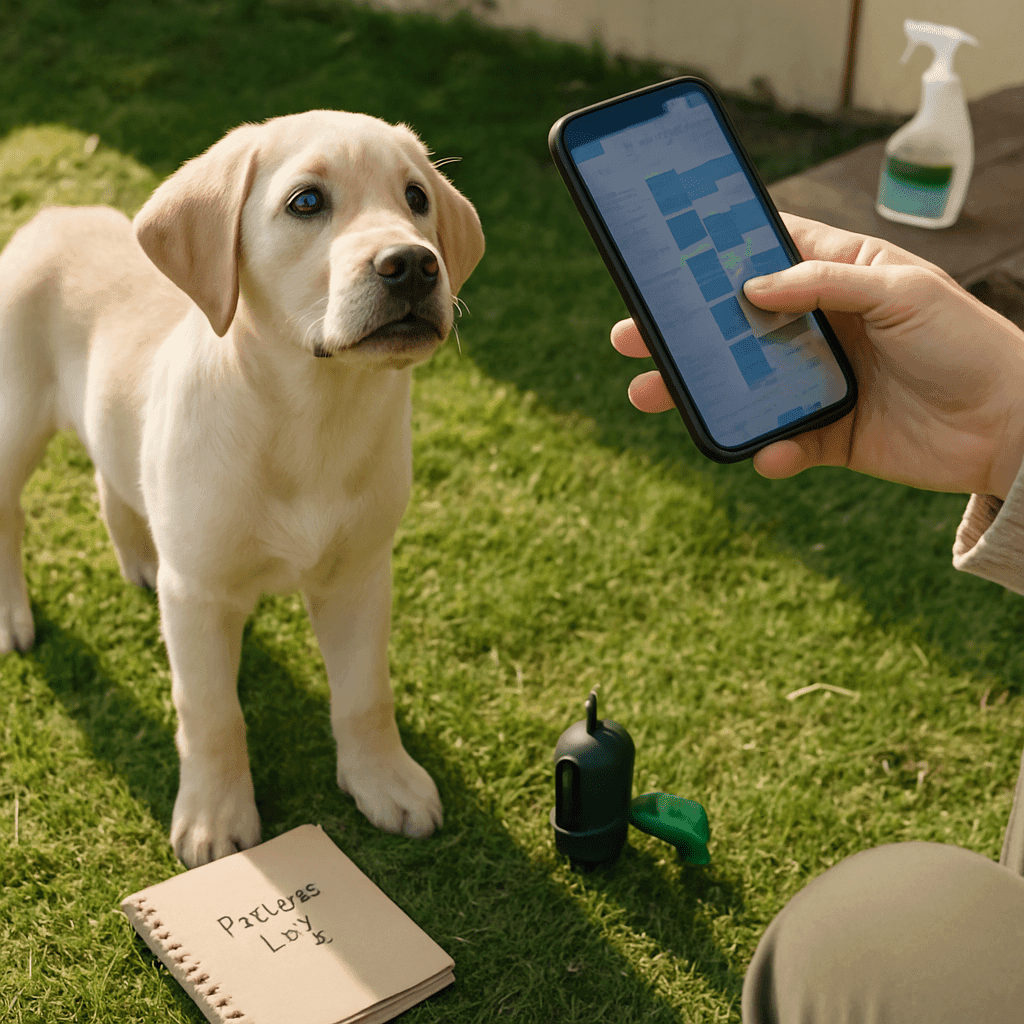
Puppy Eating Poop: Why It Happens and How to Stop It Safely – A Root-Cause Map & Step-by-Step Protocol for First-Time Owners
Safety note: This article is for educational purposes only. If your puppy shows signs of illness such as vomiting, diarrhea, lethargy, or tremors, stop reading and contact your veterinarian immediately. Never use aversive products like hot sauce, cayenne, or bitter liquids that can burn the mouth or esophagus, cause pain, and make the behavior worse.
It’s 7:15 a.m. and you’re still in your pajamas. You let your new puppy out to the yard, glance through the window, and freeze. He’s hunched over a fresh pile of poop—his own—and he’s eating it. Disgust, confusion, and a burst of fear hit you at once:
Is he sick? Am I a terrible owner? How do I make this stop right now?You’re not a bad owner, and you’re not alone. Coprophagia (poop eating) is one of the most common and distressing behaviors new puppy parents encounter. The good news: in most cases, you can resolve it safely, without scary guesswork or harsh methods. This article gives you a
root-cause map—a decision tree that helps you pinpoint why your puppy is eating poop—plus a cause-specific protocol you can start today. No shaming, no punishment, just clarity and a safe path forward.
Normal or Emergency? The First Safety Triage for Poop Eating
Before you try to fix the habit, you need to rule out a medical emergency right now. Most poop-eating episodes are harmless, but some situations require a fast vet call.
What’s normal (and usually not a crisis)
Puppies explore the world with their mouths. Poop is novel, and sometimes they just investigate. The following scenarios are common and don’t automatically signal a health problem:
- Your puppy ate his own fresh stool from the pee pad or yard, and he’s now playing, eating, and acting completely normal.
- He took one curious lick of another dog’s old poop on a walk, then spit it out.
- He occasionally nibbles at dried cat poop from the litter box, but no vomiting, diarrhea, or behavior change follows.
- The behavior started recently and coincides with a change in routine or a new environment.
In these cases, you can take a deep breath, clean your puppy’s mouth with a damp cloth if you wish, and move to the next section to figure out the trigger.
Red flags that mean “call the vet now”
Some coprophagia events are paired with symptoms that demand immediate attention. Use this table as a quick triage:
| Normal (No Vet Needed) | Red Flag (Call Vet Today) |
|---|
| Puppy ate his own stool 15 minutes ago, is playful and hungry at dinner | Vomited 2+ times within a few hours |
| A single soft stool after eating cat poop, but otherwise energetic | Diarrhea with blood or mucus, even once |
| Sniffed and mouthed old rabbit droppings, then moved on | Tremors, drooling, pale gums, or weakness after eating unknown animal poop |
| Happened while you were at work, no signs of illness | Lethargy that doesn’t improve after a nap, refusing food for 6+ hours |
When in doubt about any symptom, err on the side of calling your vet. Describe exactly what happened (whom the poop belonged to, how much was eaten, and when symptoms started).
What to do right now
- Remove access safely. Pick up any remaining poop using a bag. Lead your puppy away without a chase.
- Check your puppy’s mouth. If you can, gently look for leftover material; no need to force it.
- Document the incident. Jot down the time, what was eaten (own poop, cat poop, wildlife), and how your puppy seems. You’ll use this for the pattern log.
- Do not make your puppy vomit. Home remedies to induce vomiting can be dangerous and should only be done under veterinary guidance.
- Watch for 24 hours. If any red-flag symptom appears—especially vomiting, diarrhea with blood, or lethargy—get to the vet.
Once you’ve ruled out an emergency, it’s time to find the why.
The 3-Day Pattern Log: Pinpoint Your Puppy’s Triggers Before You Act
Without a clear log, you risk guessing the cause—and that usually leads to the wrong fix. Spend three days gathering data, then you’ll plug it into the decision tree in the next section. Fill out a simple log like the one below. You can copy this table into a notes app or on paper beside the crate.
| Day | Date | Time | Whose Poop? | Where? | Fresh/Old? | What Happened Before (meal, play, alone) | What Happened After (vomiting, normal, redirected) | Notes |
|---|
| 1 | Mon | 8:00 AM | Own | Yard | Fresh | Right after pooping, post-breakfast | Played normally, no symptoms | Immediate re-approach after eliminating |
| 2 | Mon | 4:30 PM | Cat | Litter box | Dry | Home alone for 2 hours | Found with dry mouth, no sickness | Happened out of sight |
| 3 | Tue | 7:15 AM | Own | Crate nook | Fresh | Woken up, let out to pad | Ate partially, then came for breakfast | Possibly overnight or first-morning poop |
How to use the log: Record every incident—even the ones where you interrupted your puppy before he could swallow. If nothing happens for three days, note that too; it points to a situational trigger rather than a constant drive.
If it happens too fast to write down, prop your phone on a shelf and film a 30-minute video in the common area. You’ll spot the seconds leading up to the moment.Now that you have a rough pattern, you can walk through the decision tree.
The Root-Cause Decision Tree: 4 Reasons Your Puppy Eats Poop (Find Yours)
This branching tool turns your log observations into a likely root cause. Walk through each question and follow the path. You can copy the text below onto a sticky note or screenshot it.
Question 1: Whose poop does your puppy target?
-
Mainly his own → Go to Question 2.
-
Only other animals’ (cat, other dog, wildlife) → Go to Question 3.
-
Both own and others’ → Answer for the most frequent type first, then check the secondary path.
Question 2 (for own poop): Is your puppy otherwise healthy, with firm stools, a shiny coat, and normal energy?
-
Yes, no symptoms → Go to Question 4.
-
No, he has loose stools, weight loss, dull coat, or any illness sign →
Likely Root Cause B: Medical Issue (parasites, malabsorption). Head to the vet with a fresh stool sample before trying any supplements.
Question 3 (for other animals’ poop): Is the poop accessible easily, like a litter box or yard with deer droppings?
-
Yes, purely access →
Likely Root Cause D: Exploratory / Environmental Access. Your puppy isn’t drawn to his own poop; he’s just a scavenger.
-
No, he seeks it out even when you try to manage access, and he seems driven by taste or excitement → Consider Root Cause C (behavioral) or a nutritional pull; look at timing and context.
Question 4: When does the behavior happen?
-
Immediately after he poops, every time, as if compelled to clean up →
Likely Root Cause A: Nutritional Deficiency / Digestive Enzyme Imbalance. Some dogs lack adequate digestive enzymes; the stool may still hold undigested food smell that attracts them.
-
Mostly when left alone or when you’re busy, and he ignores you but pays attention to poop →
Likely Root Cause C: Behavioral (attention, anxiety, boredom, or “den cleaning” instinct).
-
Indiscriminately, at any time, often coupled with a ravenous appetite for anything on the floor → Could be either A or C; start with A and track results.
The four root causes at a glance:- Cause A – Nutritional/Digestive Enzyme Gap: The stool still smells like food. The body may be missing enzymes or absorbing nutrients poorly.
- Cause B – Medical (Parasites, Malabsorption, GI Illness): Organisms like giardia or coccidia create irregular stools and can trigger coprophagia. Immediate vet care is required.
- Cause C – Behavioral (Attention-Seeking, Anxiety, Boredom, Cleaning Instinct): The puppy has learned that eating poop gets your reaction, or it’s a displacement behavior when alone, or he’s just emulating a “clean nest” instinct.
- Cause D – Exploratory / Easy Access: Your puppy simply has unfettered access to cat poop in the litter box, rabbit droppings in the yard, or uncollected waste from other dogs. The cure is environmental management.
If you’re stuck between two causes, always rule out the medical one first—a vet fecal exam is a small step that can protect your puppy. Now that you’ve identified your puppy’s probable root cause, use the matching protocol below.
Your Step-by-Step Protocol by Root Cause: Diet, Deterrents, and Training
Each protocol is written as a small checklist. Do not mix multiple cause protocols unless the situation clearly blends. Change one thing at a time.
Protocol A: Nutritional / Digestive Enzyme Gap
- Schedule a vet check if you haven’t had a fecal test in the last month to rule out parasites before loading up on supplements.
- Upgrade diet quality, but don’t switch too fast. Make sure your puppy food lists a named animal protein first. If you’re feeding homemade, consult a veterinary nutritionist—imbalances can worsen coprophagia.
- Add plain canned pumpkin (not pie filling). For puppies under 20 lbs, give 1 teaspoon per meal; for puppies 20-50 lbs, 2 teaspoons. Start with one meal and work up to twice daily. Pumpkin makes stool slightly less appealing without hurting the gut.
- Consider a vet-approved probiotic with Enterococcus faecium and digestive enzymes. Look for a powder specifically labeled for dogs (puppy-safe). Give as directed, usually once daily on food. This can restore healthy gut flora and break the nutrient-cycle attraction.
- Clean up feces immediately after elimination. Use an enzymatic cleaner (like those for pet stains) on the spot; ordinary cleaners leave odor markers that attract the puppy back.
- After 10–14 days, you should see decreased interest. If your puppy still beelines for fresh poop, add a safe enzymatic deterrent spray (see universal deterrent rules below) applied to a cold stool sample, never on the puppy’s food.
Protocol B: Medical (Veterinary Priority)
- Bring a fresh (less than 12-hour-old) stool sample to your vet. Ask for a fecal float or PCR test for parasites.
- Follow the treatment plan exactly. Do not use deterrent supplements or pumpkin during active treatment unless your vet approves.
- Manage strict access during treatment. Leash-walk in the yard, pick up immediately, and block litter boxes.
- After the vet clears your puppy, reintroduce digestive support and training gradually, using the same cleanup and supervision as Protocol A.
Protocol C: Behavioral (Attention, Anxiety, Boredom, Cleaning Instinct)
- Increase structured mental enrichment. Short training sessions (5 minutes, 3x a day) using puzzle feeders replace the need to scavenge.
- Teach a positive “leave it” cue. Hold a high-value treat in your closed fist. Say “leave it” and wait for your puppy to stop mouthing your hand; mark and give a different treat. Over days, practice with low-value items before applying to a fake poop-like object. Never force your puppy’s head away.
- Supervise all potty breaks. The second you see your puppy shift weight or sniff toward poop, toss a scatter of treats on clean grass away from the stool and praise when he turns. This builds a “swap” reflex.
- For attention-seeking coprophagia, do not yell or chase. Predictably, pick up the poop without a word, then redirect to a favorite toy. If you react, you’ve just made it a game.
- For den-cleaning instinct (e.g., eating poop in the crate), remove soiled pads and bedding instantly. Make sure the crate is cleaned with enzymatic spray each time.
- If the behavior spikes when alone, see our guide on puppy separation anxiety—poop eating can be a displacement behavior.
Protocol D: Exploratory / Environmental Access
- Eliminate self-service. Place cat litter boxes on an elevated surface or behind a baby gate with a small cat-only opening. On hikes, keep your puppy on a long line in areas with wildlife droppings.
- Train “leave it” during walks, and reward heavily for every look-at-you instead of poop.
- Provide appropriate foraging outlets. Scatter a portion of his kibble in a snuffle mat so he gets to “hunt” legally.
- No punishment needed. Just block access and patiently replace the habit. Within a week of no access, the drive usually diminishes.
Universal safe deterrent rules
- Use only enzymatic-based deterrent sprays designed for dogs (no capsaicin, no hot pepper, no bitter apple sprayed directly into the mouth). Check the label for ingredients like anise oil or clove oil in puppy-safe concentrations.
- Apply deterrent on a cold, clean stool sample you’ve collected, not on your puppy’s food. Let it dry, then place it in a controlled test spot while you supervise. If your puppy approaches and recoils, mark and reward.
- Never apply anything painful or caustic. Products that burn cause distrust and can escalate anxiety-related coprophagia.
When to expect progress: Many puppies show a hesitation or “look at you” instead of the poop within 5–10 days of consistent protocol. If no change by day 14, re-evaluate the root cause or escalate to professional help.
When to Call the Vet: Red Flags That Cannot Wait
Even if you’re already working on one of the protocols above, stop and call your vet if any of these symptoms show up.
- Vomiting (especially more than once in 24 hours, or any vomiting with blood)
- Diarrhea that is watery, contains blood or mucus, or lasts more than 24 hours
- Lethargy that doesn’t lift after a short rest—puppy seems uninterested in treats or play
- Pale gums, trembling, drooling, or any seizure-like activity
- Abdominal pain: hunched posture, whining when picked up
- Your puppy is not fully vaccinated and ate unknown stool (parvovirus risk is real)
- Two or more red-flag symptoms appear together
If your puppy ate unknown animal poop on a walk and then starts acting off, call your vet even if symptoms seem mild. Some toxins take hours to manifest.When you call, have these details ready: what was eaten (as specific as you can), when it happened, any symptoms and their timeline, and your puppy’s vaccine and deworming history. For further reading on disease risks, the AVMA provides guidance on
disease risks from dog social settings and
parvovirus warning signs.
Week 1 Tracker: Is It Working? And What to Do If It Fails
Consistency is measurable. Use the following weekly log to record each day’s incidents. Copy this table onto a sheet or into a notes app, and fill it out daily.
| Day | Date | Incidents / Attempts | Whose Poop? (own, cat, other) | Context (after meal, alone, right after pooping) | Any Symptoms? | Notes (e.g., responded to “leave it”) |
|---|
| 1 | | | | | | |
| 2 | | | | | | |
| 3 | | | | | | |
| 4 | | | | | | |
| 5 | | | | | | |
| 6 | | | | | | |
| 7 | | | | | | |
How to judge progress at the end of the week:- Great: Incidents are down by 50% or more, and your puppy has at least once turned away from poop when you said “leave it.”
- Good: A 25–50% reduction, and you’re catching earlier and redirecting more easily.
- No change or worse: Zero improvement despite following the protocol strictly.
If you see no progress after 7 days:- Double-check that your environmental management is tight (litter boxes blocked, yard cleaned every time).
- Revisit the decision tree—maybe you misidentified the root cause.
- If it’s still unclear, schedule a vet fecal exam if not already done.
- If after 14 days of consistent effort nothing has changed, consult a veterinary behaviorist or a certified positive-reinforcement trainer.
Do not panic-swap multiple supplements, deterrents, and training methods at once. Change one variable at a time, or you’ll never know what worked.
The Punishment Trap: A Real Story and Why Kindness Wins
When Sarah’s 14-week-old Labrador, Max, started eating his own poop in the yard, she felt a mix of revulsion and desperate frustration. Like many new owners, she heard someone say, “Put hot sauce on it—that’ll teach him.” So she dabbed a little cayenne-laced sauce on a fresh stool.Max approached, sniffed, and ate the treated poop anyway. Within an hour he was retching, then vomited. He wouldn’t come near Sarah for the rest of the evening, tail tucked. That night, when unsupervised, he ate more poop—he’d just learned to do it when she wasn’t looking.After a vet visit to soothe his irritated stomach, Sarah switched to the protocol you’ve just read. She added a probiotic, cleaned the yard with enzymatic spray immediately after every potty, and practiced “leave it” with tiny cheese cubes. In ten days, Max started to hesitate near poop and glance at her for a reward. By the three-week mark, the behavior stopped. Trust returned.Punishment fails with coprophagia because:
- It doesn’t replace the behavior with anything desirable.
- It can damage the dog-owner bond and increase anxiety, which can actually trigger more poop eating.
- The puppy often learns to perform the act only when you’re absent.
- Aversive substances can burn the mouth, esophagus, and stomach.
The American Veterinary Society of Animal Behavior
clearly states that dominance, punishment, and aversive tools should never be used. Instead, redirection, management, and positive reinforcement build a reliable “leave it” and a healthy relationship.
What to do if you’ve already tried a mild aversive: Stop immediately. Rinse your puppy’s mouth with clean water if anything caustic was applied. Clean the environment thoroughly with enzymatic cleaner. Then reboot with the positive protocol—puppies are incredibly forgiving when we change our approach.
Frequently Asked Questions
Is eating poop normal or dangerous for my puppy?
Occasional exploratory tasting is common in puppies and often harmless. Concern arises when the behavior is compulsive, paired with illness signs (vomiting, diarrhea, lethargy), or involves poop from unknown animals. If your puppy shows no symptoms after tasting his own fresh stool, it’s usually safe to manage at home. When in doubt, use the safety triage at the top of this article.
Why does my puppy specifically eat his own poop (or the cat’s poop)?
Own poop can signal a digestive enzyme gap—the stool might still smell like food to your puppy—or an instinct to clean the den. Cat poop is rich in protein and fat, making it smell like a high-value treat to dogs. The root-cause decision tree in the article will help you pinpoint the exact driver for your puppy’s pattern.
How can I stop my puppy eating poop without punishment or harsh methods?
Use the combination of management (immediate cleanup with enzymatic cleaner), positive “leave it” training, and a cause-specific intervention like diet adjustment or probiotic supplements. The decision tree matches your puppy’s context to the right protocol so you don’t need to guess. Harsh methods backfire by increasing stress and damaging trust.
What natural or safe deterrents actually work, like pumpkin or pineapple?
Plain canned pumpkin (not pie filling) can make stool less appealing and is safe at 1 tsp per 10-15 lbs body weight. Fresh pineapple in small amounts may alter stool taste, but it’s a mild adjunct, not a cure. Vet-approved digestive enzyme supplements with
Enterococcus faecium are more targeted. Avoid dangerous kitchen remedies like hot sauce, cayenne, or garlic.
When should I take my puppy to the vet for poop eating?
Call your vet if: vomiting more than twice in 24 hours, diarrhea with blood, lethargy, or any signs of pain after eating poop; if