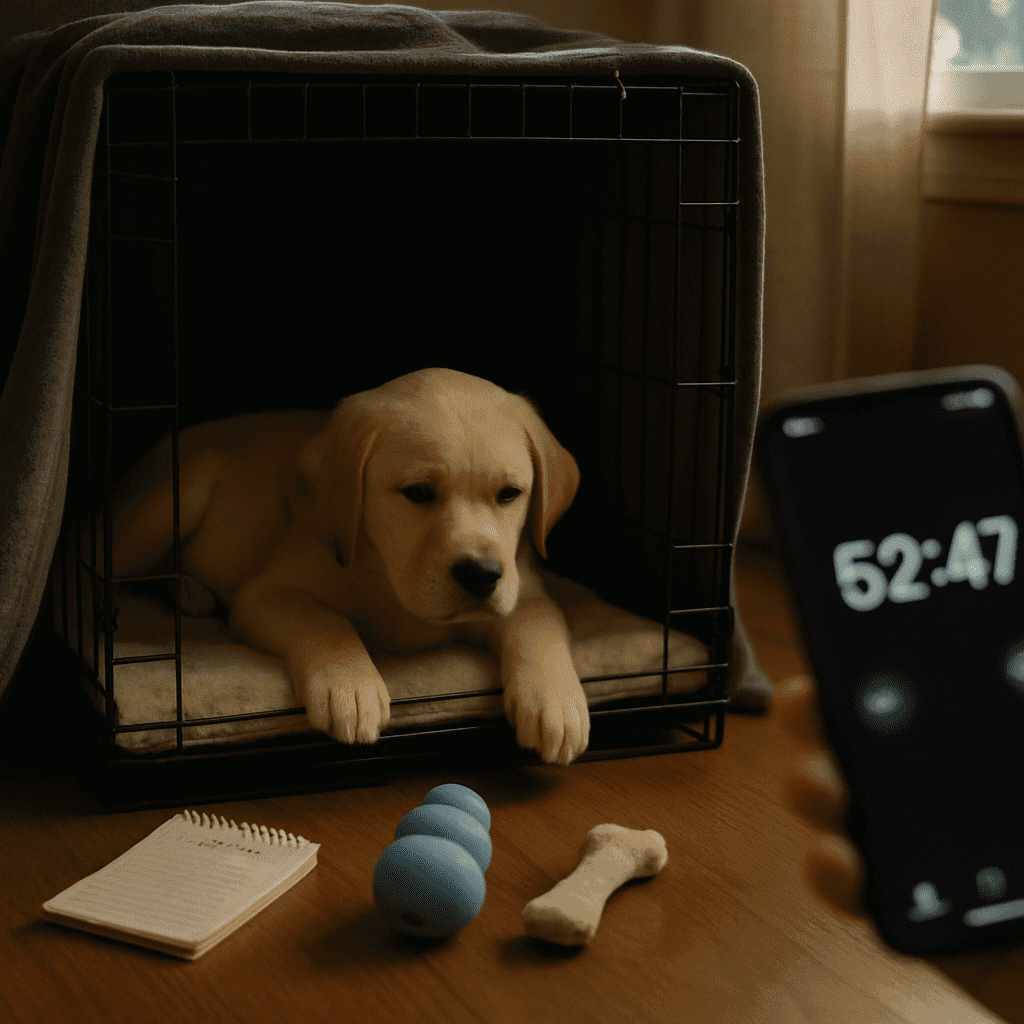
Puppy Won’t Nap During the Day: A Realistic Reset Plan for Overtired Puppies
It’s 6:45 PM. You’ve been up since 5:30 AM with your new 10-week-old puppy. You thought a little fetch in the living room would burn off that last burst of energy, so you tossed the toy for ten minutes. But now the puppy is ricocheting off the couch, nipping your ankles at an 8/10 intensity, and the kids are hiding in the kitchen. You’re exhausted, maybe a little teary, and you wonder: Why does my puppy refuse to nap? Am I doing something wrong?You aren’t doing anything wrong—you just didn’t know the overtired cycle. And tonight, I’m going to walk you through a concrete 3-day plan that will break that cycle, even if your home is messy, your schedule is crazy, and you’re running on coffee. No Pinterest-perfect setup required.Why Your Puppy Won’t Nap (And Why “They’ll Sleep When They’re Tired” Is a Dangerous Myth)
Puppies don’t naturally know how much sleep they need, and they can’t self-regulate like older dogs. If you wait for them to put themselves to bed, you’ll almost always end up with an overtired mess. This is the overtired cycle: when a puppy stays awake past the point of early tiredness, the brain releases stress hormones (like adrenaline and cortisol) to keep them going. That’s the same fight-or-flight cocktail that turns a sweet fluffball into a landshark.The common mistake chain looks like this:- Puppy shows subtle tired signs—sniffing the ground, slowing down, looking away from the toy, ears dropping slightly—but the owner misses them.
- Around minute 60–75 of being awake, the puppy enters adrenaline mode: zoomies, hard biting, a “crazy eyes” gaze, and an inability to settle even if they look exhausted.
- The owner thinks, “Oh, they still have too much energy,” and adds more fetch or tug.
- The cycle escalates: the puppy’s brain is flooded with stress chemicals, they bite harder, and the whole family gets frustrated.
Overtired or Concerning? A Quick Triage for First-Time Owners
Overtired behavior can look so extreme that new owners worry something is medically wrong. Here’s a quick visual to tell normal from vet-worthy—so you can start the reset with confidence and know exactly when to pause and call a professional.| Normal Overtired Signs (No Panic) | Concerning Signs (Call Your Vet) |
|---|---|
| Bitey, zoomies, demand barking, “crazy eyes,” can’t settle | Repeated vomiting, diarrhea, or refusing food for 12+ hours |
| Whining, fussing, or barking that stops and starts (5–15 minutes) | Continuous panicked screaming, biting bars obsessively, drooling, or trying to escape for 30+ minutes without break |
| Puppy eventually flops down and sleeps 45+ minutes | True lethargy: limp, won’t lift head for a favorite treat, can’t be roused easily |
| A “crash” after a meltdown where they finally pass out | Sudden regression after weeks of perfect napping, with fearfulness or hiding |
Safety note: If your puppy shows any of the concerning signs—especially true lethargy combined with not eating—stop the nap protocol and call your veterinarian immediately. This article is not a substitute for veterinary advice. The nap reset assumes a healthy puppy.
If you’re unsure, do a quick body check: look at their gums (should be pink and moist), check hydration by gently lifting the skin between the shoulders, and see if they’ll take a high-value treat. When in doubt, err on the side of safety and call your vet.Day 1: The Emergency Brake — Immediate Calm for an Out-of-Control Evening
You’re reading this at 7 PM and your puppy is already in orbit? Don’t wait for a perfect schedule. Use the Emergency Brake right now to guide them back to a calm state and into a nap.Step 1: Stop all play immediately. No “one last throw” or “let them run it out.” The moment you see zoomies or hard biting, the game ends.Step 2: Reduce sensory input. Dim the lights, turn off the TV, put away squeaky toys, and speak in a soft, low voice. If there’s a lot of household noise, move the puppy to a quieter room.Step 3: Do a 2-minute calm-down hold or settle exercise. Sit on the floor with the puppy between your legs or gently against your chest (if they’re small). Use long, slow strokes from the top of the head down the back—no rough play, no talking, just calm pressure. If the puppy tries to bite your hands, switch to a hands-off calm zone: toss a few tiny treats onto a mat or their bed and let them sniff and lick. The goal is to bring arousal down, not to restrain.Step 4: Offer a low-arousal activity. A stuffed frozen Kong, a lick mat with a smear of plain yogurt, or a safe chew toy that doesn’t squeak. Place it on the bed inside the crate or pen.Step 5: Place the puppy in the nap zone. Use a soft, matter-of-fact phrase like “nap time.” Stay nearby—sit on the floor beside the crate or pen—but don’t make eye contact or talk. Your presence is the anchor, not the entertainment.Step 6: Handle crying with clear rules.- If the puppy is fussing (intermittent whines, grumbles, pauses), wait 5 minutes. If the fussing escalates or continues past 10 minutes, do a silent potty break: no lights, no talk, just out to potty on leash, then straight back to the crate.
- On Day 1, the total settle window is 20 minutes. If after 20 minutes there’s no nap (and the puppy isn’t panicked), do the silent potty break and try again.
Day 2 & 3: Building the Wake-and-Sleep Rhythm That Actually Sticks
Day 1 stopped the bleeding. Days 2 and 3 teach your puppy’s body clock what “awake then sleep” feels like. The magic ingredient is a strict wake window—the amount of time your puppy can be awake before needing to go down for a nap.Wake window guide:- 2–3 months (8–12 weeks): 45–60 minutes
- 4–5 months: 60–90 minutes
- 5–6 months: 75–120 minutes
- 8–12 weeks: 6+ short naps (1–2 hours each, plus one longer 2–3 hour chunk)
- 3–5 months: 4–5 naps
- 5–6 months: 3–4 naps
- 6:00 AM wake, potty, breakfast, quiet play
- 6:45 AM nap (puppy settles after 5 minutes of fussing)
- 8:45 AM wake, potty, short training
- 9:30 AM nap
The 5-Minute Pre-Nap Readiness Checklist
Copy these six items onto a sticky note and run through them before every nap:
- Potty break completed in the last 10 minutes
- Puppy has had calm water access (not a huge drink right before crate)
- You’ve seen at least one early tired sign: sniffing, slowing, looking away, ear flick, or glazed eyes
- Wake window for your puppy’s age has been respected (not exceeded)
- Crate/pen area is set up: dim light, white noise if available, a safe chew toy (Kong or similar) present
- You are emotionally calm and will use a quiet voice for the settle cue
Your Age-Adjusted Puppy Nap Schedule (With Wake Windows That Prevent the Crazy)
A schedule that actually works isn’t a rigid clock; it’s a rhythm based on minutes awake. Here’s how to build it for your puppy’s age, using a tool you can copy right now.Sample day for a 4-month-old puppy who wakes at 7:00 AM:- 7:00 AM – Wake, potty, breakfast
- 7:15–8:15 AM – Quiet play, a 5-minute sniff walk (total awake ~60 minutes so far)
- 8:15 AM – Pre-nap potty, then into crate
- 8:15–10:15 AM – Nap (2 hours)
- 10:15 AM – Wake, potty, short training
- 10:45 AM – Potty, into crate
- 10:45 AM–12:45 PM – Nap
- 12:45 PM – Wake, potty, lunch
- 1:15–1:45 PM – Calm play
- 1:45 PM – Potty, nap
- 1:45–3:45 PM – Nap
- 3:45 PM – Wake, potty, evening walk
- 4:30 PM – Potty, nap
- 4:30–6:00 PM – Nap (or a 90-minute catnap and earlier bedtime)
What to Do When the Puppy Cries in the Crate During Nap Time
Crying is the #1 reason nap plans fail. The key is to respond humanely without accidentally teaching them that crying makes you appear for fun. Here’s a decision ladder.First, identify the noise:- Fussing: intermittent whines, grumbles, pauses, soft barks that start and stop. Sound: “eh eh eh … grumble … eh.”
- Panic: continuous screaming, howling, high-pitched yelps without breaks, biting bars obsessively, frantic attempts to escape.
- Wait 5 minutes without entering. Use a timer.
- If the fussing escalates or continues past 10 minutes, go in calmly. No eye contact, no talking. Simply leash the puppy, do a silent potty trip (30 seconds), then place them back with the same calm phrase.
- Sit near the crate but don’t engage. Your presence says “you’re safe; it’s still nap time.”
If it’s panic:
- Intervene immediately. Do not let a panicked puppy “cry it out.” They’re in distress, not learning.
- Sit beside the crate and speak in a low, slow voice. If they don’t settle, open the door, let them come out, and do a quiet, low-stimulation activity like sniffing a few treats in the grass. Then try again later.
- If panic repeats, re-evaluate the crate setup: Is it covered? Is the room too hot/cold? Many puppies find comfort with a Snuggle Puppy heartbeat toy (the gentle thump mimics a littermate) or a white noise machine. These are optional aids, not magic cures, but they can lower arousal.
- If panic continues across multiple attempts, seek help from a positive-reinforcement trainer or veterinary behaviorist to rule out separation anxiety. Our guide on [INTERNAL_LINK: positive crate introduction techniques] can also give you a step-by-step foundation.
Safety note: Never force a puppy into a crate if they are panicking, screaming, or showing extreme fear. This is not a “cry it out” plan for distressed puppies. If your puppy is truly panicking, stop, comfort them calmly, and seek professional help. Additionally, if your puppy shows signs of illness such as vomiting, diarrhea, true lethargy, or refuses food for multiple meals, stop the nap plan and contact your vet immediately.
Never punish crying: No banging the crate, no spraying water, no yelling. That increases fear and damages trust.Working Full-Time? The Morning/Evening Split Routine That Still Works
You don’t have to be home all day to break the overtired cycle. Here’s a realistic split for a 9-to-5 (or 8-to-6) work schedule.Morning block (6:30 AM – before leaving):- Wake up, potty, breakfast, active window (60–75 minutes for young puppies).
- Right before you leave, do the full pre-nap routine and put the puppy in their crate or pen for a nap. They’ll likely sleep 2–3 hours, which is the perfect interval until a midday break.
- Have a dog walker or trusted neighbor come for a 20-minute potty break and a short sniff walk. No intense play—this isn’t a play date. The goal is to empty the bladder, stretch the legs, and settle back down.
- If you use a safe, puppy-proofed pen with potty pads, set up a quiet, enriched area with a frozen Kong and white noise. Puppies often sleep more out of boredom during the day, and that’s okay as long as total sleep is within the healthy range.
- When you get home, immediately take the puppy outside for a short potty and a 10-minute sniff walk. This starts a proper awake window.
- Watch for early tired signs and start the pre-nap routine by 7:00–7:30 PM (for a young puppy) or by 8:00 PM (for a 4-month-old). If the puppy is hyped up from your arrival, use the Day 1 emergency brake before the nap.
- After the evening nap, run one final potty/play/nap cycle before bedtime.
After the Reset: Keeping Naps on Track Without Losing Your Sanity
The 3-day reset builds the foundation. Now you need a simple maintenance rhythm that grows with your puppy.Stretch wake windows weekly. Each week, add 5–10 minutes to the awake block. If your 14-week-old was doing 50-minute windows on Day 2, by next week try 55–60 minutes. Watch for signs they’re ready: the puppy takes longer to fall asleep or wakes earlier from naps.Drop a nap strategically. Don’t just remove a nap because it’s Friday. When a particular nap is consistently refused (the puppy takes 20+ minutes to settle or sleeps less than 30 minutes) for 5–7 days in a row, that’s your cue to drop it and stretch the surrounding awake windows slightly.Sunday Nap Review. Set a 5-minute phone alarm every Sunday evening. Look at your nap log for the week (or just recall how things went). Ask: Do I need to extend any wake windows? Is my puppy suddenly fighting a nap they used to love? Did we have a chaotic day? If things went off the rails—guests, travel, illness—run a “soft reset” the next morning: follow the Day 1 emergency brake sequence and tighten up wake windows for 24 hours.Transition to free roam naps (around 6–9 months): Once your puppy can nap reliably in the crate and has shown puppy-proof room behavior for at least 4 weeks, you can start leaving the crate door open. Place a comfy bed in the same spot and allow them to choose the bed. If they start getting overtired again, return to enforced crate naps—there’s zero failure in that.If a nap suddenly falls apart: Rule out teething pain (cold chews help), fear periods, or a needed wake window stretch. A puppy who has been napping well for weeks and suddenly won’t settle often is telling you something physical or developmental is shifting.FAQ: Quick Answers When You’re Staring at a Wide-Awake Puppy
How many naps does a 4-month-old puppy need? 4–5 naps during the day, plus nighttime sleep. Total sleep should still be around 16–18 hours. Wake windows at this age are 60–90 minutes, so each cycle (awake + nap) often fits within 2.5–3 hours. Check the age chart above to confirm.What if my puppy won’t settle even after following the 3-day reset? First, double-check your wake window. A common misstep is overestimating how long your puppy can be awake. Try shortening the window by 10 minutes. Also consider teething pain; a cold, frozen washcloth before nap can help. If you’re using a crate, ensure it’s positively conditioned—our crate training guide can help. If the puppy refuses to settle repeatedly, do a 1-day soft reset with even stricter timing, and if that fails, consult a positive-reinforcement trainer.Can I let my puppy nap outside the crate? Yes eventually, but for most overtired puppies a crate or pen is the fastest route to calm because it blocks out FOMO (fear of missing out) and sensory overload. Once napping is solid for a few weeks, you can transition to a puppy-proofed room with a bed. Just be prepared to go back to the crate if the overtired cycle returns.How do I know if the nap window is too short? If your puppy wakes up grumpy, still bitey, can’t focus on a treat, or consistently sleeps less than 45 minutes, the nap was probably too short. Try making the pre-nap routine longer and calmer (e.g., a 5-minute sniff walk instead of a 2-minute potty trip) and ensure they’ve truly emptied their bladder. Also check that the environment remains dark and quiet.When should I truly worry and call the vet? If you see repeated vomiting, diarrhea, refusal to eat for more than one meal, extreme lethargy (the puppy won’t lift their head even for a high-value treat), or continuous panicked screaming for 30+ minutes without breaks. Trust your gut—if something seems off beyond normal overtiredness, call your vet.Need a personalized schedule you can stick on the fridge? Our free Puppy Schedule Generator will create a day-by-day nap plan tailored to your puppy’s age—no guesswork required. Try it and stop the overtired cycle tonight.