Puppy Suddenly Having Crate Accidents: A 3-Day Reset Plan for First-Time Owners
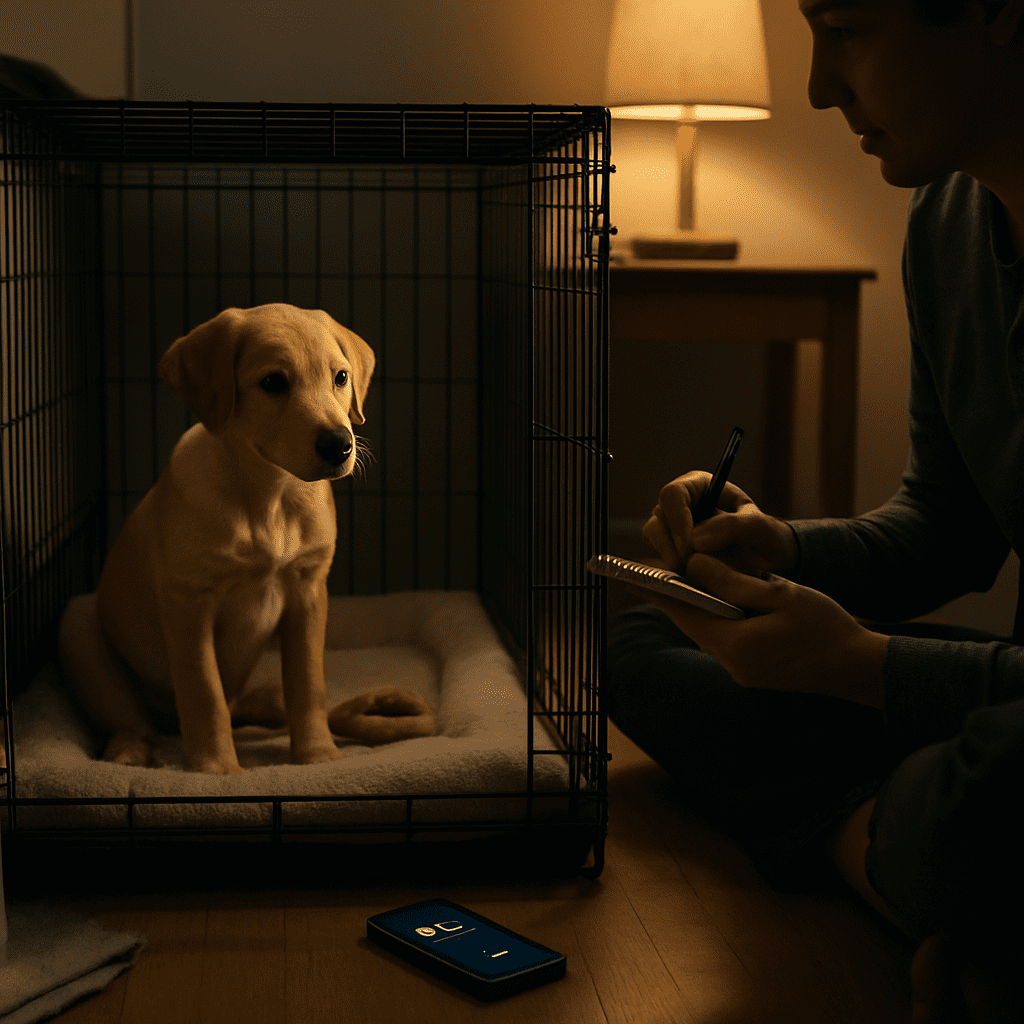
It’s 2 a.m. You wake because it’s too quiet—or maybe you heard a soft whimper. You reach the crate, turn on a dim light, and find your puppy sitting in a wet spot. A puppy who’s been dry for weeks, a puppy you proudly told friends was “practically housebroken,” is suddenly back to square one. You feel confused, maybe a little angry, and definitely worried that you’ve undone everything.That exact moment—the shock, the frustration, the fear you’re failing—is exactly what this plan was built for. I promise you, you haven’t ruined your training, and your puppy isn’t being defiant. What you’re facing is a temporary regression, and with a simple three-night reset, you can guide both of you back to dry, restful mornings. This article gives you the why, a red‑flag checklist so you don’t miss a health issue, a minute‑by‑minute protocol for each night, a crying decision tree that works even when you’re bleary‑eyed, and a copyable night‑by‑night chart you can stick beside the crate tonight.
Why Did My Crate-Trained Puppy Suddenly Have an Accident?
Regression doesn’t mean you broke your puppy. It usually means something in their little body or routine shifted just enough that their bladder couldn’t keep up. Here are the most common triggers—and which one might be haunting your night.
Normal bladder development isn’t a straight line. A 12‑week‑old medium‑breed puppy might hold it for 3 hours overnight some nights, but during a growth spurt, everything speeds up—bladder signals, urine production, metabolism—and suddenly 2.5 hours is the limit. This is typical, not a training failure. Small breeds (like a Chihuahua or Cavalier) often need an extra 30–45 minutes less than a large breed of the same age because their bladders are tiny.
Common behavioral triggers that owners don’t see coming:
- Longer overnight interval. You moved bedtime later or stopped setting an alarm, stretching the puppy’s hold time beyond what they can manage.
- Extra thirsty evenings. A hot day, extra play, or simply filling the water bowl a little higher “just in case” led to a fuller bladder at midnight.
- Exciting evening play. A wild zoomies session within an hour of bedtime can stimulate the whole system, including the bladder, and make the puppy sleep too deeply to feel the need until it’s too late.
- Changed routine. A different feeding time, a guest in the house, a new location for the crate—any disruption can loosen the potty rhythm.
One accident vs. regression. One wet crate night after a known deviation (e.g., you forgot to take water away) is a one‑off. Two or more nights, dry for weeks and then consistently wet, suggests a regression that needs a reset—not punishment.Punishment (yelling, rubbing the nose, shaming) creates fear soiling. The puppy learns the crate is scary, not safe, and may start holding it until they can’t—or they may pee out of anxiety the moment you put them in. That damages the crate trust you both worked for, so we never go there. Instead, we find the schedule gap and close it gently.If your puppy suddenly goes from 3 hours dry to peeing at 2.5 hours, and there’s no sign of illness, you probably hit a growth‑spurt window. The fix? Adjust the alarm back 30 minutes and run the reset.
Before You Start: Rule Out a Medical Issue (Red-Flag Checklist)
Safety note: This article is for behavioral regression. It cannot replace veterinary advice. A urinary tract infection, bladder crystals, or illness can look exactly like a training slip. Always rule out a medical cause before—or at the same time as—you start this reset.
Use the red‑flag table below. If any concerns overlap with the wet crate, call your vet. If your puppy has zero red flags but you’re still anxious, you can begin the reset tonight and schedule a wellness check for peace of mind.
| Red Flag | What It Might Mean | When to Call the Vet |
|---|
| Straining to pee, only drops, frequent squatting (every 10‑20 minutes) | Likely UTI or bladder inflammation | Call the vet today; do not wait |
| Blood in urine—pink, red, or dark brown | Infection, stones, or irritation | Call the vet today |
| Pee is dark orange, cloudy, or has a strong foul odor | Possible infection | Call the vet tomorrow a.m., watch for worsening |
| Puppy is lethargic, not eating, vomiting, or drinking much more than usual | Systemic illness | Call the vet immediately |
| Two or more crate accidents in 24 hours with any straining/discomfort | Suspicious for medical cause | Call the vet today |
| Wet crate but puppy is bright, playful, normal appetite, no straining, pee pale yellow | Likely behavioral | Start reset, but mention at next vet visit |
If you see straining, blood, or that “squat‑nothing‑squat‑nothing” dance, stop. No reset will help a medical problem. Get a urine sample to the vet; it’s quick and non‑scary, and you’ll have an answer fast. Many owners discover their puppy had an early UTI—cured with antibiotics and then back to dry nights within days.For non‑urgent health worries that pop up during the reset (a little soft stool, an extra nap), you can always use the
Puppy Panic Button to quickly decide if it’s “call vet now” or “keep an eye on it.”
The 3-Day Crate Accident Reset: How It Works and What You Need Tonight
The reset reconditions your puppy’s bladder and your routine by returning to a strict, timed nighttime schedule for three consecutive nights. You’re not starting from scratch—you’re just tightening the screws. The goal: three dry nights, then a graceful fade back to age‑appropriate freedom.
Core rules, no exceptions:- No scolding, no cold ignoring of genuine need.
- No water in the crate overnight. Ever.
- A predictable bedtime ritual that signals “sleep, not play.”
- An alarm‑based potty break before the typical accident hour.
What you need tonight (you probably have everything):- An enzymatic cleaner (Nature’s Miracle or similar) to break down pee proteins so the crate doesn’t smell like a toilet.
- Spare washable bedding.
- A safe, quiet chew (a frozen Kong with a smear of peanut butter, no water bowl).
- A small, gentle light source (nightlight or phone dimmed).
- Two alarms: one mid‑night, one for morning.
- A notepad and pen—or your phone note open—to log accident times.
Set the first alarm: If the accident happened at 3:00 a.m., set tonight’s alarm for 2:30 a.m. (15‑20 minutes before, 30 minutes is too aggressive). If you aren’t sure of the exact time, pick a conservative 3‑hour mark after bedtime for a puppy under 16 weeks, then adjust after you get data.
Apartment tip: If stepping outside overnight isn’t safe, set a non‑absorbent potty pad near the door (not in the crate), use the same timing, and take the puppy there on a leash with zero play. The reset still works.
Bedtime Checklist (do every night): Night 1: Your Bedtime Routine, Potty Break Timing, and Crying Response Rules
This is the hardest night because you’re tired and unsure. Walk through it step by step.
Bedtime ritual (15‑20 minutes before sleep):- Final potty trip—leash on, carry the puppy to the spot if possible, say a quiet “go potty,” wait 3‑5 minutes. If they go, calm praise (no party). If they don’t, back inside calmly.
- A minute of gentle stroking, no intense eye contact, no rough play. Put the safe chew in the crate and settle the puppy inside.
- Crate beside your bed, enough that you can lay a hand on the side if needed.
- Lights out, relax your breath so the puppy feels your calm.
Mid‑night alarm protocol: When the alarm goes off, don’t turn on bright lights, don’t talk excitedly. Leash on, carry to potty spot, wait 3‑5 minutes. If they pee, calm “good,” back to crate. If no pee within 5 minutes, back to crate and set a new alarm for 1 hour later. The whole trip should be under 5 minutes—business not party.
Crying response rules (the decision tree you keep in your head):| Cry Type | What It Sounds Like | What It Means | What You Do |
|---|
| Rhythmic, escalating | Soft whine that builds in volume, pauses, then repeats; maybe scratching at the crate door | Genuine potty need—the bladder is full | Leash on, silent potty trip (3‑5 min). If they go, back to crate. If not, return and settle. |
| Intermittent, attention‑seeking | Whimper a few seconds, stop, then start again when you move; may stop when you approach | Loneliness or comfort cry, not potty | Sit beside crate, place a calm hand on the side, gentle “shhh.” Do not remove puppy. Fade over 2‑3 nights. |
| Intense screeching, non‑stop | High‑pitched, frantic, doesn’t pause—especially in the first 20 minutes | Distress, possibly from being alone (not bladder) | Check for anything wrong (collar stuck?), then stay nearby with hand. If it continues over 10‑15 min and healthy puppy, it’s likely isolation distress—move crate to bed level, work on gradual distance. Don’t reward with picking up after sustained screaming. |
If the puppy cries within 20 minutes of a successful potty break, it is nearly always comfort‑seeking. Use quiet presence—hand on crate, gentle shush—and don’t take them out. This avoids training “cry = out of crate.”
If an accident happens: Don’t sigh, don’t comment. Pick up the puppy gently, finish potty trip if needed, clean the crate thoroughly with enzymatic cleaner while the puppy is out of sight (or in a safe pen). Do not feed breakfast inside the crate that morning. Note the time, and set tomorrow’s alarm 30 minutes earlier.
Real night example: Owner at 1:30 a.m. heard a rhythmic whine that built up. They followed the protocol—leash, outside, puppy peed immediately, back in crate within 4 minutes, slept two more hours. Without the decision tree, they might have ignored a real need or stayed out too long and turned it into playtime.
Day 2 & Night 2: Morning Adjustment, Daytime Structure, and Night 2 Tactics
The morning after Night 1, you gather data.
Morning protocol:- Immediately take the puppy out for potty, no dilly‑dally.
- Check the crate: dry or wet?
- If dry, quiet praise, normal morning. If wet, log the time (you’ll probably know from the alarm vs. accident).
Record the outcome in your notepad or phone. This log informs Night 2. If no accident, still log “dry – alarm at X, woke dry.”
Daytime structure: Night bladders are built during the day. Stick to age‑appropriate potty breaks:
- Under 4 months: every 2–2.5 waking hours.
- 4–6 months: every 3–4 waking hours.
Make note of any midday excessive drinking; it’s usually harmless but flag it if combined with accidents. Feed wet meals earlier in the evening, not right before bed. No high‑energy play within the last hour before sleep.
Night 2 adjustment based on Night 1 data:| Night 1 Result | Night 2 Alarm Change | Daytime Action |
|---|
| Dry crate, woke to alarm, peed immediately | Keep same alarm time, everything stable | Normal, maintain daytime routine |
| Accident at 3:15 a.m., alarm was 3:00 | Set alarm 15‑20 min earlier (2:40 a.m.) | Ensure water cut 2 hrs, pick up any high‑value chews early |
| Accident but alarm hadn’t gone off (e.g., 2:00 a.m. accident, alarm at 2:30) | Set alarm to 1:45 a.m. | Consider an earlier dinner or a longer final walk |
| Dry but puppy cried rhythmically shortly after alarm (false alarm) | Keep alarm, but extend wait‑outside time by 2 more minutes | Nothing; puppy may have needed more time to empty |
Repeat the same bedtime ritual. If Night 1 was successful (dry), you can cautiously test a 15‑minute later alarm—only if your puppy’s age allows. For a 10‑week small breed, don’t push yet; keep the conservative alarm.
Real example: Night 1 accident at 3:15 a.m. Owner set alarm to 2:30 a.m. on Night 2, puppy woke dry, peed outside, slept till 6:00 a.m. A second owner forgot the water rule but gave a wet dinner at 8 p.m.—puppy peed at 1 a.m. Correction: moved wet food to 5 p.m. Problem resolved.
Daytime tracking help: If you want to spot a pattern in daytime pees or accidents, you can pair this reset with the
Puppy Potty Pattern Tracker. It helps you see if certain times of day are always the trouble—making nighttime adjustments even sharper.
Day 3 & Beyond: Spotting Progress, When to Extend, and Returning to Reliability
You don’t need perfection by Day 3. You need a clear trend.
Signs the reset is working:- Dry crate until alarm (even if you had to wake puppy).
- Puppy eliminates quickly outside and returns to crate without fuss.
- Daytime accidents have reduced.
- Crying is either brief settling whine or a clear potty call, nothing frantic.
If Day 3 was wet: Do not panic. Extend the reset by two more nights. Keep the same alarm time—don’t shift yet. Check your compliance: was water removed 2 hours before? Was final potty truly empty? After Night 5, if still wet, take a step back: re-examine for medical causes, carefully review the routine, and consider a slightly earlier alarm still. You haven’t failed; the timeline just needs a breath.
Alarm fade plan (after three consecutive dry nights):- Night 4: push alarm 15 minutes later.
- Night 5: another 15 minutes later, and so on.
- For a 16‑week medium puppy, you can aim for a max 5‑6 hour stretch; for a 12‑week small breed, cap at 4 hours.
Once the puppy sleeps through the night without an alarm for two weeks—going 6+ hours without an accident—night training is complete. You can then respond only to genuine potty cries (the rhythmic, escalating one).
Progress chart idea (copy this to your notes):| Night | Alarm Time | Dry? | Accident Time | Notes |
|---|
| 1 | 2:30 | No | 3:20 | Rhythmic cry ignored too long |
| 2 | 2:30 | Yes | — | Puppy settled after break |
| 3 | 2:30 | Yes | — | Slept till 6 |
| 4 | 2:45 | Yes | — | Fading alarm |
| 5 | 3:00 | Yes | — | Dry and happy |
If the puppy regresses after a week of dry nights, look for a late disruption (new food, later dinner, a visitor) and run a 2‑day mini‑reset using the same protocol. It’s totally normal—life wobbles, but the foundation stays.
Common Mistakes That Make Crate Accidents Worse (and What to Do Instead)
Almost every owner has done at least one of these while bleary‑eyed at 3 a.m. No guilt—just the quick pivot.
| Mistake | Why It Backfires | What to Do Instead |
|---|
| Leaving a water bottle in the crate | Continuous sipping fills the bladder; accidents become inevitable | Remove water 2 hours before bed; hydrate well in the evening |
| Scolding or rubbing nose in pee | Puppy learns to fear you and the crate, may start fear‑soiling | Clean silently with enzymatic cleaner, adjust alarm, and move on |
| Putting a pee pad inside the crate | Teaches the crate is also a bathroom | Crate is for sleep only; pads belong far away if you must use them overnight |
| Jumping up for every whimper | Rewards crying with freedom, creating a vocal alarm clock | Use the crying decision tree; comfort whines get a hand, potty cries get a boring trip |
| Moving the crate to a far room or using a smaller crate as punishment | Increases anxiety, making accidents more likely | Crate stays positive, near you during the reset, size just enough to turn around and lie down |
| Thinking one dry night means “done” | Puppy’s bladder hasn’t stabilized in 24 hours | Stick to three consecutive dry nights before fading the alarm |
Real story: One owner, after a single wet night, put a puppy pad inside the crate “just in case.” The puppy promptly peed on it nightly for a week. The pad said “bathroom.” Once removed and the reset started, dry nights returned in three days. Another owner yelled in frustration; the puppy then cowered at crate time, and accidents got worse. They rebuilt trust with calm crate games and the reset plan, and within a week the puppy was back to dry mornings.
Frequently Asked Questions About Crate Accident Regression
How long will it take to stop the crate accidents completely?
With the strict reset, most puppies are dry again in 3–5 nights. A few need an extra breath—2 more nights after Day 3. Full reliability usually settles within a week if you don’t rush the alarm fade. Plan your sleep accordingly, and you’ll have a clear finish line.What if my puppy poops in the crate during the reset?
Check meal timing. Feed supper at least 3 hours before bedtime and make sure the puppy fully empties their bowels on the final walk. A later bowel movement sometimes needs a slightly earlier alarm, like 4 a.m., to give relief. If it’s diarrhea, stop the reset and call your vet. For solid poops, clean thoroughly, note the time, and adjust the alarm 30–45 minutes earlier the next night.Can I give my puppy water in the crate if it’s hot?
No. Even a water bottle meant for cages leaks or encourages sipping, which adds urine volume. Instead, keep the room cool with a fan, use a cooling mat outside the crate in a supervised daytime area, and offer water generously until the 2‑hour cutoff. If your bedroom is dangerously hot, adjust the cooling solution, not water in the crate.My puppy cried for 45 minutes after a potty break and I couldn’t stand it—what should I do?
First, confirm the bladder is truly empty (they just peed). Then it’s comfort‑seeking. Sit beside the crate, place your calm hand on the side, and “shhh” softly. Don’t take the puppy out; that guarantees the crying strategy works. Over 2–3 nights, you’ll move your hand away sooner and eventually step back. Many owners find that after 2 difficult nights, the crying drops to 5 minutes and then stops. You’re not being cruel; you’re teaching settling.Your 3-Day Crate Reset Kit: A Night-By-Night Chart You Can Copy Tonight
Because at 2 a.m., you don’t want to scroll an article—you want a single piece of paper. Below is exactly that: a night‑by‑night chart with the decision tree built in. Copy this into your phone notes, print it, or write it on a notecard and tape it beside the crate.
Use this chart each night, and you’ll see the tiny shifts that add up to success.
One more safety net: anytime during the reset you spot signs that worry you—straining, blood in urine, extreme lethargy—trust your gut. Instead of searching frantically, keep the
Puppy Panic Button bookmarked. It helps you quickly decide whether it’s a vet‑now emergency or something you can watch while you finish the reset.You’ve got this. Three nights of intention, a little less water, a well‑placed alarm, and the humbling grace to clean an accident without anger—that’s all it takes to turn “crate accident” back into “crate champ.” You and your puppy already know how; you just needed the map. It’s taped right there beside the crate.
Sources and safety references
These trusted resources provide additional guidance on puppy crate training, crying, and health concerns mentioned in this article: