Puppy Fearful After Being Charged by Another Dog: Rebuilding Trust on Walks
You clip the leash, and instead of the bouncy, tail-wagging pup who used to greet the outdoors with excitement, you see hesitation and fear. How do you restore your puppy’s confidence after they’ve been charged by another dog? This guide provides a step-by-step approach to rebuild trust without overwhelm—for both you and your puppy.
What Happened to Your Puppy’s Confidence (And What It Looks Like Now)
Imagine your puppy’s mind capturing the charge like a slow-motion video: a sudden rush, barking, tension on the leash. The brain tagged this as danger, triggering fear responses when even small reminders occur—a distant bark or a familiar street corner.Here’s what these reactions might look like:- Tail tucked tightly
- Ears flattened or swiveling
- Freezing mid-step
- Pulling sharply toward home
- Refusing favorite treats
- Whining or trembling
Troubleshooting: If panic persists a week later, consider professional support. This isn’t failure—it’s recognizing when extra help is needed.
The 24–48 Hour Reset: Let Safety Come First
For the next one to two days, prioritize mental decompression. This break allows stress chemicals to dissipate without new exposure.Immediate Steps:
By removing outdoor triggers for a moment, we lower fear and start a safe, indoor foundation.- Cancel walks for 24–48 hours. Zero outdoor pressure.
- Potty in the quietest area with a leash. Carry your puppy if needed.
- Engage in indoor enrichment: Snuffle mats, frozen Kongs, short trick sessions.
- Create calming spaces: Watch for stress signals and allow peaceful rest.
Common Mistake: Testing walks too soon. Stick to the full 24–48 hours.Fallback: Use a puppy pad near the door if outdoor potty is overwhelming.
Build Your Puppy’s Fear Map (Trigger Map Exercise)
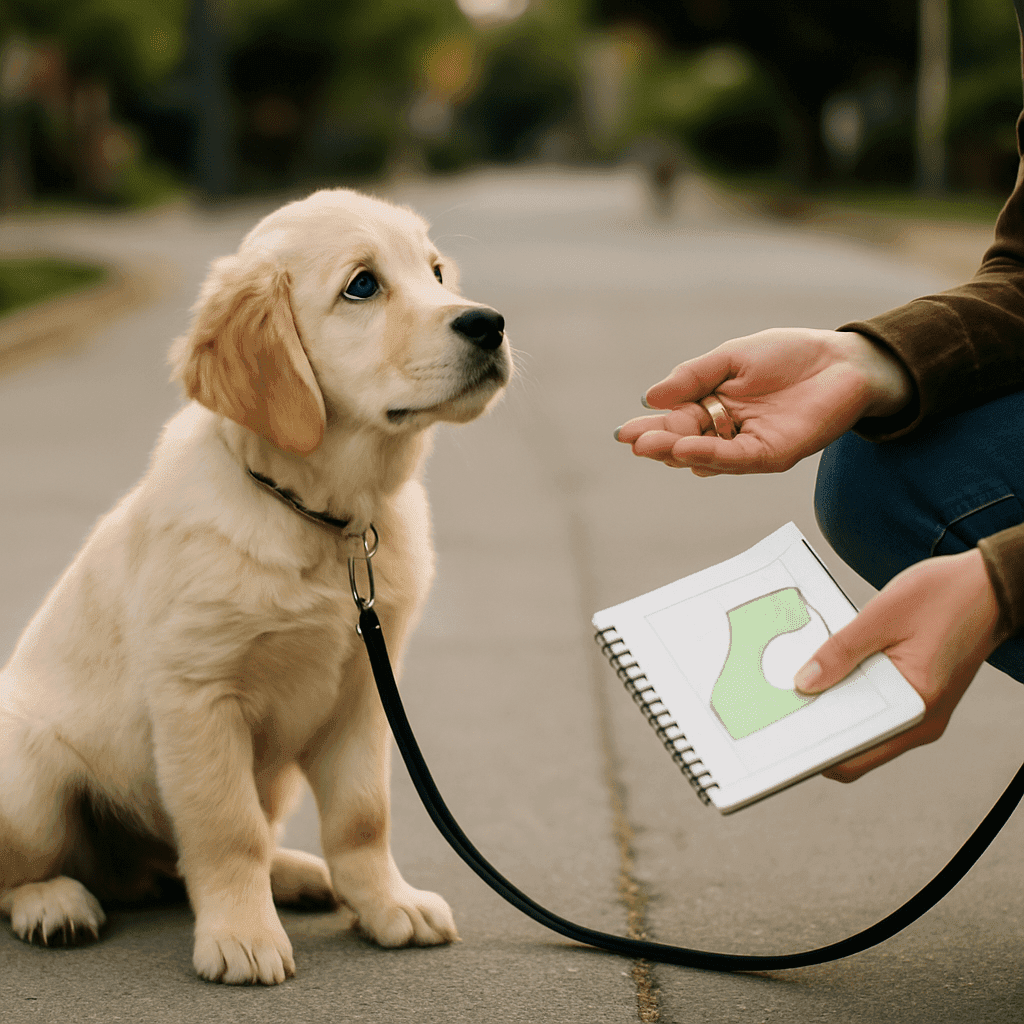
Recognize that not all spaces carry the same threat levels. Create a map to identify high or low-risk areas.Create a Trigger Map:- Mark the Red Zones—where the incident occurred and nearby.
- Identify Orange Zones—places with loose or barking dogs.
- Highlight Green Zones—quiet, no-dog areas.
No Safe Green Zones? Drive to a quiet, empty parking lot or use a friend’s yard.
The 5-Step Puppy Confidence Ladder: From 100 Feet to Side-by-Side
This structured plan helps transition your puppy from distant safety to comfortable proximity with other dogs.| Step | Distance | Conditions | Reps | ✓ |
|---|---|---|---|---|
| 1 | Zero dogs in green zones | Relaxed, treat-eating puppy | 3 times | ☐ |
| 2 | 100 feet from calm dog | Treat-focused, loose demeanor | 3 times | ☐ |
| 3 | 50 feet | No freezing or whining | 3 times | ☐ |
| 4 | 25 feet | Relaxed and responsive | 3 times | ☐ |
| 5 | 10 feet, progress to side-by-side | Fully relaxed | 3 times | ☐ |
- Step 1 - Zero-Dog Walks: Start in a green zone. Use tasty treats to reinforce positivity. Success means no freezing and treat acceptance.
- Step 2 - 100 Feet: Find a calm dog and start distant. Reward eye contact.
- Steps 3 to 5: Gradually decrease distance. Ensure relaxed behavior before advancing.
Safety note: For severe reactions, consult a professional. Use the Puppy Panic Button for immediate triage if needed.
What Not to Do: 5 Mistakes That Slow Recovery
Avoid these missteps during recovery:
If mistakes occur, the ladder allows for resetting to earlier, successful steps.- Low-Value Treats: Opt for high-reward items like chicken.
- Forcing Greetings: Wait until confidence is solid before introductions.
- Scolding or Pulling: Calmly redirect and use treat scatters instead.
- Rushed Walks: Keep pace with your puppy’s comfort level.
- Owner Anxiety: Practice calm breathing before sessions.
Handling the Unexpected: Another Off-Leash Dog
If an off-leash dog surprises you, follow this protocol:- Body Block: Position yourself between your puppy and the dog.
- Treat Scatter: Throw treats to distract the other dog.
- Retreat: Back away slowly, keeping your puppy safe.
- Decompress: Return home for a day of rest.
When to Call a Professional (Vet or Behaviorist)
Use this checklist to determine if further help is needed:
Consult professionals early to prevent deepening fear.- ☐ Refusal to go outdoors after one week.
- ☐ Extreme panic at any dog sighting.
- ☐ Aggressive responses.
- ☐ Overwhelming anxiety for you or your puppy.
- ☐ Sudden fear onset with physical symptoms.
Your Next Walk: Today’s 1-Step Confidence Boost
Begin with small, achievable moments. Your task today:
Each success reinforces safety and builds resilience.- Choose a Green Zone. Even your driveway works.
- Use High-Value Treats.
- Walk for 5 Minutes. Reward calm observation.
FAQ
How soon after the charging incident should I start the confidence ladder?
Wait 24–48 hours for decompression, then begin Step 1 with indoor readiness.What if my puppy regresses during the ladder?
Return to a previous distance temporarily. Regression is a normal part of learning.How do I handle another off-leash dog while training?
Follow the body-block-treat-scatter retreat strategy and take a break.How do I know when to call a professional trainer?
Use the checklist: no progress after a week or signs of aggression indicate further support is needed.Can I use treats to ‘bribe’ my puppy out of fear?
Treats create positive associations, helping reduce fear without reinforcing the fear itself.For emergencies or urgent decisions, use the Puppy Panic Button. Stay steady and trust the step-by-step process.