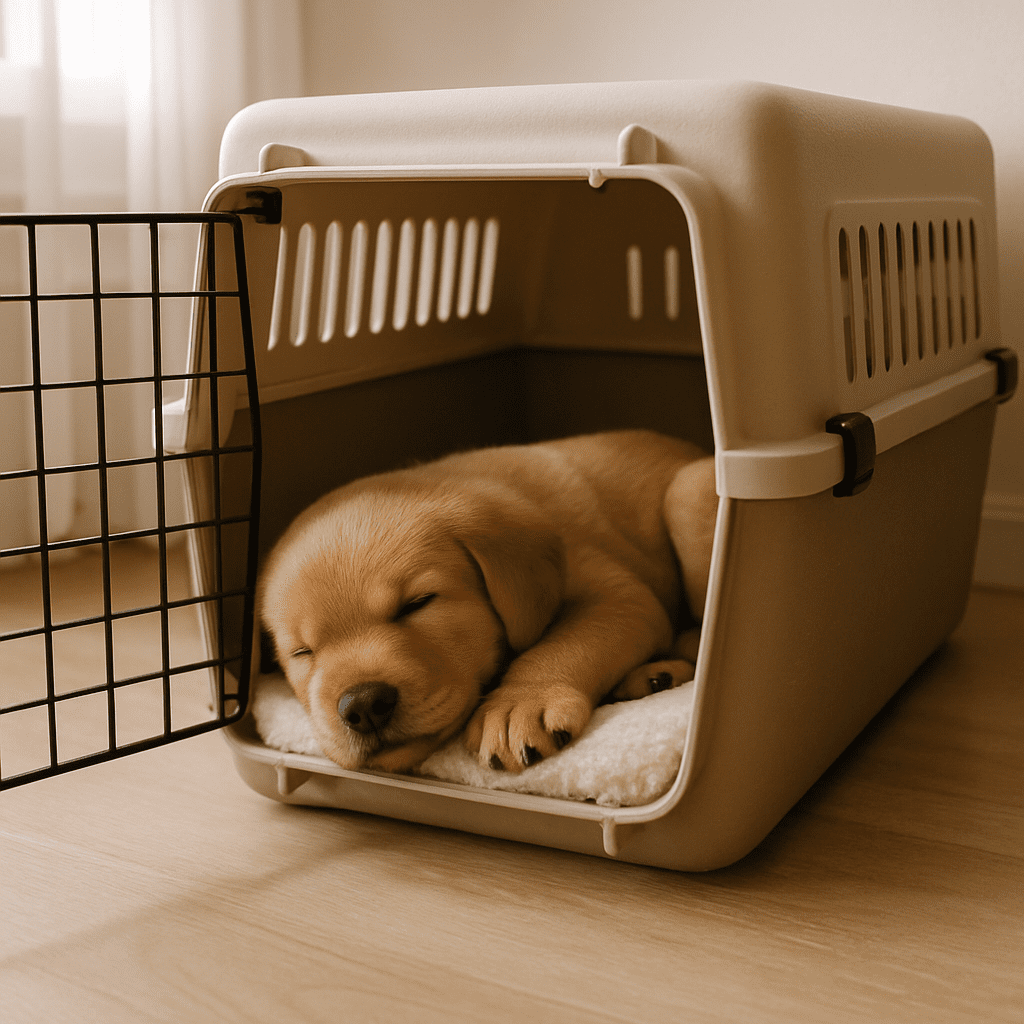
Puppy Won't Nap in Crate During the Day? A Quiet Settle Routine
Before you try the routine: Right now, move the crate to the quietest corner of the room you’ll be in, away from windows, foot traffic, and the television. Even if you’ve had it there for a week, a high-activity spot can sabotage daytime naps. That single change can reduce visual FOMO by half. Next, gather a lightweight sheet to cover three sides of the crate (leave the front partially open), a white noise machine or a phone app, and a safe long-lasting chew like a frozen Kong. Then, plan to start the first Quiet Settle Routine after your puppy has been awake for about 45–60 minutes—not when they're already overtired and frantic. You’ll follow the steps below exactly twice today; just two naps, and you’ll see a difference.
Fast Answer
Place your puppy's crate in a quiet corner, use a sheet to cover three sides, set up a white noise machine, and plan naps after 45–60 minutes of play. Use the Quiet Settle Routine twice daily for results.Why Daytime Crate Naps Are Harder Than Night Sleep
The puppy who dozes peacefully all night can morph into a crate-protesting tornado at 10 a.m. At night, natural melatonin, darkness, and a quiet household all work in your favor. During the day, light streams in, the dishwasher hums, and someone drops a sneaker on the floor. Your puppy’s brain stays alert. They have FOMO: if they can hear you making coffee or see a dog walk past the window, the crate can feel like a punishment rather than a rest spot.Another reason: overtiredness. A young puppy’s awake window is surprisingly short—around 45–60 minutes for an 8-week-old, possibly up to 2 hours for older pups. When a puppy passes that window without sleep, adrenaline and cortisol spike. They look energetic but are actually frantic and overstimulated. Trying to crate a hyped-up puppy is like trying to tuck in a toddler who just drank a juice box and watched cartoons. The Quiet Settle Routine addresses this by adding a dedicated low-arousal sequence before the crate door closes.A mistake that worsens daytime refusal is treating the crate the same way as at night—plopping the puppy in and expecting silence. Without darkness and drowsiness, crying can escalate into panic. The approach outlined here uses short, boring resets if crying crosses a threshold, keeping the experience safe and emotionally neutral.
The Quiet Settle Routine: Minute-by-Minute Plan
This 5-phase sequence takes about 10 minutes total and should be repeated exactly every daytime nap.
| Phase | Time | What You Do | If Puppy Protests... |
|---|
| 1. Calm-Down Window | 5–7 minutes | Dim lights, close curtains. Speak softly. No exciting toys; offer a long-lasting chew on a mat next to you. | If they get mouthy, redirect to the chew without raising your voice. |
| 2. Boring Potty Break | 2–3 minutes | Take puppy to their potty spot on a short leash. Stand still—no playing, no walking, no eye contact beyond a quiet “go potty.” | If they try to play, become a statue to show that play won't happen here. |
| 3. Crate Preparation | 1 minute | Cover three sides of the crate with a light sheet, leaving the front partially open. Place a soft bed inside, use a frozen chew. | If the puppy avoids the crate, drop a few treats inside and let them discover them. |
| 4. Settle Cue & Exit | 30 seconds | In a low, steady voice, say your settle phrase (e.g., “Time to rest.”). Place the puppy inside, close the door, leave the room. | Wait outside if the puppy whines. |
| 5. Post-Exit Response Flow | Ongoing | Stay out of sight but within earshot. If it’s mild grumbling, let it be. If nonstop distress, use the reset protocol below. | Mild protest within 2–3 minutes: ignore. Continuous intense crying >5 minutes: do one boring reset check, avoid turning it into attention or play. |
Reset Protocol: Keep lights dim, avoid eye contact, and speak in a flat tone. Quietly clean if needed, reposition the puppy, and say “Time to rest” again.
Building a Daytime Crate Nap Schedule That Fits Real Life
Even a perfect routine flounders if the timing is off. Use the puppy’s natural awake window to start the Quiet Settle Routine, not the clock alone.
- 8–10 weeks: awake 45–60 minutes, then nap (6–8 naps per day)
- 10–12 weeks: awake 60–75 minutes, then nap (5–6 naps)
- 12–16 weeks: awake 60–90 minutes, then nap (4–5 naps)
- 16+ weeks: awake up to 2 hours, with 3–4 naps
Full-day routine example:| Time (approx.) | Activity / Quiet Settle Routine |
|---|
| 7:00 a.m. | Wake, potty, calm play |
| 8:00 a.m. | Begin Quiet Settle Routine |
| 9:30 a.m. | Wake naturally, potty, calm play |
| 10:45 a.m. | Begin Quiet Settle Routine |
| 12:15 p.m. | Wake naturally, potty, lunch feeding |
| 2:00 p.m. | Calm play, potty |
| 3:15 p.m. | Begin Quiet Settle Routine |
| 4:45 p.m. | Wake naturally, potty, calm interaction |
| 6:00 p.m. | Dinner, calm evening activities |
| 7:30 p.m. | Quiet time, begin evening nap routine |
If your puppy refuses to settle at the scheduled time, adjust the routine by 15 minutes. Use a pen as a bridge if needed, applying the same Quiet Settle Routine.
Normal vs. Not Normal: When to Stay Firm vs. When to Intervene
Knowing normal protest versus distress removes the guesswork.
| Green Zone (Stay Consistent) | Yellow/Red Zone (Intervene & Reassess) |
|---|
| Whining for 5–10 minutes, then fades | Continuous screaming for >15 minutes without pause |
| Circling, digging softly, then settling | Frantic bar-chewing, panting, or drooling |
| Awake after 20–30 minutes, then resettles | Lethargy, refusal to move, or elimination inside the crate |
For red-zone signs, stop the nap session and offer calm reassurance. Check for discomfort and consult a professional if necessary.
Common Mistakes That Make Daytime Crate Naps Worse
Even well-meaning habits can undermine the Quiet Settle Routine.
- Instead of: High-energy play before the calm-down window
Try: A 5-minute chew session.
- Instead of: Letting the puppy out after 10 minutes of crying
Try: Use the reset check once and wait longer.
- Instead of: Cooing or eye contact during the settle phase
Try: A flat, steady tone.
- Instead of: Changing the routine daily
Try: The exact same sequence every time.
- Instead of: Using the crate as a timeout
Try: A separate timeout area like a gated-off corner.
Troubleshooting: What to Do When the Routine Isn’t Working
Real life rarely follows the plan. Here’s how to handle the most common roadblocks.
- If the puppy only naps on the floor: Start the Quiet Settle Routine on a mat at the crate door. Let them fall asleep there, then move the mat inside gradually.
- If the puppy naps in a pen but panics in the crate: Use the pen and run a “crate welcome” program outside of sleep times. Introduce crate naps gradually.
- If neighbors complain: Pair white noise with a draft-sealed door, and communicate with neighbors.
- If the puppy consistently wakes after 20 minutes: Do a silent resettle pop-in, and check for environmental triggers.
- If nothing works: Track the routine for three days. Identify patterns or consult a force-free trainer. Calm crate experiences outside of naps are never wasted.
Your Printable Daytime Crate Nap Checklist
Download the Quiet Settle Routine as a one-page PDF. It includes:
- Checkboxes for each phase: Calm-Down, Boring Potty, Crate Prep, Settle Cue, Post-Exit
- Response flow
- Nap times
Download the free Daytime Crate Nap Checklist and get access to our Puppy Schedule Generator.
Frequently Asked Questions
- How long should I let my puppy cry before giving up? Allow mild protest for up to 10 minutes. For intense crying over 15 minutes, use the reset. If panic continues, reduce crate duration and try pen-based naps.
- Should I cover the crate or leave it open? Cover three sides with a light sheet, leave the front open. This reduces visual stimulation.
- What if my puppy only naps outside the crate? Start with a “mat settle” outside the crate door and gradually move inside.
- How do I build a daytime crate nap schedule? Use awake-window rules and anchor to the wake-up time. Write down successful nap times.
- When is it okay to let the puppy nap in a pen instead? If the crate triggers distress, use the pen while scheduling positive crate sessions. Transition gradually.
- Can I use this routine while I’m working from home? Yes. Pair it with work breaks, maintaining consistency over perfection.