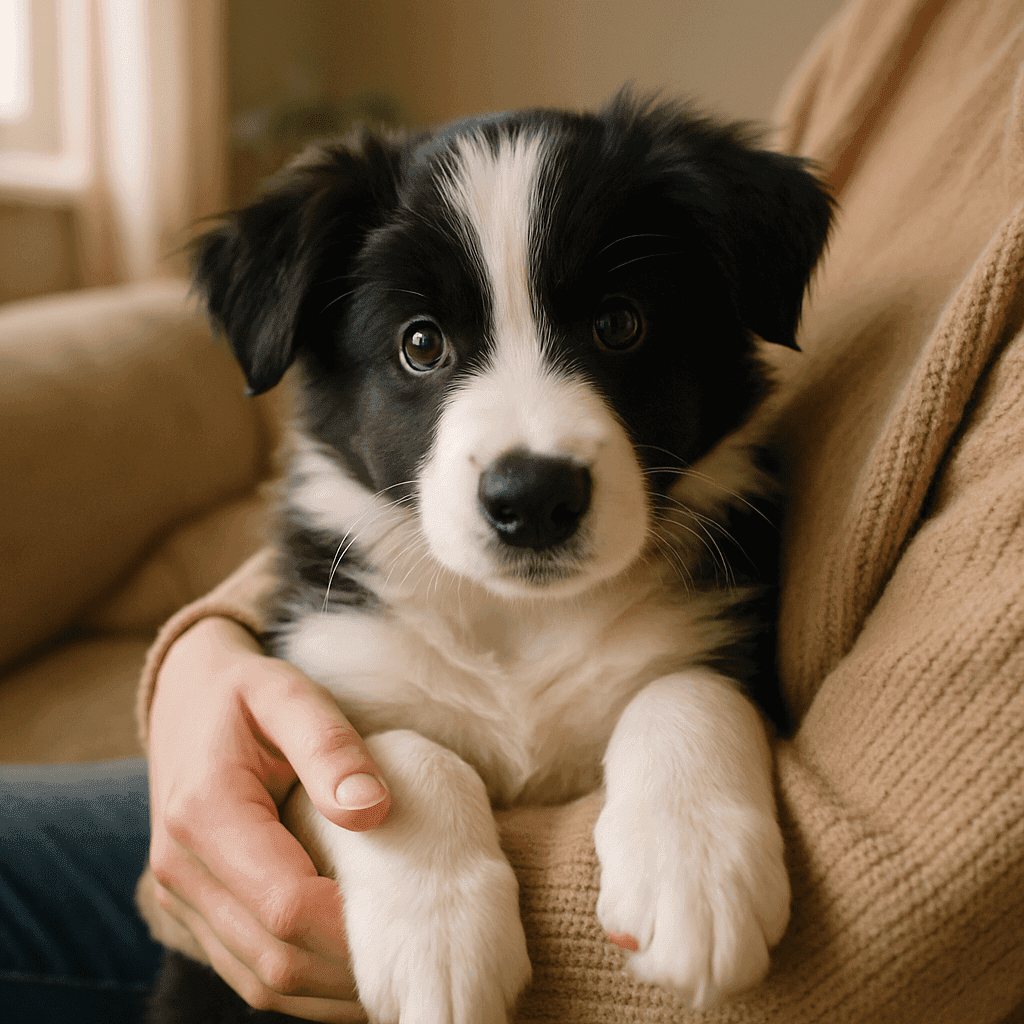
Got 8 Weeks Old Border Collie: What To Do First, What To Avoid, And When To Worry
Why Your Border Collie Puppy Panics & Should You Let Him Cry It Out?
Your puppy is not being stubborn, dramatic, or broken. His reaction is wired deep into what a Border Collie is.
Border Collies were bred to read and control motion, to think independently, and to act on impulse the second they see an opening. When you close a crate or gate, you remove that control. For a working-line brain, sudden confinement can feel like being trapped in a corner with no way out—and that triggers a powerful, panic-driven escape response. At 8 weeks old, he’s also fresh from his mother and littermates. Closing the door doesn’t just mean “now I rest”; it means “I’m alone, there’s no flock to follow, and the den is sealed shut.” That combination of high drive and brand‑new independence is why so many Border Collie puppies panic at the gate click.
Real panic looks like this: continuous screaming or howling that doesn’t dip, throwing himself against the bars hard enough to move the crate, biting the wire until his gums bleed, or a complete inability to settle even after 15 minutes. That is not normal protest whining—it’s a fight‑or‑flight storm. Ignoring a puppy in that state doesn’t teach him to self‑soothe. It teaches him that the crate is a place where fear happens and nobody helps. Research‑based guidance from the American Veterinary Society of Animal Behavior warns against flooding and forced exposure when an animal is in active distress. With a herding breed, the damage can run deeper because the puppy may generalize the fear to any closed door, leash pressure, or even separation.
Is it okay to let a puppy make a few soft whimpers that fade in under five minutes? Yes, if all needs are met, you can wait a few moments. But if the crying escalates or sounds frantic, you step in. This article will show you how to do that without creating a new problem.
What to Do First: Immediate Steps to Break the Panic Cycle
When the panic starts, your first job is safety and nervous system recovery, not training. Every second you force a closed door while your puppy is in fight‑or‑flight wires the panic deeper.
Here is exactly what to do the next time he panics:
Open the gate immediately. Do not wait for a quiet second. Panic is not a teaching moment—it’s an emergency switch. Unlatch and let the door swing open.
Stay physically still and calm. No scolding, no frantic petting, no high‑pitched “it’s okay.” Puppies read your body language. Your slow, steady presence says “the world is not ending.”
Clip a light house line (leash) to his harness and guide him to a small, gated‑off corner or a quiet kitchen area with you. This prevents wandering while giving him the movement and proximity he craves. You are, for now, his safe flock.
Offer a frozen stuffed Kong or a Lickimat smeared with something irresistible—plain yogurt, puppy‑safe peanut butter, or wet food—right next to you. Licking lowers heart rate and mimics the rhythmic comfort of nursing. It is the single fastest way to bring a Border Collie puppy down from an adrenaline spike.
Check the clock. If he has been awake for more than 45 minutes straight (the absolute maximum for 8 weeks), he is likely overtired and physically incapable of calming himself. Skip all crate attempts and help him nap outside the crate now: dim the lights, play white noise, place a Snuggle Puppy or a warm water bottle wrapped in a blanket next to him, and sit quietly without eye contact. Many exhausted puppies crash within 10 minutes once the world becomes boring.
After he is fully settled—not just quiet but soft‑eyed and resting—take him for a silent, boring potty break. Then, when you resume crate desensitization, go all the way back to the beginner level: door open, treats raining inside, no closing at all. You cannot train a flooded brain, but you can wipe the slate clean and rebuild trust.
A common mistake is thinking you have to “win” the battle in the moment. You don’t. A calm puppy on a mat next to you is a win. Trying to force a crate closure while he’s screaming is a loss, even if you eventually shut the door.
If he’s thrashing so hard he won’t touch food, strip the environment: move to a small, dim bathroom with no toys, just you sitting against the wall holding the leash calmly. Let the adrenaline burn out in a boring, safe container before you offer the Kong again.
The 3‑Day Gentle Crate Desensitization Plan (No Fear, No Tears)
The goal is not speed. It’s building a positive emotional response to the closed door so strong that panic never has a chance to start. This method is rooted in the gradual desensitization that modern veterinary behavior guidance recommends for confinement distress. It respects your Border Collie’s intelligence by never tricking or forcing him.
Day 0: Set the Stage
Before you close anything, make the crate a magical place. Set it in a busy family area so “crated” doesn’t mean “isolated.” Use a sturdy wire crate with a divider to create a den just big enough to stand, turn around, and lie down. Cover three sides with a breathable cover to satisfy the herding‑dog desire for a cozy, cave‑like shelter. Add a washable mat and a noise machine (or a phone app) to dull startling household sounds.
For one full day, the door stays open. Toss treats into the back randomly, feed every meal inside with the bowl all the way in the rear, hide peanut butter smears on the divider, and let him find them. Never lure him in and shut the door. The message: the crate is a treat‑dispensing, stress‑free zone.
When he confidently walks in and out on his own, you’re ready.
Day 1: Door Touch Games and First Seconds
You’re going to make the door something that predicts food, not fear.
Session 1 (5–10 repetitions)
- With the puppy inside, touch the door handle lightly but do not move it. Mark with a calm “yes” and drop a high‑value treat inside.
- Next, touch the handle and let the door move a quarter inch—instantly treat.
- Watch his body language. Ears forward, tail relaxed, mouth soft? Good. If he startles, you changed the picture too fast; go back to just touching the handle until he’s relaxed.
Session 2 (play 5–10 times throughout the day)
- When he is inside with a stuffed Kong or chewing, gently swing the door so it’s almost closed but not latched. Keep your hand on the door. Treat through the bars while the door hovers.
- After three successful almost‑closes, briefly close the door for one second while you pour treats through the wires, then open. You’re just adding a “one‑Mississippi” with the door shut—then freedom.
- Vary the time: sometimes 2 seconds, sometimes 1. Always open before the puppy finishes his chew. Never let the door be closed while he’s anxious.
By the end of Day 1, you want a puppy who sees the door move and looks for the treat, not the exit. If he panics when you latch the door at all, stay at the hover stage for another day. A Border Collie’s trust is won in milliseconds.
Day 2: Adding Duration with You Beside the Crate
Now the door closes for a few seconds while you stay right there.
- Start each session with a quick refresh of Day 1 steps to keep success high.
- With the door latched, feed a steady stream of tiny treats through the bars for 5 seconds. Release him with a calm cue like “free” before he loses interest.
- Stretch to 10 seconds only if he looks completely comfortable—no pawing, no whining. Do 8–10 repetitions over the morning.
- Introduce a 15‑second session while you sit beside the crate reading quietly (no eye contact). If he barks or scratches, you’ve pushed too far. Immediately unlatch, calmly take him outside for a potty, and end that session. Next time back up to 5 seconds.
This phase taps into the Border Collie’s pattern‑seeking mind. He learns: the door closes, a calm human sits nearby, good things happen, then the door opens. Between sessions, he’s out playing or napping with you.
Day 3: First Short Alone Moments and Crate Naps
This is where the magic of earlier steps pays off. You’re adding tiny doses of out‑of‑sight while he’s occupied.
- Sit next to the crate, close the door with a frozen Kong inside, and after 10 seconds stand up and take one step away. Immediately step back and treat through the bars.
- After a few successes, walk to the doorway, return, treat.
- When you can stand a few feet away for 30 seconds, attach a cue like “settle” and practice just being in the same room but not beside the crate while he works on the Kong.
- Aim for a 30‑minute rest with the door closed while you move quietly around the house. If he stirs and whines softly, go to him quietly, let him out for a boring potty break, then back in with a fresh chew. You are proving that the crate is not a trap—it’s his safe napping den.
If at any point the puppy screams the moment you leave the room, you jumped too fast. Spend the rest of Day 3 reducing distance until you can stand one step away with him calm. For a Border Collie, separation is a separate skill; it may need an extra week. A heavy‑duty playpen with an open crate inside can bridge the gap—applying the exact same door‑closing steps to the pen gate.
Sample Daily Nap Schedule for an 8‑Week‑Old Border Collie
A schedule that puts sleep first is your best weapon against panic. At 8 weeks, a puppy needs 18–20 hours of sleep, and wake windows should never exceed 30–45 minutes. An overtired Border Collie can’t learn crate comfort—he just melts down.
| Time | What’s Happening |
|---|---|
| 6:30 AM | Wake, immediate potty, 5‑minute quiet cuddle. |
| 6:45 AM | Short, low‑intensity play in a small area. No fetch. |
| 7:15 AM | Breakfast from a puzzle toy or inside the open crate. Potty after. |
| 8:00 AM | Settle ritual: chew on a frozen Kong next to you, lights dimmed. |
| 8:15 AM – 10:00 AM | Crate nap (door closed if ready; if not, quiet mat nap with house line). |
| 10:00 AM | Potty, then short walk or mental game (find‑the‑treat). |
| 10:30 AM | Gentle training session (name game, sit) – 5 minutes max. |
| 10:45 AM | Calm settle, then crate or pen with a Lickimat. |
| 11:00 AM – 12:30 PM | Morning nap. |
| 12:30 PM | Potty, lunch, short free movement with you. |
| 1:30 PM | Afternoon nap (1.5–2 hours). Repeat the settle ritual. |
| 3:30 PM | Potty, social play or a safe chew session. |
| 4:00 PM | Bedtime‑style calm down. Not a party. |
| 4:30 PM – 6:00 PM | Late‑afternoon nap. |
| 6:00 PM | Potty, final meal of the day (feed early to avoid overnight tummy upset). |
| 6:30 PM – 7:30 PM | Very low‑key together time. Chewing, licking, soft touch. No zoomies triggers. |
| 7:30 PM | Begin evening wind‑down; no television or active play. |
| 8:00 PM – 10:00 PM | Short nap if needed, but keep stimulation minimal. |
| 10:00 PM | Final potty, then into bed area (crate or playpen) for the night. |
| Overnight | One silent potty trip at 1–3 AM if he cries. No play, no lights. |
When a nap runs short and your puppy wakes after 20 minutes of whining, go to him calmly, take him to potty on leash, and then guide him back to the sleep spot for a quiet settle. Do not start a new play session. If he absolutely won’t resettle after 15 minutes of calm effort, allow a gentle, boring awake period—then start the next nap as soon as early tired signs appear.
Normal Puppy Behavior vs. Real Red Flags for Herding Breeds
Knowing the difference between a learning whimper and a distress signal prevents two big mistakes: quitting the plan when it’s working, or pushing through when something is medically wrong.
Normal adjustment sounds:
- Soft whines that rise and fall, lasting less than 10 minutes, and end in sleep.
- A few sharp yips when you first move out of sight, which stop when he hears your voice.
- Light pawing at the door that halts when you place a frozen chew inside.
- What some owners call the “Border Collie grumble”—a low, conversational moan that quiets as soon as you reply in a calm tone.
These are signs your puppy is learning that being alone isn’t scary, just a little boring. You can continue with the next step of the plan.
Concerning behaviors – pause and reassess:
- Continuous, high‑pitched screaming or howling for more than 20 minutes with no quiet intervals, even with you next to the crate.
- Thrashing against the wire hard enough to shift the crate or cause bleeding gums.
- Heavy panting, excessive drooling, or trembling that continues for several minutes after you open the door.
- Refusing all treats and food for more than 8 hours during daytime plus showing lethargy.
- A puppy who completely shuts down: won’t move, won’t respond to his name, eyes glassy.
If you see any of these, stop crate closure immediately. Switch to the emergency settle protocol in the “What To Do First” section and call your veterinarian within 24 hours. Puppies can become sick quickly, and some health issues—like a brewing infection or severe teething pain—present as sudden panic or inability to settle. A veterinary behaviorist or a qualified force‑free trainer is also worth consulting if the distress persists despite a gentle approach, especially with high‑drive breeds.
A simple test for herding dogs: if your puppy is crying at the crate door but immediately stops and takes a high‑value treat when you offer it through the bars, he’s likely frustrated rather than panicked. True panic often causes a food refusal. That distinction tells you whether to stay the course (frustration) or drop back several steps (panic).
5 Common Mistakes That Make Crate Panic Worse (And How to Fix Them)
Even caring owners sometimes use strategies that inadvertently feed the fear. Fixing these can be the difference between tears and a sleeping puppy.
1. Using a crate that feels like a barn, not a den
A full‑size wire crate without a divider makes a young puppy feel exposed. Install a divider so the crate bed is only large enough to stand, turn, and lie down. A cozy den activates the natural calming instincts that herding dogs rely on. Cover three sides with a washable, breathable cover to further replace that “watched from all sides” anxiety with “I’m hidden and safe.”
2. Closing the door when the puppy is already agitated
If his tail is tucked, he’s pacing, or he just finished a zoomie session, do not close that door. Only latch when he is fully engaged with a frozen Kong and his body is loose. Every time you close the door while he’s stressed, you’re pairing the click with fear. The fix: back up and create 20 positive repetitions where the door moves while he eats.
3. Skipping mental exercise before crate time
A Border Collie puppy’s brain needs to be used up more than his legs. Five minutes of scent work—hiding treats under a towel, teaching “find it”—drains mental energy deeper than twenty minutes of free running. A tired puppy from physical exercise alone can be spring‑loaded and ready to panic. Always do a short, calm thinking activity before a crate session. Even “touch” (hand targeting) for two minutes shifts his brain into learning mode.
4. Inconsistent routine
Herding breeds thrive on predictability. If nap times slide around wildly, the puppy never learns the pattern. Stick to the same sequence: potty, calm play, settle ritual, crate with a chew, rest. After five days of 90% consistency, most Border Collie puppies begin to anticipate the crate as part of the rhythm—not a random trap.
5. Jumping from “present” to “alone” in one leap
When you’re sitting beside the crate, your puppy feels safe. The moment you leave the room, that safety evaporates. Increase distance in steps: sitting one arm’s length away, then three paces, then near the door, then in the doorway but visible, then out of sight for just two seconds—always returning with a treat before anxiety appears. Distance and alone time grow in tiny, unscripted slices so your puppy can’t predict when you’ll be gone, but always trusts you’ll come back.
If you realize you’ve been making one or more of these mistakes, don’t spiral into guilt. Reset: give the puppy a full 12 hours with zero crate closure, run the emergency settle protocol once, then restart Day 1 with the corrections in place. Progress rebuilds quickly.
Troubleshooting: What If He Still Barks, Bites Bars, or Won’t Nap?
You’re following the gentle plan, but you’ve hit a roadblock. That’s normal. Below are specific scenes and what to try next.
He barks or howls non‑stop for 15+ minutes even with you right there.
The step is too big. Open the door, take him for a silent potty break, then settle him with a chew outside the crate on a mat next to you. For the next session, drop back: practice door touches without latching until he is totally relaxed, then try just 2 seconds of closure before he finishes his treat. Also rule out a full bladder—a puppy who needs to pee seldom settles.
He frantically bites the bars, hooks his teeth, and won’t stop.
First, confirm the crate divider is properly sized and three sides are covered—visual stimulation can fuel biting. Give him an appropriate outlet: attach a durable chew toy (like a pup‑safe nylon chew or a frozen Kong) to the crate wall with a short tie so he can gnaw while staying put. Some owners lightly spray bitter apple on the bars only if the puppy is teething and chewing the metal, but test on a small spot first to ensure it doesn’t increase distress. If the biting is so intense you worry about tooth damage, immediately switch to a heavy‑duty playpen with an open crate inside; confine him without a wire door until the oral fixation settles. More mental exercise before confinement helps enormously.
He’s calm when you’re beside the crate but panics the second you leave the room.
This is the most common plateau for herding breeds. Work “distance” before “disappearing.” Sit one step away, then two, then with your back turned. Use a mirror or a baby gate in a doorway so you’re technically “gone” but he can still see or hear you. Practice stepping behind a piece of furniture for one second and reappearing immediately with a jackpot treat. Gradually build to the point where you