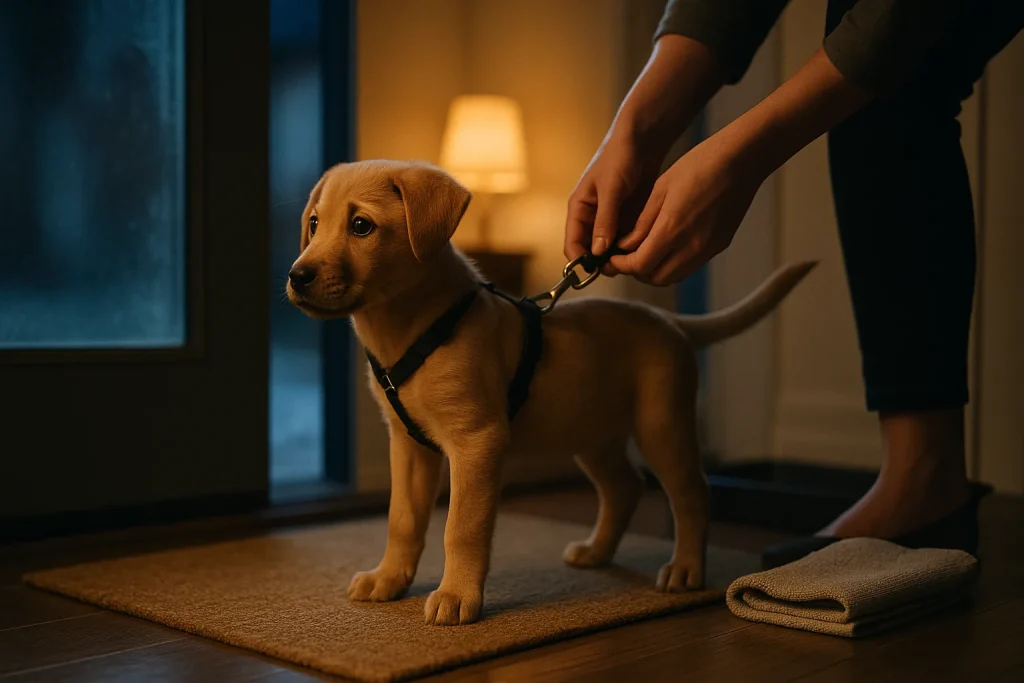
If you typed something like “i got puppy he's gets his last vaccination tomorrow he's crazy this really help thx” into a search bar at midnight, you are not alone. You have a tiny tornado on your hands and a big appointment coming fast. The good news: you do not need to magically train a calm puppy by morning. You need a better plan for the next 24 hours.
This is a comparison guide, because there are really two ways this day can go. One path is the usual panic move: try to burn off every bit of energy, skip the prep, and hope exhaustion somehow turns into calm. The other path is quieter and more effective: lower the arousal, set up the vet visit, and make the waiting room easier on both of you. The second path does not require a perfect puppy. It just fits how puppies actually work.
What to Do Now: Calm the Day Instead of Trying to Win It
Right now, the biggest mistake is trying to solve the problem by exhausting your puppy. That usually backfires. A puppy who is overstimulated does not become serene; he becomes more frantic, more bitey, and more likely to melt down in the car or clinic.
Use this simple right-now plan instead:
- Stop rough play and end the chaos loop.
- Give one short sniffy walk or a few minutes of indoor scent work.
- Pack the vet bag tonight.
- Practice the carrier or car calmly, even for just a few minutes.
- Keep your own voice and movements slow, because puppies read your pace faster than your speeches.
A useful five-minute reset is a towel game: scatter a few smelly treats in a towel, loosely roll or fold it, and let your puppy sniff them out. The point is not obedience. The point is to redirect the brain from zoom mode to nose mode.
Pack these items tonight so tomorrow is not a scramble:
- high-value treats that smell stronger than kibble
- a lick mat or frozen Kong for the waiting room
- a towel or blanket that smells like home
- a backup leash
- vaccination records
- your phone with the clinic number saved
If your puppy uses a carrier, set it out now and leave it open. If he has never practiced it, tonight is still worth doing as a positive association session, not a test.
If your puppy is already bouncing off the walls, stop the games, offer the frozen lick mat, and put him in a quiet space for a reset. Calm is not something you demand. It is something you make easier to find.
Tonight vs. Tomorrow Morning: The Prep That Changes the Whole Visit
Here is the real comparison: a rushed puppy-day versus a steady one.
The rushed version looks like this: you stay up late, assume tomorrow you’ll improvise, feed a heavy meal right before the ride, forget the records, and try to shove an overexcited puppy into the car while you are already tense. That puppy usually arrives at the clinic over-aroused, carsick, or upset before the exam even begins.
The steady version is much simpler. You do a little work now so tomorrow has fewer decisions.
Tonight
Keep the evening low-key. A short sniff walk is enough. Then switch to quiet enrichment: a frozen Kong, a lick mat, or a “find it” game with a few treats hidden in a towel or under a box. Put the records in the bag, place the backup leash by the door, and decide what time you need to leave so you are not rushing.
If the puppy will ride in a carrier, leave it open and toss treats inside. If the car makes him tense, spend a few minutes sitting near the car with treats and no destination. The goal is not to “finish training.” The goal is to lower the drama around the event.
Tomorrow morning
Wake up with enough margin to avoid a sprint. Potty first. Keep the potty trip boring: no fetch, no wrestling, no long loop around the block. If your puppy is sensitive to motion, offer only a small snack before the ride—just enough to settle the stomach, not a full meal that may worsen nausea.
Before you leave, do one last potty break and then load the puppy calmly. The car should feel like a normal transition, not a chase scene. If he refuses the carrier, use high-value treats and a treat trail into it. If he still resists, pause, breathe, and try again rather than forcing a battle.
A sample morning can look like this: potty, quiet sniff time, a small frozen treat in the carrier, then a calm load into the car with a familiar blanket. That is the kind of morning that makes the clinic visit more manageable.
Clinic Time: Compare the Waiting Room Options
The waiting room is where a lot of owners lose the thread. There are noises, smells, other animals, and a puppy who is already primed to react. You do not need the perfect strategy. You need the one that fits your puppy.
Option 1: Carrier or covered crate. Best for puppies who are easily overwhelmed, vocal, or too interested in every dog in the room. A partly covered carrier lowers the visual load and gives the puppy a smaller job: lie down, chew, sniff, wait. Add a lick mat with a little peanut butter, plain yogurt, or canned puppy food if your vet says that is okay for your puppy.
Option 2: Mat on the floor. Best for puppies who can still take treats and are not exploding with social energy. Use a small blanket or bath mat as a “place” spot and reward the puppy for staying near it. The mat should feel like a portable safe zone, not an obedience drill.
Option 3: Quiet observation. Best for the rare puppy who is curious but not overly wound up. Keep him close, reward calm glances, and avoid letting strangers reach in and hype him up. Even friendly attention can tip a hyper puppy into overdrive.
How do you choose? Watch the puppy, not the fantasy version of the puppy. If he is hiding, trembling, or refusing treats, use the carrier. If he is scanning every dog and ignoring food, use the carrier. If he can sniff, settle, and eat, the mat may work. The main rule is behavior, not hope.
Bring a simple script for the vet so you don’t forget key questions while your brain is full:
- What side effects are normal after this shot, and when should I call you?
- When can we start neighborhood walks?
- Do you recommend puppy class or any next steps for socialization?
- Do I need to keep him quiet for the rest of today?
If the clinic asks you to wait in the car, that can actually be easier for a lively puppy. Same rules apply: keep it calm, use treats if they help, and avoid turning the car into a barking contest.
Normal vs. Not Normal After the Last Vaccination
This is the part worth getting right, because once the appointment is over you will probably be tired and second-guessing yourself.
Usually normal in the first 24 hours:
- Mild sleepiness or a longer nap than usual, as long as the puppy can wake up easily.
- Slight soreness where the shot went in.
- A small firm lump at the injection site that slowly fades.
- A little less interest in food for part of the day.
Not normal, and worth a call to the vet right away:
- Swelling of the face, muzzle, or eyelids.
- Hives or raised bumps on the skin.
- Repeated vomiting or repeated diarrhea.
- Trouble breathing, noisy breathing, or open-mouth panting that does not settle.
- Extreme lethargy, collapse, wobbliness, or a puppy who is hard to wake.
- Persistent trembling that does not ease.
The timing matters. A vaccine reaction that looks allergic can show up within minutes to a few hours after the shot, which is why many clinics want you nearby for a bit. Mild soreness or tiredness is more common later and usually eases within a day. If something feels off and you are unsure, call the clinic. That is exactly what they are there for.
A useful rule: if the puppy is sleepy but responsive, that leans normal. If the puppy is dull, wobbly, swollen, or struggling to breathe, that is not something to watch and wait on.
If the injection site seems mildly sore, keep the puppy quiet and tell your vet. If you are considering a cool compress, ask your vet whether they want you to use one and how. Do not start poking or massaging the spot hard.
Common Mistakes and Their Better Alternatives
A comparison guide is only useful if it shows the trap and the fix.
| If you are doing this | Try this instead |
|---|---|
| Running the puppy hard to “get the energy out” | Use sniffing, licking, and low-key enrichment to bring arousal down |
| Skipping carrier practice until the last minute | Spend a few minutes tonight making the carrier a treat zone |
| Forgetting a potty break before leaving | Potty right before you load the car, then again before clinic entry if needed |
| Feeding a big meal right before the ride | Give only a small snack if your puppy needs one to settle his stomach |
| Assuming the last shot means instant public freedom | Ask your vet when immunity is considered reliable, then wait for that green light |
| Forgetting to ask about the next step, like puppy class or microchipping | Bring a short question list and check those items off while you are there |
If you have already overdone it and your puppy is wild, do not keep escalating. Stop the activity, lower your own energy, offer a long-lasting chew or frozen treat, and reset. A reset is better than another round of frantic play.
One common scenario: you take the puppy for a long, intense exercise session before the appointment, and he gets more wound up, not less. The better choice is a short sniff walk plus a frozen Kong. That swap matters more than most people think.
When the Puppy Will Not Calm Down, or Seems Sick After the Shot
There are two very different problems that often get mixed together: a puppy who is too aroused before the appointment, and a puppy who seems unwell after it. They need different responses.
If your puppy is still crazy right before you leave
Try the least dramatic solution first.
- Give a very short sniff walk.
- Put the puppy in a quiet, boring space with a chew or frozen treat.
- Reduce movement, noise, and conversation around him.
If he still cannot settle, do not keep adding stimulation. Sometimes the best move is to let the body come down in a calm room for a few minutes and then try again. For a puppy who is used to handling and snug gear, a Thundershirt-style wrap or snug calming shirt may help some dogs feel more contained, but only use that if your puppy already tolerates it comfortably. Never force a wrap on a stressed puppy who hates being handled.
If your puppy seems off after the vaccine
Use the symptom comparison above. Then ask: is he sleepy but responsive, or is he truly unwell?
If he vomits once but is otherwise bright, call the vet for guidance and keep things quiet. If he vomits repeatedly, becomes wobbly, swells up, or struggles to breathe, call the vet immediately. Do not wait to see if it passes.
A good decision rule is this: a puppy who is resting more than usual but still looks like himself may just need a quiet day. A puppy who is not acting like himself in a serious way needs a professional call.
That distinction is the whole game.
When Can You Finally Go Outside?
This is the payoff question, and the answer is worth doing correctly.
Do not assume the last vaccination means “outside starts tomorrow.” Ask your vet when your puppy is considered protected enough for normal public exposure. Many vets recommend waiting until roughly 1 to 2 weeks after the final vaccine before regular walks in higher-risk areas, but your clinic may tailor that advice based on your puppy and your location.
The comparison here is simple:
Too fast: you rush into dog parks, pet-store floors, and busy sidewalks before immunity has had time to build. That is not a socialization win; it is a risk you do not need to take.
Steady: you start with quiet, low-risk walking environments once your vet says the timing is right, and you build up from there.
The best first outings are short and boring in the right ways: a quiet sidewalk, a clean street, a front-yard potty spot if it is safe, or a brief sniff walk where your puppy can observe without getting flooded. If he cannot focus outdoors yet, that does not mean you failed. It means you start even smaller.
A useful readiness check is behavior-based:
- Can he take treats outside?
- Can he recover after a brief startle?
- Can he follow your voice for a few seconds?
- Can he walk a short distance without turning every leaf into a crisis?
If not, scale back. The first week outside is not a race.
The Real Difference Between the Two Plans
The chaos plan says: burn energy, improvise, and hope the puppy becomes manageable by force.
The calm plan says: reduce stimulation, use food and sniffing wisely, ask the vet the right questions, and wait for the actual medical green light before opening the outside world.
That second plan is better because it respects what puppies are: immature, reactive, easily over-aroused, and very capable of learning when the day is structured around their actual nervous system.
Your puppy does not need you to be perfect tomorrow. He needs you to be predictable.
This is information only; always consult your veterinarian for advice on your puppy’s health.