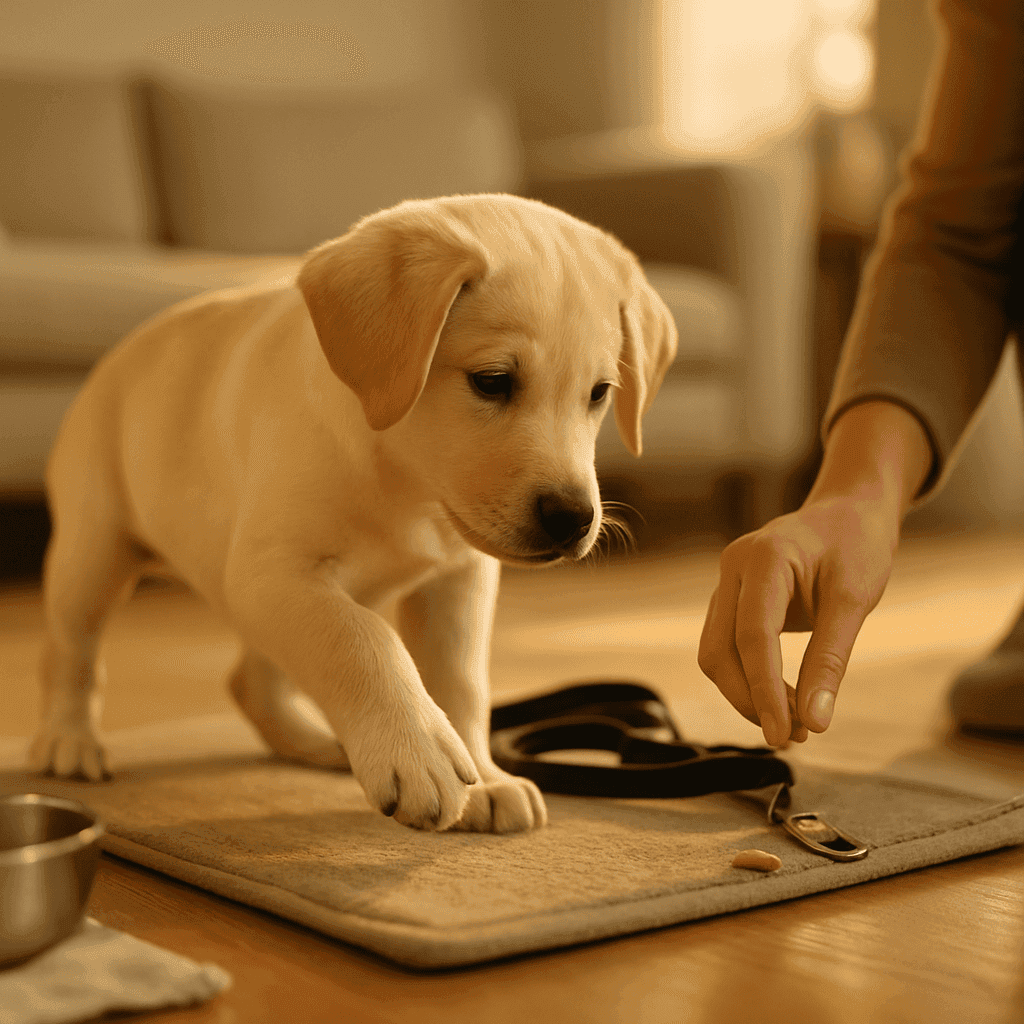
Fast Answer: Is It Normal for a Puppy to Bite Paws After a Walk?
Yes, sometimes. A puppy may nibble a paw briefly after a walk because a bit of dirt, grass, or moisture feels odd between the toes.
Usually normal if:
- The chewing lasts only a short time and stops on its own.
- You find a speck of dirt, a tiny bit of grit, or nothing at all.
- The paw looks like the other paws, and your puppy walks normally.
Needs a closer look if:
- The puppy keeps going back to the same paw after you wipe it.
- The chewing settles for a moment, then starts again.
- The paw looks slightly pink, but not swollen or hot.
Needs a vet soon if:
- Your puppy yelps when you touch the paw.
- There is limping, holding the paw up, bleeding, swelling, heat, discharge, or a bad smell.
- The puppy will not put weight on the leg or seems unusually quiet.
Think of the paw bite itself as a signal, not the diagnosis. Brief nibbling after a dusty walk can be ordinary. Frantic chewing, limping, or a paw that feels hot is not something to brush off.
What to Do in the First 5 Minutes After the Walk
Your goal is to stop the chewing loop and look at the paw before the puppy works itself into a bigger irritation.
- Keep the puppy contained. Stay in the entryway, on a mat, or in another easy-to-clean spot. Don’t let the puppy race around and track more dirt through the house.
- Grab a clean towel or dog-safe paw wipe. Use a fragrance-free, alcohol-free wipe made for dogs, or a damp cloth with lukewarm water if that is all you have.
- Hold one paw at a time. Start with the paw the puppy is not already attacking if possible. That makes handling easier and helps you see the paw without a struggle.
- Look between the toes and under the pads. This is where pebbles, grass seeds, foxtails, and small splinters hide. A flashlight helps if the fur is thick or the light is poor.
- Wipe the paw gently. Go top, bottom, then between each toe. Keep your touch calm and even.
- Break the fixation. Give a chew, stuffed toy, or lick mat on the other side of the room while you inspect the next paw. You are not rewarding the paw biting; you are redirecting the puppy so you can finish the check.
- Dry the paw if it got wet. Moisture trapped between toes can keep the skin irritated.
If the puppy fights paw handling, do not wrestle. Work in short passes, keep your hands gentle, and use a chew to occupy the mouth while you inspect. Rough handling can make even a minor paw issue worse.
Step-by-Step Post-Walk Paw Inspection and Cleaning Plan
This is the routine that catches the problems a quick wipe misses.
- Set up the basics. Have a towel, a dog-safe wipe or damp cloth, and a light source ready near the door. If your puppy comes home muddy often, keep the supplies in one place so you don’t have to scramble.
- Check the pads. A healthy pad usually feels dry to slightly textured, not sticky, cracked, or raw. Look for cuts, thorns, trapped grit, or a patch that seems redder than the rest.
- Check between every toe. Separate the toes gently. This is the most important place to inspect because foxtails and grass awns like to lodge there. If you can’t see well, use a flashlight and look from both sides of the paw.
- Check the dewclaw area. The dewclaw sits higher on the leg than the other nails, so it is easy to miss. It can snag, scratch, or trap debris.
- Compare both front paws and both back paws. One paw that looks warmer, redder, or puffier than the others matters more than a little overall pinkness after a walk.
- Clean only as much as you need to.
- Dusty paw: wipe it.
- Muddy paw: rinse with lukewarm water, then dry thoroughly.
- Grass-pollen exposure: a cool water rinse can help remove what is irritating the skin. - Dry carefully. Pat the paw, then dry between the toes. If the fur stays damp, the skin can stay irritated. That moisture can also create a better environment for yeast or bacteria.
- Use balm only on intact skin. If the pads are dry or a little cracked, a thin layer of dog-safe paw balm can help after the paw is fully dry. Do not put balm on open cuts.
- Watch the behavior after cleaning. If the puppy stops paw biting and settles into a normal activity, you likely found a simple irritant. If the licking or chewing keeps going, the problem is not solved yet.
A real-world pattern makes this easier to picture: a puppy returns from a park walk, chews a dewclaw for 20 seconds, and then lies down. That is much less concerning than a puppy who keeps gnawing one toe, then another, and cannot relax until you find a tiny pebble or seed.
Normal Paw Behavior vs. Signs of a Problem
Use the puppy’s behavior and the paw’s appearance together. One without the other can mislead you.
| What you see | More likely normal | More likely a problem |
|---|---|---|
| Biting lasts | Briefly, then stops | Keeps returning for a long stretch |
| Paw appearance | Same as the other paws | Redder, swollen, hot, bleeding, smelly |
| Puppy’s movement | Walks and plays normally | Limping, holding paw up, flinching |
| Reaction to touch | Tolerates gentle handling | Yelps, pulls away, guards the paw |
| Pattern | Happens once after a dusty walk | Repeats after grass, weeds, or every walk |
A simple rule helps: if the puppy is otherwise fine and the paw looks normal, monitor after a wipe. If the puppy keeps worrying the same paw or the paw changes color, shape, or temperature, treat it as a problem until proven otherwise.
Common Mistakes First-Time Owners Make
- Assuming every paw bite is just a habit. Sometimes it is. Sometimes it is the first sign of a thorn, seed, or sore spot. If you skip the check, you can miss a foreign body until it becomes harder to remove.
- Using the wrong wipes. Baby wipes, scented cleaners, and alcohol-based wipes can sting tiny scratches and make the puppy lick more. Use dog-safe, fragrance-free products or plain water.
- Scolding the puppy for licking. If the paw hurts, punishment does not solve the cause. It only makes the puppy less willing to let you examine the paw next time.
- Leaving the paw wet. A damp paw is more likely to stay irritated. Dry between the toes, not just the top of the foot.
- Waiting too long when there is obvious pain. Limping, swelling, discharge, or a hot paw should not be watched for several days. Those signs deserve veterinary attention.
Troubleshooting: What If the Biting Continues or Gets Worse?
If you cleaned the paw and the puppy is still biting it hours later, use what you see to narrow the cause.
If the paw is slightly pink and the puppy keeps licking it
This often fits an irritant or contact allergy, especially after grass, pollen, or weeds.
- Rinse the paw again with cool water.
- Dry it completely.
- Prevent more licking for a while with supervision, a cone, or another safe barrier your vet approves.
- Watch what happens over the next day.
If the puppy improves after rinsing and dries out, you may have found the trigger. If the same pattern repeats after walks, especially on grass, bring it up with your vet. Seasonal or environmental allergies are a real possibility.
If you suspect something is stuck but you cannot see it
Re-check with better light. Look from above, from the side, and between the toes. Feel for a small hard point or a spot that makes the puppy pull away.
Do not dig aggressively. Embedded foxtails, splinters, and similar debris can worsen if pushed deeper. A vet can remove them more safely.
If the paw looks normal but the puppy still bites it
Sometimes the paw is not the whole story. A tired, overstimulated puppy may mouth the paw as a self-soothing habit, especially after a busy walk.
- A calm chew.
- A short rest in a crate or pen.
- Less excitement right after the walk.
If the behavior only shows up when the puppy is wound up, sleepy, or overstimulated, the fix may be better pacing rather than a paw treatment. But if it keeps happening when the puppy is calm, keep looking for a physical cause.
When to call the vet
Call sooner rather than later if you notice:
- Swelling
- Heat
- Bleeding
- Pus or discharge
- A bad smell
- Limping
- Refusal to bear weight
- Persistent pain when touched
A small puncture can look minor from the outside while still trapping debris or infection underneath.
One Useful Fallback: The “Rinse, Dry, Recheck” Rule
If you are unsure what category the puppy fits into, use this fallback:
- Rinse the paw with cool or lukewarm water.
- Dry it completely, especially between the toes.
- Recheck the paw after the puppy has been calm for a short while.
- If the biting stops, you likely dealt with a simple irritant.
- If it continues, becomes more focused, or the paw changes, move into veterinary care.
This works because it removes one of the most common causes of post-walk paw biting: something irritating the skin surface.
Your Post-Walk Paw Care Routine
- Contain the puppy before he races off.
- Wipe or rinse the paws.
- Check the pads.
- Separate the toes and look deep inside.
- Dry thoroughly.
- Watch for continued licking or chewing.
- Escalate if there is pain, swelling, heat, bleeding, or limping.
The best clue is still the puppy’s behavior. Brief nibbling after a walk can be ordinary. Repeated, focused, or painful paw biting is your sign to inspect more closely and act sooner.