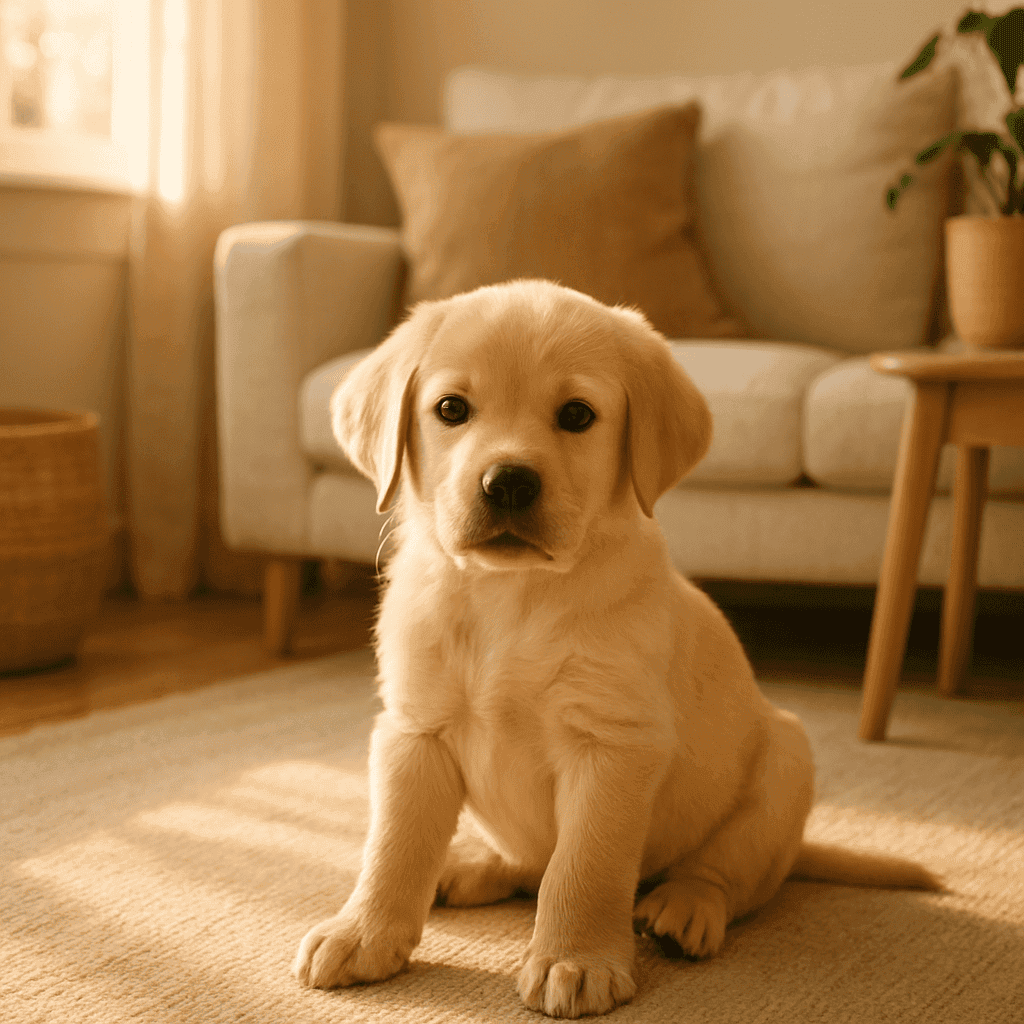
Puppy How Do You Stay So Positive When He Growls: A Calm Response Plan for First-Time Owners
If you have ever sat on the floor after a long day, heart beating a little too fast because your puppy growled at you when you reached for his chew, you are not a bad owner. You are human. The real question is not how to force yourself into a cheerful mood. It is how to stay calm, safe, and clear-headed when a growl feels personal.
Many first-time owners feel hurt, startled, or even afraid when a puppy growls. You may have thought, “I do not hurt my dog at all, so why is he making that noise toward me?” That reaction makes sense. But growling is usually information, not rejection. It is a puppy’s way of saying something is too close, too sudden, too valuable, or too uncomfortable in that moment.
The goal is not to become cheerful on command. The goal is to respond in a way that keeps both of you safe and helps your puppy learn what to do instead.
Identify the Hardest Trigger
Before you try to stay positive in the moment, you need to know exactly which version of the problem is hardest. Otherwise you may accidentally start training at the most intense, most realistic, and most likely-to-fail moment.
The first action is simple: record the trigger, environment, timing, puppy response, and what happens immediately before and after. You do not need a fancy journal. A notes app or a piece of paper near the couch works.
Write down:
- Date and time
- Where it happened
- Who was nearby
- What object, space, or action was involved
- What the puppy did
- What you did before and after
- How long it took the puppy to settle or recover
Example: “Monday 7:15 p.m., puppy on his bed with a chew. I leaned over to pick up a sock next to him. He froze, turned his head slightly, and gave a low growl. I backed off. He kept the chew and relaxed again within about 10 seconds.”
That kind of record helps you separate the main pattern from occasional exceptions. Maybe the growl only happens when you reach toward him while he is chewing. Maybe it only happens when he is tired, or when a visitor leans over him. That is useful information.
There is an important difference between a hard trigger and general disobedience. A puppy who growls and then quickly recovers, looks away, or shakes off is telling you that the moment was too much, but he can come back down. A puppy who stays frozen, gives a hard stare, lifts a lip, growls repeatedly, or cannot disengage for several minutes is showing a much more intense response. That is not the place to begin.
If the puppy cannot disengage or recover, the next action is to choose an easier starting point.
A common failure pattern is starting at the hardest real-world version. If your puppy guards a food bowl at dinner while kids are running nearby, do not make that your practice session. Name the hardest trigger first, then back away from it on purpose.
Create an Easier Starting Point
The goal here is to create a learnable setup, not to force confidence. You want a version of the situation in which your puppy can first succeed without growling, freezing, or panicking.
You can make the setup easier by changing one or more of these dimensions:
- Distance: practice farther away from the trigger
- Item value: use a boring item instead of a highly valuable one
- Movement: stand still instead of leaning or reaching
- Environment: use a quiet room instead of a busy kitchen
- People: reduce the number of people or pets present
- Duration: keep the session very short
For example, if your puppy growls when you approach his food bowl, an easier starting point might be an empty bowl on the floor while you sit six feet away. If that still feels too hard, move farther away or remove the bowl entirely and use a low-value toy later.
A manageable learning step is one where the puppy can stay loose, notice you calmly, and recover quickly. Flooding is the opposite: putting the puppy in the full-intensity situation until he shuts down or panics. Do not do that. Do not use punishment, scolding, or force, because those can make the puppy more worried and can teach him to skip the growl warning and go straight to a bite later.
Before the session, define one clear success signal. It might be: the puppy stays relaxed when you appear, or the puppy looks away from the item and back at you without growling. If success becomes inconsistent or stress rises, make one dimension easier. Increase distance, lower the item value, reduce movement, or move to a quieter room. That is not failure. That is adjusting the difficulty.
Teach the First Achievable Response
Instead of trying to suppress the growl, teach a concrete alternative that works in the real situation. One of the most practical early skills for growling around toys or food is the trade game.
The trade game teaches the puppy that giving something up does not mean losing everything good. It also gives you something to do instead of freezing or getting upset.
Try this low-distress setup:
- Gather two similar low-value items.
- Give the puppy the first item.
- In a calm voice, say “trade.”
- Show the second item and lightly toss it a few feet away.
- The moment the puppy drops the first item, let him go get the second one.
- Pick up the first item while he is busy with the second.
- Repeat three to five times, then stop before the puppy gets bored or overexcited.
Keep the repetitions short and successful. Do not promise a universal count or timeline. Some puppies pick this up quickly. Some need several days or weeks at an easy setup. The marker is not the calendar. The marker is whether the puppy can succeed calmly.
Once the trade game works with boring items in a quiet room, bring it closer to the real trigger but in a smaller way. If the puppy growls when you approach a chew, start at the edge of his comfort zone. Say your cue before the growl happens, toss a better treat or an alternative toy away from you, and move back. The idea is to teach an alternative and reduce pressure.
If the puppy growls, you were too close or too fast. Return to an easier setup.
A common failure pattern is rewarding too late. If you wait until the puppy is already stiff, staring, or growling, you are practicing the difficult version. Reward the early calm behavior instead. If the puppy succeeds, great. If he stalls or escalates, fall back to the last successful level.
Build Difficulty Gradually
This is where many owners make the mistake of progressing because they think enough time has passed. Progress should follow performance, not the calendar. If you move forward too quickly, the growling can return and you may think the training failed when really the setup was too hard.
| What you see in the session | What to do next |
|---|---|
| Two or three calm repetitions with a loose body, soft face, and quick recovery. | Progress: make one thing a little harder, such as slightly less distance, a slightly higher-value item, or a small movement. Do not change everything at once. |
| Mixed success, some hesitation, slower recovery, or one mild growl followed by relaxation. | Pause and repeat the same level until the puppy looks more comfortable and predictable again. |
| Growling, freezing, hard stare, lifted lip, whale eye, or recovery that takes 30 seconds or more. | Simplify: increase distance, use a lower-value item, reduce noise, or shorten the session. |
| Air snapping, bite attempt, stiff lunge, repeated growling, or you feel unsafe. | Stop the training session. Do not repeat in that setup. Seek qualified help. |
The table only works if you are honest about what you are seeing. If the puppy cannot recover quickly, the branch is not “try harder.” The branch is “make it easier.” For example, if your puppy did well when you were three feet away, but growled when you moved to one foot, return to two or three feet until he is calm and predictable again. Then change one variable, not the whole scene.
Troubleshoot Setbacks
A setback is not proof that your puppy is stubborn or that you are failing. It is usually a sign that one training variable is too high or too poorly timed.
Compare these variables before you blame yourself or the puppy:
- Timing: Were you too late with the cue or reward?
- Criteria: Did you ask for too much at once?
- Environment: Was the room busier, louder, or more chaotic than usual?
- Reinforcement: Was the reward strong enough for that level of difficulty?
- Fatigue: Was the puppy overtired, hungry, or overstimulated?
- Rehearsal: Did the old trigger happen repeatedly outside of training?
A common failure pattern is increasing correction when the setup is too difficult. If the puppy growls because you moved too close, scolding him does not teach confidence. It adds pressure. Instead, change one variable and compare the result.
For example, suppose your puppy was doing well with trades at two feet. You moved to one foot and he growled. Instead of repeating at one foot or scolding him, go back to two feet for several successful repetitions. Then try one small change, such as moving to eighteen inches with a lower-value item. If that works, continue carefully. If not, stay at two feet longer.
If the same failure repeats after one controlled change, choose the next most likely variable. Maybe the failure is not distance but the fact that sessions are happening right before dinner when the puppy is hungry. Move the session to a calmer time and compare again.
Decide When to Pause or Seek Help
Some growling is a training problem. Some growling is part of a bigger behavioral or health picture. You should pause and get qualified help when the problem category changes.
Look for these warning signs:
- The growling becomes more frequent or more intense
- The puppy air snaps or makes contact with skin
- The puppy becomes suddenly aggressive after being tolerant before
- There is stiffness, hard staring, or a low body posture with growling
- The puppy seems painful, hesitant to move, or reluctant to be touched
- The behavior appears after a fall, injury, or sudden change in health
- You feel afraid of your own puppy
Start with a veterinary assessment when pain or illness is possible. A puppy with an ear infection, sore paw, stomach pain, or another physical problem may growl because handling hurts. That is not primarily a training issue.
For resource guarding, sudden regression, or bite risk, contact a certified trainer or veterinary behavior professional who uses positive reinforcement and avoids punishment. Do not continue self-guided practice after the problem category changes.
If you are unsure whether the situation is safety urgent, use the Puppy Panic Button to slow down and sort the next step, then call a veterinarian or qualified professional for any safety concern.
Frequently Asked Questions
Is it okay to ignore growling?
Usually no. When a growl is a warning about discomfort, space, or a valuable item, ignoring it can teach the puppy that the warning does not work. Some puppies then escalate to snapping or biting. The safer move is to stop the pressure and read the context. Back away, lower the difficulty, and make a plan rather than pretending the noise did not happen.
What if my puppy growls when I take away a toy or food?
Treat it as possible resource guarding. Stop taking the item by force. Create space, stay calm, and do not punish the growl. Then work on the pattern separately using a trade game and gradual approach. Start with low-value items and easy distance. If the guarding includes snapping, biting, or a stiff body, get qualified help sooner rather than later.
Why does my puppy growl at me?
Usually because something in the moment feels too close, too sudden, too valuable, or too uncomfortable. That could be a toy, food, a resting spot, handling, or a crowded environment. The growl is usually about the situation, not a personal grudge.
Should I punish my puppy for growling?
No. Punishing a growl can teach a puppy to suppress the warning while still feeling uncomfortable. That can create a dog who bites without warning. Instead, listen to the growl as information, reduce the immediate pressure, and train an alternative behavior at a level where the puppy can succeed.
How do I stay calm when I am scared of the growl?
You do not need to feel positive immediately. Give yourself a simple script: stop moving, take a slow breath, look at a neutral spot, and create distance. Exhale before you speak. Remind yourself that the growl is information, not a statement about you. Having a plan, such as the Progress–Pause–Simplify Grid, helps your brain move from panic to the next small action.
How do I know if the growl is playful or serious?
Look at the whole body. Playful growling usually comes with loose, bouncy movement, play bows, soft eyes, and a relaxed face. Serious growling often comes with a stiff body, freezing, hard stare, lifted lip, whale eye, or a closed mouth after the growl. When in doubt, pause the interaction and watch for recovery. If the puppy does not quickly relax or you feel unsafe, treat it as serious.
What if the growling gets worse or more frequent?
That is a signal to stop self-guided practice and seek help. Worsening growling can mean the puppy is in pain, becoming more worried, or rehearsing a behavior that is getting stronger. Start with a veterinary assessment if pain or illness is possible. Then involve a certified trainer or veterinary behavior professional who uses positive reinforcement.
Can I train my puppy to stop growling completely?
Trying to eliminate growling completely is not the right goal. You want to reduce the puppy’s need to growl by making the situation less threatening and teaching safer alternatives. Some growls may still happen from time to time, and that is useful information. The goal is not silence at all costs. The goal is a puppy who feels safe enough not to need the warning as often.
Next Step
Choose one trigger from your log. Make the setup easier. Write down one success signal. Practice the trade game or a simple calm check-in at a distance where your puppy can succeed. Then use the Progress–Pause–Simplify Grid to decide whether to progress, repeat, pause, or simplify.
Sources and Safety References
For more information on puppy behavior and safety, refer to AKC's guidelines on new puppy care and PetMD's puppy crate training advice.