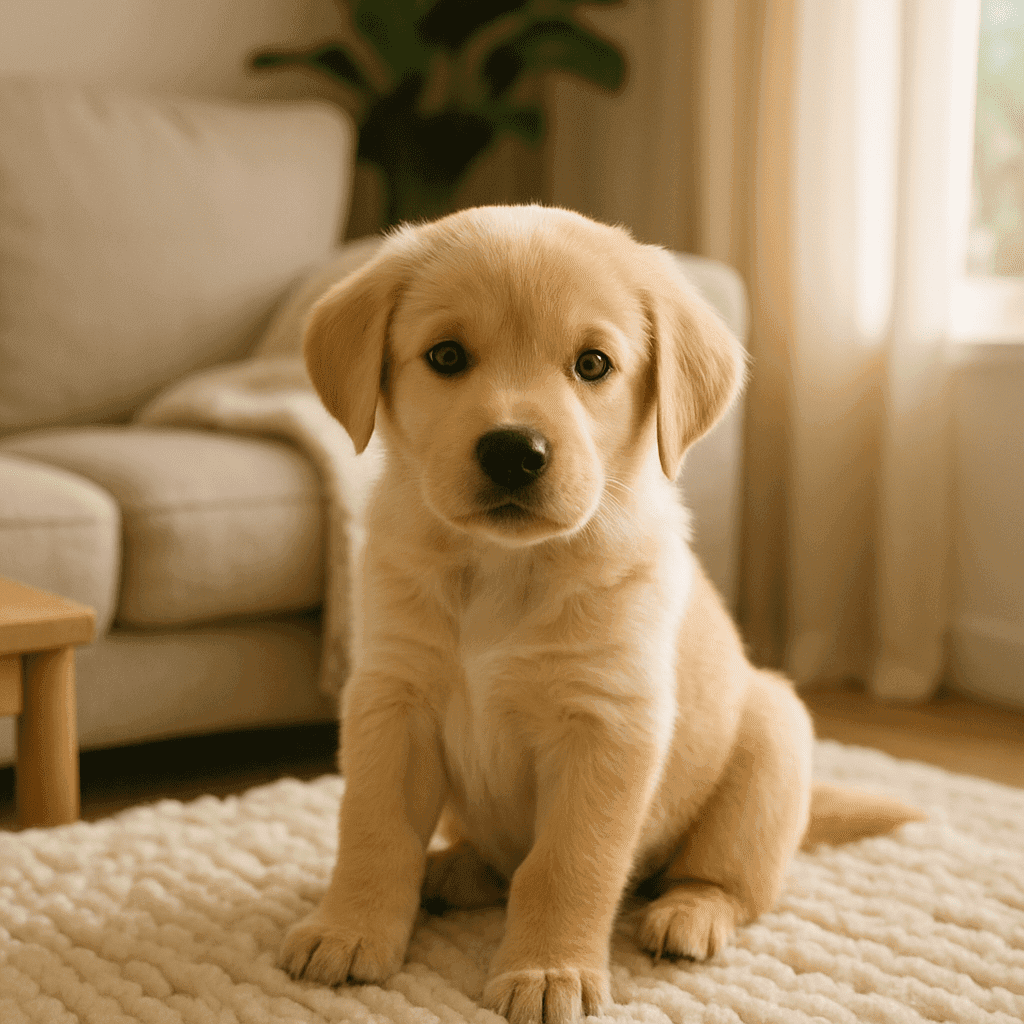
Puppy Pees Inside Right After Being Outside: Why It Happens and How to Fix It
You’ve just returned from the yard, your puppy’s paws are still damp, and a fresh puddle appears on the kitchen floor. That flash of frustration is completely normal, but blaming yourself or the puppy won’t fix it. The good news: this is one of the most common potty training snags, and it almost always comes down to a few specific reasons you can change starting today.
Why Your Puppy Pees Indoors Right After Being Outside
She’s not doing this to upset you. From her perspective, outside is a giant, distracting amusement park, and inside is the quiet, familiar den where she can finally relax. The association between grass and pee isn’t hardwired—it’s a skill you teach, and it takes time.
The “outside is exciting” disconnect. A nine-week-old Labradoodle on a dewy morning will notice every leaf, bird chirp, and interesting breeze. Her brain is so busy processing novelty that the need to pee never reaches the top of her priority list. She didn’t “forget” to go—she simply didn’t register the physical sensation until things calmed down indoors.
The transition trigger. Walking through the doorway can cause a physical release. The change in temperature, the familiar smell of home, and the sudden shift from alertness to relaxation can make a puppy’s bladder let go within 30 seconds. This isn’t a choice; it’s a reflex you can manage with a simple entry routine.
Incomplete emptying. Some puppies will pee just enough to relieve pressure but not fully empty their bladder, especially if they’re nervous or if the outing ends abruptly. The second they feel safe inside, the rest comes out.
Fear or uncertainty. A rescue puppy who’s skittish outside may hold everything until she’s back in the safety of her crate or living room. Loud trucks, strange dogs, or even cold, wet grass can make a sensitive puppy “wait it out” until she’s in her safe zone.
Your own pattern might accidentally reinforce it. If the moment he pees outside you cheerfully rush back inside and end the fun, he learns: peeing means the walk is over. Some puppies will hold back to keep the adventure going, then finish indoors later.
All of these reasons are fixable with a calm, structured reset. The next sections give you the exact steps.
What to Do First When Your Puppy Has an Accident
Stay quiet. Punishment, even a loud “no!” or grabbing his collar, can teach him one dangerous lesson: peeing in front of you is scary. He’ll start hiding to pee—behind the couch, under the table—and you’ll lose the chance to reward the right behavior. Here’s your no-panic protocol.
Step 1: If you catch him in the act. Clap your hands once softly or say “Oops!” in a neutral tone—just enough to interrupt without frightening. Immediately scoop him up and carry him straight to his outdoor potty spot. If he finishes there, celebrate with three tiny, high-value treats and calm praise. This turns a mistake into a learning moment.
Step 2: If you find a puddle after the fact. Breathe. Any reaction—scolding, pointing, rubbing his nose—is useless and damaging. He can’t connect your anger to something that happened minutes ago. Silently clean the spot with an enzymatic cleaner, never ammonia-based products, which smell like urine and actually invite repeat accidents. Note the time, location, and what was happening right before (walk, play, meal) in a simple log.
Step 3: Clean thoroughly. Standard household cleaners don’t remove the scent markers that tell a dog’s nose, “This is a bathroom.” Use an enzymatic cleaner like Nature’s Miracle or Rocco & Roxie and follow the bottle instructions—usually soaking the area and letting it dry completely. This step is non-negotiable.
Step 4: Ask yourself a kind, honest question. Was this my error? Did I stay outside too long and make it a play session? Did I skip a potty break because the last one was “just an hour ago”? Did I miss the sniffing or circling? Write it down. The log will reveal patterns faster than memory.
Step-by-Step Potty Training Reset Protocol
This seven-day reset isn’t about starting over from zero; it’s about tightening your supervision and clarifying the bathroom rules. Follow the sequence, and you’ll usually see a dramatic drop in accidents within three to five days.
1. Build a Predictable Daily Rhythm
Puppies thrive on routine. Attach potty breaks to the same life events every day:
- Immediately upon waking (even from a nap)
- After eating or drinking
- After play sessions or zoomies
- After training
- Every 30–60 minutes for young puppies (under 12 weeks), and every 60–90 minutes for four- to six-month-olds
Use a simple timer. The goal is to take him out before he feels urgency, so he never rehearses the indoor accident.
2. The Five-Minute Rule
Outside, leash your puppy and go to the same small, boring patch each time—no new smells, no toys, no games. Stand still like a tree. Give her five minutes. If she pees or poops, reward her instantly with three pea-sized pieces of chicken or freeze-dried liver right on that spot. Then you can add a minute of calm sniffing or a short walk as a bonus.
If nothing happens after five minutes, don’t wait longer. Calmly walk back inside, put her in her crate or tether her to you, and wait five to ten minutes. Then go out again. Repeat until she goes. This teaches that outside trips are for business, and holding it without a chance to wander indoors breaks the cycle of empty trips followed by indoor accidents.
3. Reward at the Source
Don’t wait until you’re back inside. The treat must happen the moment she finishes, while her paws are still on the grass. This creates a powerful link: “pee here = amazing things happen.” Within a few days, she’ll start heading to that spot and eliminating quickly.
4. Manage Freedom with Umbilical Cord or Crate
During the reset, your puppy should never wander unsupervised. Use a hands-free leash tied to your waist or belt, or keep her in a crate or puppy-proof playpen when you can’t watch her. This prevents sneak accidents and reduces your stress. When you can’t supervise, she’s in a safe, small space—ideally with a chew or stuffed Kong.
5. The Slow-Entry Ritual
This addresses the “transition accident” directly. After a successful outdoor potty, don’t rush to unclip the leash and give her free domain. Walk inside slowly, keep her on leash, and immediately engage her in a mini training session or offer a long-lasting chew. This shifts her brain from “outdoor relaxation” to a calm indoor focus and gives her bladder time to settle. After five minutes of calm, you can supervise her or place her in her management spot.
6. Track Everything for One Week
Use a simple notebook or a digital note. Columns: time of outdoor trip, success (yes/no), accident (yes/no, time, location), what happened before, any notes (distractions, fear). Review it every evening. You’ll spot patterns like “always after the 4 p.m. play session” or “he holds it when the neighbor’s dog barks,” then adjust the schedule.
7. Gradually Expand Freedom
After three consecutive accident-free days in a managed area, give her access to one extra room while you’re present. If an accident happens, shrink the space again—no drama, just management. This isn’t punishment; it’s setting her up to succeed.
Is This Normal? When to Worry About a Medical Issue
Most cases of post-outdoor peeing are behavioral and resolve with the reset protocol. But sometimes, a puppy’s body is trying to tell you something.
Normal (behavioral):
- A puppy under six months who occasionally pees inside after being outside in a new or exciting place
- The outdoor pee is a few drops, then a larger puddle indoors within five minutes
- Accidents happen only when there are big distractions (birds, other dogs, fireworks)
- She’s otherwise energetic, eats well, and drinks normally
Concerning (needs a vet check):
- Straining to pee, yelping, or producing only a few drops repeatedly
- Blood in the urine or frequent licking of the genitals
- Urinating while resting or sleeping (involuntary dribbling)
- A sudden jump in accidents in a previously reliable puppy, especially if accompanied by lethargy or a change in water intake
- Puddles are very small but appear every 10–20 minutes
If you notice any of the concerning signs, pause the training protocol and call your veterinarian. Bring a fresh urine sample if you can. A urinary tract infection, crystals, or even an anatomical issue like an ectopic ureter can mimic a training problem. You can’t train away a medical condition, and waiting only makes it worse.
Mistakes That Make This Problem Worse (And What to Do Instead)
Even well-meaning owners can accidentally deepen the pattern. Here are the most common slip-ups and their immediate fixes.
1. Turning outdoor time into a playdate. If you toss a ball or let him chase leaves before he eliminates, you’ve taught him that outside = fun, not bathroom. The fix: potty trip first, business only, then a short walk or play.
2. Ending the outing the second he pees. He learns: peeing ends the fun. He starts holding back to make the walk last longer. The fix: after he goes, continue a calm minute of wandering or give him a treat scatter, then head inside. The end of the trip shouldn’t feel like a punishment.
3. Punishing accidents. A harsh “No!” or a swat teaches him you’re unpredictable and scary. He’ll start sneaking off to potty in secret. The fix: follow the interruption protocol above—neutral sound, carry outside, reward if he finishes. If you missed it, clean silently and move on.
4. Using ammonia-based cleaners. They mimic urine scent and actually mark the spot as a bathroom. The fix: enzymatic cleaner, every time.
5. Relying on puppy pads during the reset. Pads can confuse a puppy who’s learning to go outside. If you must use them (apartment living), place them as close to the door as possible and still take her out frequently. Eventually fade the pads.
6. Giving full-house freedom too soon. If your puppy can wander three rooms away, accidents will happen, and you may not see them. The fix: tether or crate until the pattern is broken, then slowly expand.
Troubleshooting Guide: Diagnose Your Puppy’s Specific Cause
Because a fearful Shih Tzu needs a different fix than a hyper Labrador, this section walks you through pinpointing why your particular puppy isn’t emptying outside. Work through these questions in order.
Question 1: Does your puppy seem scared or avoid certain outdoor spots?
If she freezes, tail tucks, or pulls back toward the door, fear is overriding her need to pee.
Targeted plan: Move the potty area to a quieter, sheltered corner—maybe a patio with a grass mat or a spot shielded by bushes. Sit with her outside for short, no-pressure sessions (just a minute or two) with delicious treats thrown on the ground. Gradually extend the time. Reward any sniffing or stepping onto the grass. Don’t force her; let her build confidence at her own speed. This can take a week or two, but it’s the foundation for all future outside success.
Question 2: Is your puppy extremely distracted—chasing leaves, barking at birds, eating dirt?
He’s overstimulated and can’t tune into his body.
Targeted plan: Use a short leash and take him to a boring patch of gravel or a single square of pavement. No talking, no eye contact—be a statue. Five minutes max. If he doesn’t go, back inside, confinement, repeat. No toys outside until after elimination. Within a few days, he’ll learn that this spot is for business, not adventure.
Question 3: Does the accident happen within two minutes of walking through the door?
That’s the transition trigger.
Targeted plan: The slow-entry ritual detailed above is your best tool. After you step inside, keep him on leash, offer a stuffed Kong, or start a simple “touch” hand-target game right away. Don’t unclip the leash until he’s been calm and settled for five minutes. This bridges the focus gap.
Question 4: Does she pee a small amount outside, then a big puddle inside?
Incomplete emptying is the cause.
Targeted plan: Give her more time after the first pee. Sometimes a puppy has a “second stream” that comes 30–60 seconds after the first. Stay still for an extra minute or two after she finishes, and watch for a second squat. Reward both. Also, ensure she isn’t distracted during the first pee—keep the environment boring.
Question 5: Do accidents happen at very predictable times of day?
Schedule mismatch.
Targeted plan: Use a schedule generator to map out exactly when breaks should happen based on her age. Adjust water management: offer water freely during the day, but pick up the bowl an hour before bedtime. If accidents cluster at 11 a.m. despite an 8 a.m. break, add a short 10 a.m. trip.
Question 6: Has a previously housebroken puppy suddenly started having accidents?
Look for medical causes first. Rule out a UTI with a vet visit. Also consider a stressful event (a loud noise, a new person, a schedule disruption) that may have temporarily regressed his confidence. In that case, run a mini-reset with extra supervision for a couple of days, but don’t assume it’s purely behavioral until health issues are cleared.
Your Puppy’s Potty Schedule and Daily Reset Checklist
Stopping the indoor peeing cycle requires a clear, realistic schedule tailored to your puppy’s age—not a generic “take him out often” note. That’s where a schedule generator makes everything easier.
Our free Puppy Schedule Generator creates a personalized daily plan with exact potty break times, nap windows, and feeding slots so you never have to guess whether it’s been too long. It aligns with the reset protocol: you’ll see the predictable flow that sets your puppy up for success.
Pair that schedule with this daily reset checklist to keep yourself on track:
- Morning potty break within 2 minutes of waking
- Potty after every meal, every play session, and every training session
- All outdoor trips on leash to a boring spot, maximum 5 minutes of waiting
- High-value treat delivered immediately on the grass after eliminating
- No unsupervised indoor roaming—use tether, crate, or playpen
- Slow-entry ritual after every outdoor trip (calm activity for 5 minutes indoors)
- All accidents cleaned with enzymatic cleaner, no punishment
- Log every success and every accident today
- Check log for patterns and adjust next day’s breaks
- Medical red flag? (straining, blood, dribbling) If yes, call vet
Run through this list each evening for seven days. The combination of a smart schedule and a simple record will reveal exactly where to adjust, and most owners see a sharp drop in accidents before the week is out.
Sources and Safety References
For more detailed guidance, consider visiting the following sources: