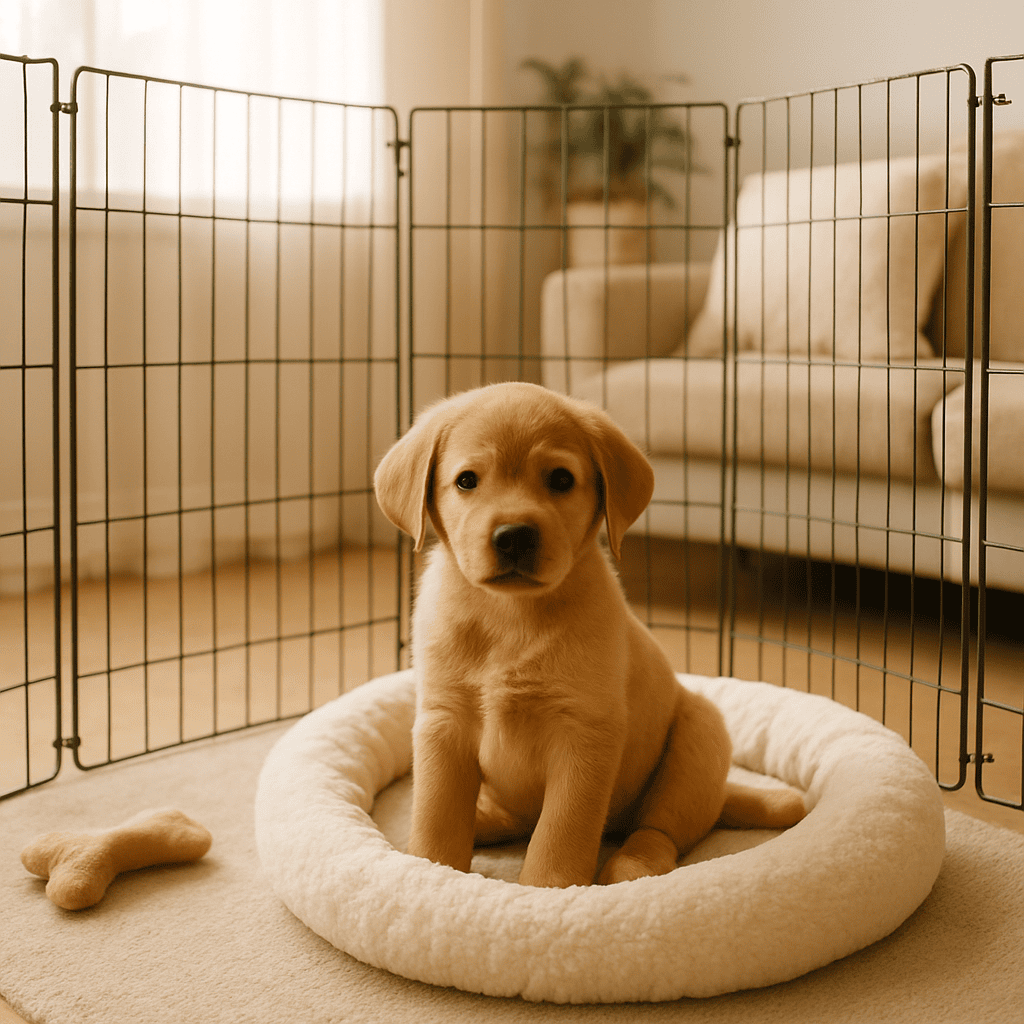
Puppy Hates the Playpen: A Gentle Training Plan to Make It a Safe Space
If your puppy screams, throws herself against the mesh, digs at the floor, or escapes the playpen the second you step away, it can feel like the pen is making everything worse. Many puppies react this way because the playpen represents something scary: being separated from you, losing the ability to follow, or being confined before they understand what the space means. The goal is not to force your puppy to tough it out. The goal is to teach, in small steps, that the playpen is a calm place where good things happen and you always come back.
A good playpen plan is less about “getting the puppy to obey” and more about reading the puppy’s comfort level, protecting recovery time, and changing one thing at a time. If you rush the process, you can accidentally turn the playpen into a place your puppy expects to feel trapped. If you move slowly and stay observant, the same space can become a predictable rest spot instead of a daily battle.
Prepare for the Routine
Before you train, prepare the playpen setup and choose a realistic first session. A puppy who hates the playpen is often dealing with one or more of these: too much distance from you, too much time alone, too much excitement or exhaustion, a scary latch sound, a too-small space, a slippery floor, or a previous experience of being shut in while panicking. You do not need to fix all of them at once. You mainly need to remove the biggest barriers before you begin.
First, make the pen physically safe and low-pressure. Remove collars, harnesses, or anything that could catch on the pen. Put the pen on a non-slip surface if possible. Add a washable mat or towel, a small water bowl, and one or two calm chew items. Keep the pen near you at first, not in an isolated hallway or laundry room. If the playpen has a door that clangs loudly, practice opening and closing it away from the puppy or soften the closing with your hand.
Next, choose a training moment that gives you the best chance. Many puppies do better after a potty break and a little gentle movement, but before they become overtired or zoomie. If your puppy is already frantic, wait. If she is hungry, use part of her meal or a few small, smelly treats. The first session should be only a couple of minutes total, not a long confinement test.
| Ready check | What you want before the session |
|---|---|
| Pen setup | Safe, stable, non-slip, and close to you |
| Puppy status | Recently pottied and not frantic |
| Rewards | 10 to 15 tiny, high-value treats |
| Your time | Enough time to repeat short steps calmly |
| Support | No rushed handoff, no competing task, no immediate departure |
| Fallback | A clear plan to make the session easier if the puppy struggles |
If one of those pieces is missing, simplify the first stage until it is ready. For example, if you only have boring kibble and your puppy spits it out near the pen, that is not a training failure. That is a missing reward. Use something better, such as tiny pieces of plain boiled chicken, cheese, or another puppy-safe treat. If your puppy will not eat near the pen at all, do not close the door yet. The first trustworthy signal is that the puppy can take food near the pen without backing away.
What to Expect at the Start
The first stage should look almost too easy. Your job is to help the puppy learn that the pen is not a trap. Expect sniffing, hesitation, one paw in, a quick step out, a little whining, and maybe a glance at you. Those are normal first responses. A short whine while she is chewing or sniffing is not automatically panic.
Signs that the plan needs to slow down include: refusing treats inside the pen, trembling, cowering, frantic clawing at the floor or mesh, hard escape attempts, high-pitched screaming that climbs rapidly, heavy panting with the mouth open, or loss of bladder or bowel control from fear. If you see those signs, open the pen or remove the barrier pressure, move the food outside the pen, and make the next session easier.
The first few repetitions can look like this: you scatter a few treats on the floor near the pen, then inside the open doorway, then a little farther inside. The puppy follows the food, eats, and walks out. That is a successful opening stage. You are not trying to shut the door yet. You are building the idea that approaching the pen earns food and nothing scary happens.
A common mistake is trying to complete the whole routine in one afternoon. Many puppies show meaningful improvement over a few days, not one long session. Some settle noticeably in two to seven days. Others, especially puppies who have already learned to escape or panic when shut in, may need two to three weeks of shorter, calmer repetitions before the pen feels neutral. Use those timeframes only as a rough guide. Watch your puppy’s response more than the calendar.
Follow the Recommended Sequence
The sequence matters because each step builds on the last. You are looking for calm behavior before you add the next variable. The fastest way to create a puppy who hates the playpen more is to combine too many new things at once: a new location, a closed door, being alone, and being tired. That is too much.
Try this order:
- Sit beside the pen and scatter treats outside and just inside the open door.
- Scatter or place treats deeper inside the pen while the door stays open.
- Feed a meal or a stuffed chew inside the pen with the door open while you sit nearby.
- Invite the puppy into the pen and sit beside it while she chews, with the door still open.
- Close the door for one or two seconds while you feed through the fence, then open it while she is still calm.
- Close the door for five to ten seconds while you sit beside the pen and feed through the mesh.
- Stand up, take one step away, return, and reward.
- Add short indoor distance, such as walking to the kitchen and back, while the puppy has a long-lasting chew.
- Step out of sight for three to five seconds and return without a big greeting.
Each step should be repeated until the puppy looks comfortable. That may be three calm repetitions or it may be three separate days. If the puppy backs away at step 3, return to step 2. If she panics when the door closes at step 5, return to step 4. The required order is not about being strict. It is about not skipping a step that protects the puppy from panic.
A realistic moment might look like this: your puppy steps into the pen to grab a piece of chicken, chews for fifteen seconds, and walks out while you are sitting on the floor beside her. That is not a failed stay. That is exactly how the early stage should look. You are teaching the puppy to enter and remain calm, not to perform a long confinement on day one.
Use the Routine Timeline
Use this in-article routine timeline to choose the next step. Do not treat it as a rigid universal schedule. Each row is a decision branch. Copy it into your notes and use one row per session.
| Session | Puppy response | Decision | Next attempt |
|---|---|---|---|
| Day 1, after potty, just before a meal | Sniffs pen, takes treats near door | Ready for open-door step | Scatter treats inside the open pen |
| Day 1, after meal, calm moment | Steps in, eats, leaves | Repeat same step | Do not close the door |
| Day 2, after potty | Steps in and chews for 20 seconds with you beside pen | Ready for a tiny latch | Close for 1 to 2 seconds while feeding |
| Day 2, later | Whines but continues chewing, no panic | Hold at current step | Repeat same step or reduce time |
| Day 3 | Paws or whines when you stand up | Go back to beside-pen work | Do not add distance yet |
| Day 3 or 4 | Calm for 30 seconds with door closed and you beside pen | Ready for a short absence | Leave for 5 seconds and return calmly |
| Day 4 or later | Calm with you in the next room for 10 seconds | Add duration slowly | Use a stuffed chew or scatter food |
The decision is always continue, adjust, pause, or prepare. Continue only when the puppy shows calm behavior. Pause when the puppy seems unsure but not panicked. Adjust when one variable makes the difference. Prepare when you need a better time of day, a higher-value reward, or a calmer puppy.
For example, if your puppy handled five seconds but whined when you stood up, do not push distance. Return to sitting beside the pen for two more repetitions. If she whined when you closed the door but kept eating, try one second instead of five. That is a useful adjustment. If she refused food after the latch clicked, open the door and go back to open-pen feeding. The sequence is working only when the puppy can stay slightly under threshold.
Adjust the Plan From the Puppy's Response
When the plan stalls, change one variable at a time. This is the difference between useful adjustment and constant improvisation. Useful adjustment sounds like: same pen, same time, but I stayed one step closer. Constant improvisation sounds like: I moved the pen, changed the treats, closed the door sooner, and left the room all in the same session. That makes progress harder to read.
If your puppy escapes, first check the setup. Remove nearby objects she can climb on. Make sure the latch is secure, but do not rely on a stronger latch to fix panic. Many puppies escape because the pen is too small, the floor is slippery, or the puppy was put in while already frantic. Change only the setup while keeping the training sequence gentle. If she keeps climbing, place the pen where she can still see you and use a shorter session.
If your puppy won’t stay in the playpen, ask what happens just before you put her in. Did she potty? Is she thirsty? Did she just wake from a nap? Is she searching for you? A puppy who refuses to stay often has a need that the pen made harder to meet. Meet that need first. Potty before the pen. Offer water before a longer rest. Give a stuffed chew or food puzzle for the first few minutes. Then lower the door pressure until she can stay without crying.
If crying starts the moment you close the door, keep the door open longer. You can close the door when your puppy is already chewing or eating. A common mistake is to wait until the puppy is agitated and then close the door. Instead, close it while she is in the middle of a calm activity. If the crying starts and climbs quickly, open the door and help her settle. You are not rewarding panic by preventing it. You are protecting the learning process.
If the same difficulty repeats at the same transition, pause the plan for a day. Give the puppy calm enrichment outside the pen, such as a snuffle mat or a short chew session. Then return to the last step she handled. This keeps the pen from becoming a daily source of conflict.
Review the First Cycle and Plan the Next Step
After a few days of short sessions, review what actually happened instead of repeating the same setup. Stable progress means the puppy can take food near or inside the pen, enter without forced placement, settle briefly with the door open, and accept short closed-door sessions without panic. A plan that needs support looks like repeated food refusal, hard escape attempts, increasing distress, or a puppy who cannot recover after each session.
Ask yourself these questions after the first cycle:
- Did my puppy eat near or inside the pen?
- Could she step in without being lifted or pushed?
- Could she stay calm for 10 to 30 seconds with the door closed while I was beside the pen?
- Could she handle a very short distance or absence?
- Did I see panic signs or only mild protest?
If most answers are yes, the next step is to add duration gradually. Move the pen only when the current location is stable. For example, if the pen is beside your desk and your puppy settles with a chew for two minutes, add five minutes before you try a different room. If you need to work in another part of the house, carry the calm cue with you: use the same mat, same chew, and same low-key tone.
If most answers are no, do not repeat the same harder step. Pick one variable and make the next session easier. That might be moving the pen closer to you, using better treats, choosing a lower-energy time of day, or removing the door panel entirely for a day. If repeated failure continues at the same transition, seek qualified help. A certified trainer can watch your setup and timing in person or online. A veterinary behavior professional can help if the distress looks more like panic or separation-related behavior than ordinary protest.
The most important next step is not to make the pen perfect in one weekend. It is to protect the puppy’s ability to recover. A quiet two-minute pen session that ends before panic is worth more than a long struggle that teaches her the pen is unsafe. Keep notes on one or two sessions, then plan the next one from what you actually saw.
FAQs
Why does my puppy hate the playpen?
Often it is a mix of confinement, separation, boredom, frustration, or a setup that feels too hard too soon. Some puppies also dislike the pen because it was introduced only when they were already tired, overexcited, or expected to stay there too long.
How do I get my puppy to stay in the playpen without crying?
Start with the door open, use high-value treats, keep sessions short, and close the door only when your puppy is already calm and occupied. If crying starts fast, go back to an easier step instead of trying to outlast it.
What if my puppy keeps escaping?
Check for a slippery floor, a weak latch, climbable objects nearby, or a pen that is too easy to scale. Fix the setup first, but also slow the training down. Escape attempts often mean the puppy is still too worried for the current step.
How long does this training usually take?
Some puppies improve in a few days, while others need two to three weeks of short, calm repetition. The exact timeline depends on how stressed the puppy feels, how consistent the setup is, and whether you advance only when the puppy is ready.
Can I close the playpen door right away?
Usually no. It is better to earn comfort with the open pen first, then add very short door closures while your puppy is calm and engaged. Closing the door too soon can turn a mild dislike into a bigger fear.
What do I do if my puppy panics inside?
Open the pen, lower the pressure, and return to an easier step. Do not keep pushing through panic. If panic is intense, repetitive, or paired with injury, vomiting, diarrhea, lethargy, or refusal to eat or drink, call your veterinarian and consider professional training help.