Puppy Car Sickness on the First Ride: Safe Prep And What To Do
Claire sat in the driver’s seat, keys in the ignition, but she couldn’t make herself back out of the driveway. In the back, strapped securely into a crash-tested carrier, was Leo—an eight-week-old Golden Retriever puppy with paws too big for his body and eyes that hadn’t yet learned what a car was. Claire’s mind was stuck on one terrifying thought: What if he gets sick? What if I traumatize him on his very first ride home?
The next twenty minutes could either be a calm, sniffly introduction to the world or a panicked, messy event that ended with both of them stressed. For Claire, and for you, that second outcome isn’t inevitable. Nausea and drooling are physiological responses, not a personality flaw or a failure on your part, and there is a clear, gentle path through them.
By the time you finish reading, you’ll know the exact 30-minute prep countdown to run before you ever pick up the keys, a scripted 3-step rescue for mid-ride drooling, a symptom map to tell harmless motion sickness from a health red flag, and a 5-session confidence ladder you’ll start the very next morning. This isn’t a fluffy list of travel tips; it’s a lifeline for a nervous first-time owner on pickup day.
Before You Leave: Your 30-Minute ‘No Sickness’ Setup
The hour before you collect your puppy decides almost everything. Most first-ride vomiting happens not because the puppy is “bad in the car,” but because the stomach was full, the car was hot, or the crate was slick and scary. A tight, calm sequence in the final moments removes the preventable triggers.
Start with the stomach. A puppy’s inner ear isn’t the only thing that causes car sickness—full stomachs all but guarantee it. No food for 2–3 hours before the ride. No “small snack to settle the nerves.” That well-meaning biscuit will come back up. If possible, arrange feeding so there is a full 2-hour gap, ideally 3 if they are slightly older. Water is different: a small sip up to 30 minutes before leaving is fine, but not a full bowl.
A few laps of water, 15 minutes before. Claire set her alarm 45 minutes early. She gave Leo his last small meal three hours before they left the breeder’s house, then offered nothing but a few tongue-laps of water from her cupped hand 15 minutes before loading him up. No water bowl in the car during the drive—travel bowls are for rest stops or the destination.
The potty break window. Exactly 5–15 minutes before you place the puppy in the car, visit the designated potty spot. A tiny bladder can make a puppy miserable and more prone to sickness. If nothing happens, don’t panic—just note it and plan a quick stop on the longer drive home.
Car configuration in the last 5 minutes.
- Temperature: Aim for 68–72°F (20–22°C), slightly cool, not cold. Air conditioning on low, directed away from the puppy’s face.
- Noise: Radio off. Your calm, low voice is the only soundtrack.
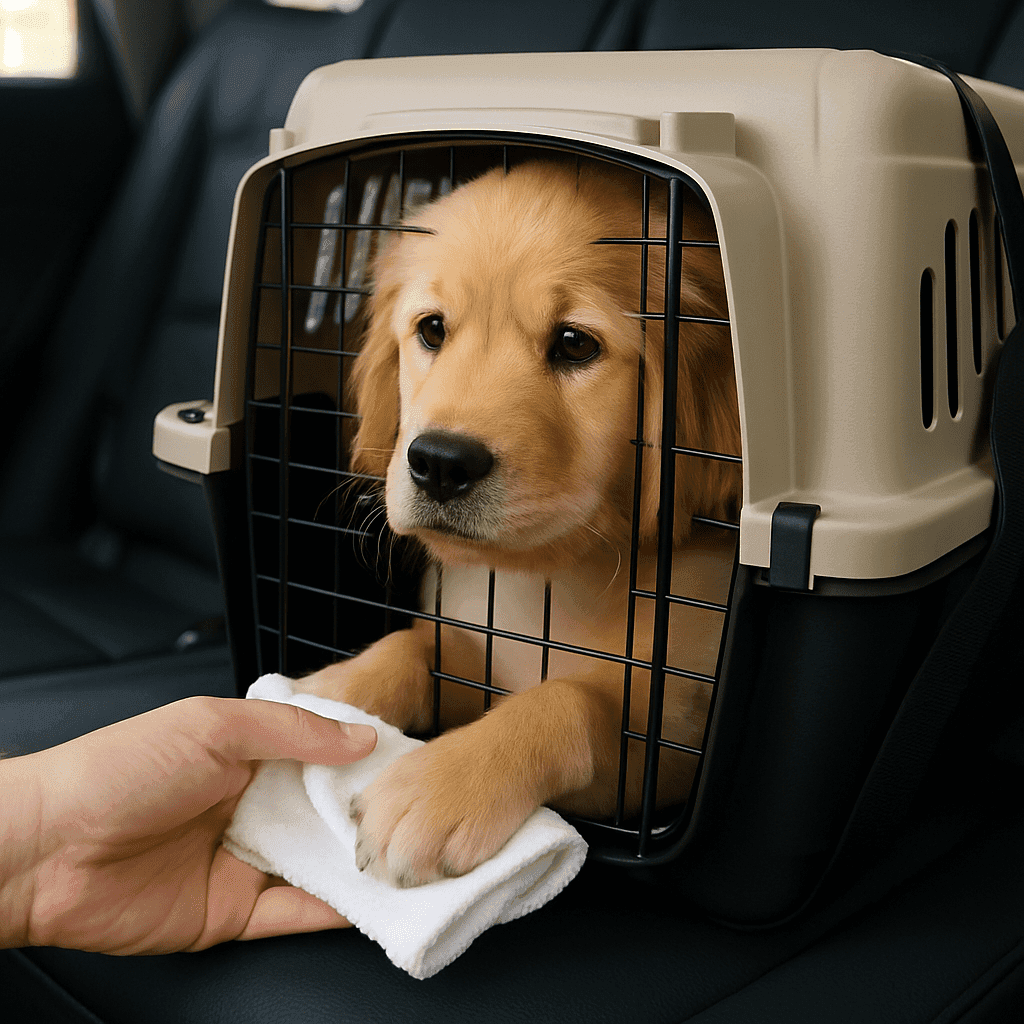
- Restraint: A crash-tested carrier or a puppy car seat harness is essential. A puppy loose on a lap increases motion sickness because the puppy slides with every turn. Secure the carrier in the back seat. Line the carrier with a pee pad, then a towel that smells like your home.
- Waterproof layer: A waterproof backseat cover or an old towel under the carrier reduces anxiety for you.
Your sickness kit in the passenger footwell. Pack a zip-top bag with: 3 unscented baby wipes, a small roll of paper towels, an empty plastic bag for soiled items, and a spare towel.
Owner mindset as you close the door. Move slowly. Speak in a soft, steady murmur. Your puppy doesn’t need a cheerleader right now; she needs a calm anchor.
During the Ride: A 3-Step Rescue If Your Puppy Starts Drooling
Ten minutes into the ride, Claire heard it—a soft, wet smacking sound from the back seat. Her heart rate spiked, but her hands didn’t shake because she knew exactly what to do.
Drooling and lip-licking are early signs of nausea. The goal here isn’t to stop drooling—it’s to prevent it from escalating into vomiting.
Step 1: Silent environment check (less than 10 seconds). Turn off the radio. Lower any loud road noise. Keep your voice low and slow. Say, “You’re okay, we’re almost there.”
Step 2: Cool towel on paw pads (30–60 seconds). If you have a passenger, hand them a clean paper towel dampened with cool water. Gently rest the damp towel on the puppy’s front paw pads. This sensory shift can distract the puppy’s nervous system.
Step 3: Decide to continue or pull over. Watch the puppy’s mouth and eyes. If drooling slows and lip-licking stops, continue driving gently. If it escalates, pull over. Find a safe spot—a rest area, quiet parking lot, wide shoulder away from traffic.
If vomiting happens. One small spit-up is not a disaster. Clean it with an unscented wipe, reassess, and continue if the puppy seems alert. If the puppy vomits again, refer to the Symptom Map and contact your vet.
Is It Motion Sickness or Something Else? The Symptom Map
A single vomit in a puppy is often innocuous. But a young, possibly unvaccinated puppy who vomits twice and then lies flat requires immediate veterinary attention.
Signs That Suggest Motion Sickness:
- Clear drool.
- Lip licking and yawning.
- One episode of vomiting that contains mostly water or a tiny amount of kibble.
- Puppy lifts head and seems alert within 5 minutes after vomiting.
Signs That Need a Same-Day Vet Call:
- Vomiting more than once within an hour.
- Diarrhea, especially with blood.
- Lethargy where the puppy can barely lift its head.
- Gums that are pale, white, or bluish.
- Full-body trembling.
- Vomit that looks like coffee grounds or bright yellow-green bile.
Safety note: This article shares gentle, vet-informed desensitization steps and does not diagnose medical conditions. Vomiting in young puppies can signal serious illness. Always contact your veterinarian immediately if vomiting occurs more than once, is accompanied by diarrhea or lethargy, or if the gums appear pale.
The First Hour Home: Settle Without Stress
The moment you walk through your front door, resist the urge to make everything better immediately. The puppy needs a gentle recovery protocol.
- Straight to the potty spot. Carry the puppy to the bathroom area. Stand still for 5 minutes. If they pee, say “good” quietly.
- Reintroduce water in sips. Allow 2–3 small sips, wait 10 minutes, and repeat.
- Delay the first home meal for at least 1–2 hours. When you do feed, give half the usual portion and observe.
- Quiet, familiar rest for 30–60 minutes. Place the puppy in a crate or playpen with a towel and a chew.
If the puppy refuses water for more than 2 hours or seems abnormally limp, call your vet.
The Car Confidence Ladder: 5 Sessions to a Calm Car Puppy
This is the core tool of the entire guide.
Session 1: Parked, Engine Off (3–5 Minutes)
- Setup: Car parked. Engine off. Puppy in secured crate.
- Action: Scatter treats inside the crate. Wait.
- Goal: Puppy eats treats with no stress signals.
- Advance: Achieve zero stress signals for 2 consecutive sessions.
Session 2: Parked, Engine On (3–5 Minutes)
- Setup: Start the engine.
- Action: Repeat the treat scatter. Let puppy settle.
- Advance: Zero stress signals for 2 full sessions.
Session 3: Micro-Movement (2–3 Minutes Moving)
- Setup: Drive 50 feet.
- Action: Give a chew when parked.
- Goal: Puppy relaxed during movement.
- Advance: No drooling, enthusiastic chewing.
Session 4: Around the Block (Under 5 Minutes)
- Setup: Drive a gentle loop.
- Action: Observe. Offer calm chew when parked.
- Advance: Zero stress signals.
Session 5: Positive Destination (5–10 Minutes)
- Setup: Drive to a quiet park.
- Action: Allow a calm sniff walk.
- Advancement beyond session 5: Increase drive time gradually.
Log every session in your phone notes. If the puppy won’t take treats in a parked car after 3 days, try Session 1 indoors.
When to Pause the Ladder (and Call the Vet Instead)
Hard stop—immediately halt and call your vet if:
- Vomiting more than once per session.
- Diarrhea or lethargy after a session.
- Refusal of water for more than 2 hours.
Soft pause—if:
- Mild drooling recurs twice at the same level.
Script for calling the vet:
“Hi, I’m working on car desensitization with my puppy. He has vomited [number] times during short sessions, and I’ve noticed [additional symptoms]. I want to rule out any medical cause before continuing.”
Your First Car Ride Prep Checklist (Copy and Pack)
- [ ] Puppy last ate 2–3 hours ago. Small sip of water allowed 30 minutes before.
- [ ] Quick potty break before leaving.
- [ ] Crash-tested carrier secured.
- [ ] Waterproof seat cover or towel under carrier.
- [ ] Sickness kit: pee pads, wipes, towels.
- [ ] Water and bowl—no water during drive.
- [ ] Car set to gentle cool, radio off.
- [ ] Phone charged, vet number saved.
Once you’re home, a structured daily routine reduces stress. Try our free Puppy Schedule Generator.
Frequently Asked Questions About Puppy Car Sickness
Should I feed my puppy before the first car ride?
No. An empty stomach drastically reduces vomiting risk. The rule is no food for 2–3 hours before the ride. A tiny sip of water 30 minutes before is okay.
What should I do if my puppy vomits during the ride?
Stay calm. Pull over safely. Clean without scolding. Check gum color. If the puppy seems alert, continue home. If they vomit again, call the vet.
How long should the first car ride home be?
Ideally under an hour. Plan a rest stop if longer. Focus on calmness.
When should I call the vet after a car sickness episode?
Call if vomiting occurs more than once, is accompanied by diarrhea, lethargy, or pale gums. It’s okay to call if uncertain.
What if my puppy refuses treats in the car?
Start with car desensitization indoors. Try calming treats and ensure no external stresses are present in the car environment. If issues persist, consult your vet.
Sources and safety references
- [EXTERNAL_SOURCE: AKC - guidance on puppy’s first car ride and motion sickness]
- [EXTERNAL_SOURCE: PetMD - car sickness in puppies]
- [EXTERNAL_SOURCE: VCA Animal Hospitals - puppy travel safety]