Puppy Wakes Up Too Early: The Complete Morning Routine Fix for First-Time Owners
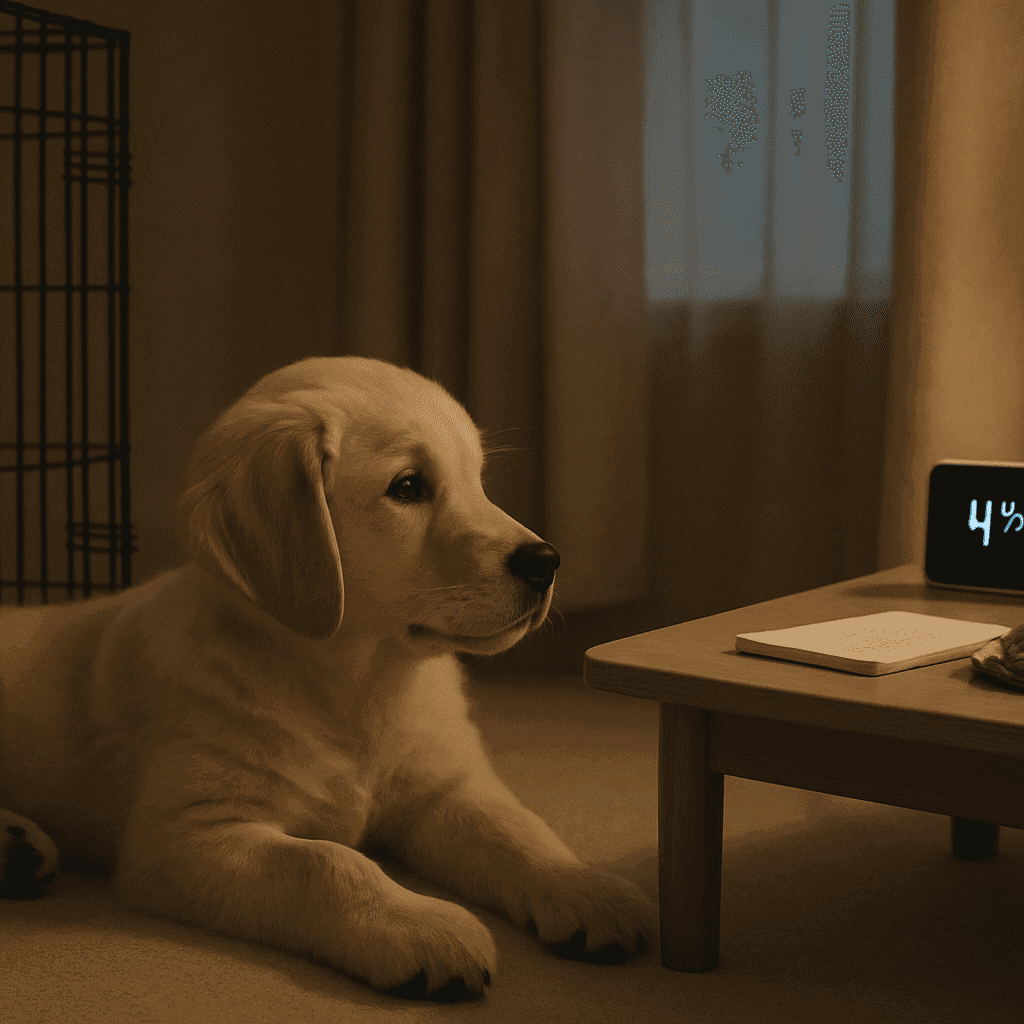
It’s 4:37 AM. The room is dark, your head is foggy, and a high-pitched whine is coming from the crate in the corner. You fumble for your phone, hoping you misread the time, but no—it’s still well before dawn. Your puppy has been awake for five minutes, and the whining is getting louder. You can’t tell if it’s a full-blown emergency or a tiny creature training you to serve breakfast at an hour meant for night-shift workers and insomniacs.Jamie, a first-time Labrador owner, knows this scene by heart. When Scout was nine weeks old, 4:30 AM became their unofficial wake-up call. Jamie would stumble out of bed, scoop Scout up, rush her to the yard, then pour kibble into a bowl, all while the rest of the world slept. Within a week, Scout’s internal clock was set to 4:30 sharp—not because she was broken, but because Jamie had accidentally taught her that early-morning whimpering equals instant food and attention.You’re not a bad owner. Your puppy isn’t broken. Early waking is a fixable schedule puzzle, and the solution doesn’t involve ignoring genuine needs or letting a tiny bladder suffer. In this guide, you’ll get a step-by-step 5-day shift plan, a “whine decision tree” so you never second-guess a 4 AM cry again, and an age-based bladder table to keep everything biologically realistic—so you can finally move that wake-up time to something closer to 6:30 or 7:00 AM, without guilt.Why Your Puppy Wakes Up Too Early (And Why It’s Not Your Fault)
Puppies aren’t doing this to be difficult. The early-waking habit almost always comes down to a small handful of correctable factors: an empty stomach after a long overnight fast, a small bladder that’s reached its limit, environmental cues like the first sliver of daylight or a neighbor’s car starting, and—most commonly—a well-meaning owner who fed the puppy immediately after that first 4:30 AM cry.An 8- to 12-week-old puppy can only hold their bladder for about 2–3 hours overnight, and their digestive system runs on a short clock. If the last meal was at 7 PM, by 4 AM they’re genuinely hungry. If they whine, you let them out, they pee, then you feed them, you’ve just created a powerful chain: “I cry → I get a potty break and breakfast.” The puppy learns that 4:30 AM is the start of the day.Environmental triggers play a sneaky role too. A 14-week-old puppy might start barking at 4:45 AM because Dad’s alarm goes off at 5:00, and she’s learned to preempt it. Even a faint light through a curtain or a garbage truck’s rumble can kick off the cycle. Before you know it, the puppy is anticipating the alarm, not responding to a real need.Why does ignoring alone often fail? Because if the puppy’s bladder is truly full or hunger is driving the whining, ignoring will simply lead to frantic crying, accidents, and a stressed-out puppy. The fix is to adjust the underlying schedule—meal timing, last potty, and the morning rhythm—then gradually shift the first interaction later.Mistake to warn against: Assuming it’s a behavioral problem without first checking food, water, and potty timing. If you’re unclear on the root cause, keep a simple log for three mornings: write down the exact wake-up time, what the whining sounded like, what you did, and whether the puppy eliminated. Patterns will emerge—often pointing straight to last night’s dinner time.Normal or Not? The 4 AM Wake-Up Health & Habit Check
Before you change anything, you need to know whether this is a benign schedule issue or something that belongs in a vet’s hands. Most early waking is normal for a young puppy, but certain signals are a deal-breaker.Safety note: If your puppy has suddenly started waking earlier than usual with no obvious schedule change, or shows any signs of illness—vomiting, diarrhea, straining to urinate, unusual lethargy, or a frantic, un-settling cry that doesn’t pause when you’re nearby—pause all schedule adjustments and contact your veterinarian. Do not try to shift wake times through an underlying illness; it won’t work and can cause real distress.
Use this table to quickly sort between normal early waking and a potential health flag:| Normal Early Waking | Concerning Signs (Call Your Vet) |
|---|---|
| Wakes at the same early time every morning, pees quickly when taken out, settles back into rest | Sudden onset of early waking after previously sleeping longer, especially with accidents |
| Whining stops briefly when you approach the crate | Frantic, non-stop crying that continues even with your calm presence |
| No accidents in the crate | Straining to urinate, blood in urine, or crying while peeing |
| Puppy is active and eating during the day | Vomiting, diarrhea, appetite loss, or extreme lethargy |
| Waking time drifts slightly earlier by a few minutes each day | Waking at very odd hours (like 1:00 AM) after previously sleeping longer stretches |
The 5-Day Morning Shift Plan: Moving Wake-Up Time 15 Minutes a Day
The golden rule: shift your puppy’s “first interaction” (the quiet potty trip you still must offer if they need it) by 10–15 minutes later each day. The key is that you don’t refuse a genuine potty need; you just reschedule everything—meals, last potty, and your own response—so the puppy’s internal clock drifts forward.Why 10–15 minutes per day? Canine circadian rhythms adjust in small increments, and a bigger jump often triggers a relapse. This pace also lets you keep last evening meal and water timing consistent so the puppy’s bladder isn’t set up for a 3 AM emergency.Your Fill-In-The-Blank 5-Day Shift Builder
Copy this table into a notebook or a notes app on your phone. Fill in your current “first whine” time, your target wake time, and the daily shifts. The meal time is when you place food down calmly—not right after the potty trip, but at the newly shifted time.| Day | Current First Whine Time | New “Silent Potty Check” Time | Calm Meal Time | Notes |
|---|---|---|---|---|
| Day 1 | Write your current early wake time, e.g., 4:45 AM | 4:45 AM – take out on leash, no words | 5:00 AM | No food before this. If puppy eliminates, back to crate. |
| Day 2 | 5:00 AM | 5:00 AM – same silent potty check | 5:15 AM | Last evening meal should now be around 7:30 PM |
| Day 3 | 5:15 AM | 5:15 AM – if whines at earlier time, use decision tree | 5:30 AM | Adjust last water pickup: remove water 1.5–2 hours before bedtime |
| Day 4 | 5:30 AM | 5:30 AM | 5:45 AM | If puppy slept until 5:30 without whining before, celebrate silently. |
| Day 5 | 5:45 AM | 5:45 AM | 6:00 AM | Target wake time achieved. Continue shifting further if needed. |
The Whine Decision Tree: Potty Need, Attention, or Something Else?
Here’s the moment-by-moment script that ends the 4 AM “should I or shouldn’t I” debate. You’re not ignoring your puppy; you’re responding with a system that protects both of you.Step 1: Check the clock. How long since the last potty? If it’s under 3 hours for a small breed puppy or under 4 hours for a medium-to-large breed puppy, a potty need is less likely (see the age-bladder table in the next section). Still, don’t assume.Step 2: Wait 2–3 minutes without doing anything. Sit by the crate, don’t talk, don’t make eye contact. Listen: is the whining escalating in pitch and urgency, or does it pause and come in bursts? Escalation often indicates a physical need; on-and-off whining often signals “I want you here.”Step 3: If the whining continues or escalates, clip on the leash and take the puppy out for a 100% boring potty trip. No “good morning,” no play, no treats, not even a smile. Walk to the potty spot, stand still, and wait up to 5 minutes. If the puppy eliminates, give a soft “good pup” and walk straight back to the crate. No detours to the kitchen.Step 4: If no elimination happens within 5 minutes, return the puppy to the crate. Now sit quietly within sight of the crate for a few minutes. If the puppy whines again but you know the bladder is empty, it’s likely an attention-seeking behaviour. Do not re-open the door; instead, stay nearby in a calm, still way—this teaches that quiet presence is available, but 4 AM party time isn’t.Step 5: Check for discomfort. If the whining is frantic and nothing else fits, quickly scan: is the crate soiled? Is it too warm? Is the puppy’s foot caught? Solve the physical issue and then return to the plan.
Safety note: Never withhold a true potty need to stick to a schedule. If your puppy really has to go, take them out. The decision tree helps you tell the difference, but if you’re unsure, err on the side of the boring potty break.Age-Specific Overnight Potty Durations & Nap Timing That Prevent Early Waking
A 9-week-old puppy cannot physically hold their bladder for 8 hours, and trying to enforce that will backfire. Use this table as a rough guide for the maximum time between overnight potty breaks, then adjust your last-evening potty to match. Remember that smaller breeds often have smaller bladders and may need slightly more frequent breaks than a large-breed pup of the same age.| Puppy Age | Max Overnight Hold (Approx.) | Small Breed Caveat |
|---|---|---|
| 8–10 weeks | 2–3 hours | May need 2-hour breaks |
| 10–12 weeks | 3–4 hours | Some small breeds still 3 hours |
| 12–16 weeks | 4–5 hours | Gradually improving |
| 4–5 months | 6 hours | Many can hold 6, but not all |
| 6+ months | Up to 8 hours | Large breeds manage better; small breeds may still need a 6 AM out |
- 6:30 AM – silent potty break, back to crate until meal time
- 7:00 AM – breakfast (after shift completion)
- 7:30 AM – short calm play, then a 30-minute nap
- 7:00 PM – dinner
- 7:30–8:00 PM – calm activity, no wild fetch
- 9:30 PM – last water lifted
- 10:45 PM – final potty break
- 11:00 PM – crate with a snuggle toy, lights out
Working Owner Schedule: Shifting Wake-Up Without Ruining Your Morning
If you have to be out the door by 7:30 AM, you might think the only way to manage is to keep that 5 AM wake-up so you have time to exercise and feed the puppy. The good news is that you can still shift the wake time closer to your own alarm—you just need to compress the morning routine and lean on evening prep.Let’s take Sarah, a nurse who leaves at 6:00 AM. Her 14-week-old pup initially woke at 5:00 AM, and Sarah fed her immediately, then rushed through a quick walk before putting the pup back in the crate with a Kong. By Day 5 of the shift plan, Sarah’s target first interaction was 5:45 AM. Her morning looked like:- 5:45 AM – silent potty trip (the pup had already started holding longer)
- 5:50 AM – back to crate with a stuffed Kong, no breakfast yet
- 6:00 AM – Sarah quietly gets ready, the pup works the Kong and settles
- 6:15 AM – Sarah leaves, dog walker arrives at 9:00 AM for a break
- Calm breakfast was shifted to 6:45 AM by the dog walker
How to Tell It’s Working (And When to Pause and Call the Vet)
Progress with this plan isn’t always linear, but you’ll see clear signals.Green flags (by day 5–7):- The puppy begins waking closer to the new target time
- Whining reduces from minutes to seconds
- After the potty trip, the puppy settles back within 2–3 minutes
- Daytime naps improve because the puppy is better rested
- On Day 3 or 4, the puppy whines a bit earlier again. This is often temporary. Hold for an extra night, then continue.
- The puppy shows signs of distress
- Appetite drops, or you notice vomiting, diarrhea, or straining
- The puppy suddenly wakes at a new time after having slept longer before
- Any blood in urine or feces
Early Wake-Up Cause Check & Action Guide
Before you start, work through this checklist. It doubles as a daily log you can keep beside the crate.- Record wake-up time for 3 days.
- Check last meal time and portion.
- Ensure final potty break is right before you go to sleep.
- Evaluate crate setup.
- When the first whine happens, wait 2–3 minutes.
- Take the puppy out for a silent, no-play potty trip.
- If several nights show no real potty need, begin the 5-day shift plan.
- Note any signs of illness and call your vet before continuing.
Frequently Asked Questions
Is it normal for a puppy to wake up before 6 AM?
Yes, especially under 4 months. Their bladder capacity and feeding schedule often set a natural wake time around 5–6 AM. It can be shifted gradually—you’re not stuck with a dawn patrol forever.How late is too late to shift the wake-up time?
You can move it to a time that fits your family’s schedule, but never push the puppy beyond their safe bladder holding limit. For very young pups, 6:30–7:00 AM is a realistic goal; older puppies can reach 7:30–8:00 AM.Should I feed my puppy immediately when they wake early?
No. Feeding right away reinforces the early wake-up. Wait until the target meal time. Offer the boring potty break, then give breakfast at the new time.How do I distinguish between a true potty need and attention-seeking?
Use the decision tree: check the time since the last potty, note the whine pattern, and do the 5-minute boring potty test. True need results in elimination; attention-seeking often pauses when you’re present.How long does it take to fix early waking with a schedule change?
Most owners see improvement in 5–7 days, with full adjustment within two weeks. Small regressions are normal—just hold the step for an extra day.A Final Note on Humane Training
According to the American Veterinary Society of Animal Behavior, punishment and ignoring distress are not appropriate for routine puppy issues. This shift plan is built on meeting your puppy’s needs while gently working with their biology. If you ever feel stuck or your puppy shows signs of deeper anxiety, reach out to a certified trainer.Once you’ve filled in your shift builder and started tracking, you may want a full, personalized daily schedule for your puppy’s age. Generate your puppy schedule to create a routine that aligns with the wake-time you’re building.