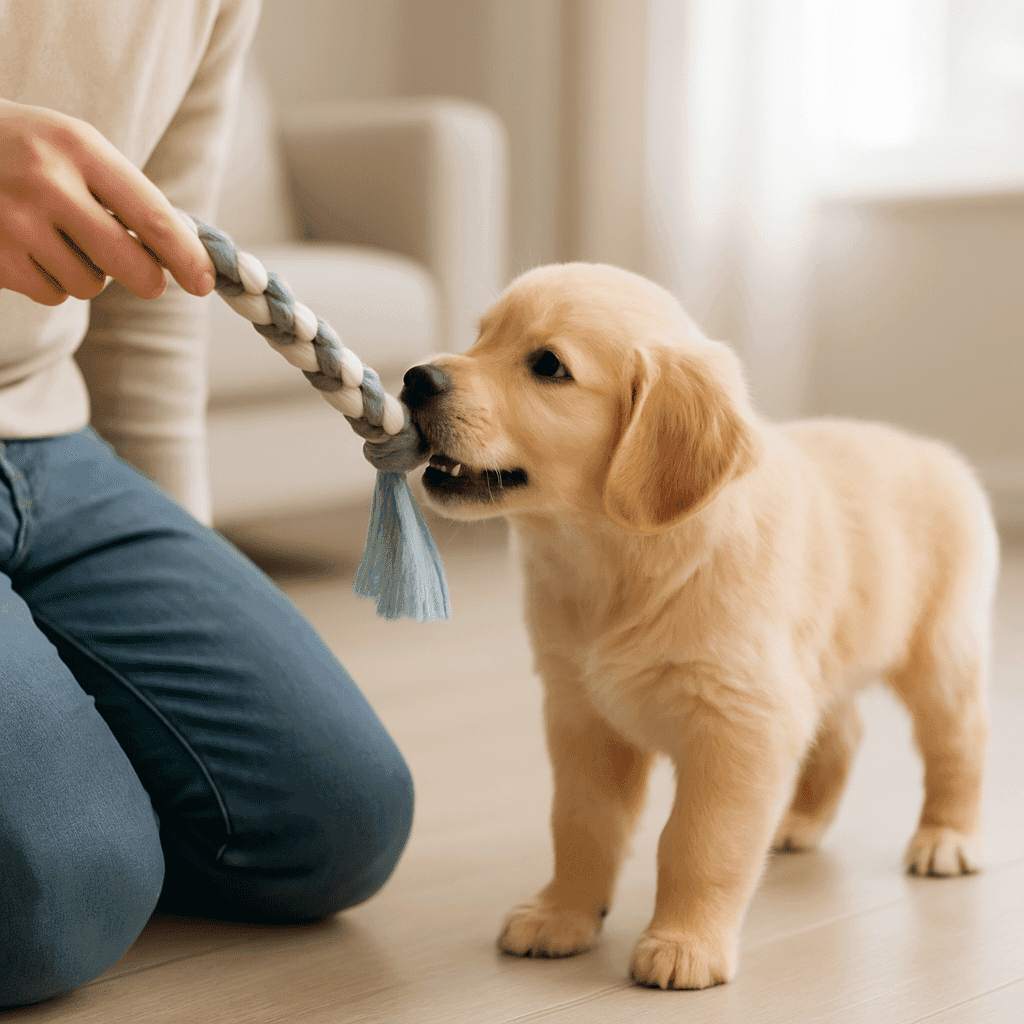
Puppy Biting Clothes and Hands: A Calm Response Plan for First-Time Owners
The first step in stopping unwanted biting is mastering the freeze. When your puppy’s teeth touch fabric or skin, stop moving completely. Avoid pulling, shouting, or making sudden movements. This halts the predator-prey instinct, making your clothes less appealing as a toy and preventing escalation. Begin practicing this change immediately.Fast Answer
To quickly manage puppy biting, stop moving when teeth contact fabric or skin, say 'ouch' calmly, and offer a toy. Use these steps consistently to teach better behavior and reduce biting episodes.Why Your Puppy Can’t Keep Their Teeth Off You (And Why It’s Not Aggression)
A puppy uses their mouth much like a toddler uses their hands—to explore the world. When they nibble at your sleeve or grab the hem of your dress, it's not about dominance. It’s driven by instincts: exploring textures, relieving teething pain, and responding to movement. Teething peaks between 8 and 16 weeks, the same period most new puppy owners bring their puppy home. During this time, chewing and mouthing are constant to ease discomfort.Movement is a major trigger. A dangling hoodie string or a swinging pant leg mimics prey’s motion. Overstimulation also plays a role—an excited or tired puppy may lose bite inhibition. Understanding these triggers is crucial to addressing biting without resorting to fear or punishment.Normal vs Concerning Behavior
Normal Mouthing- Gentle, stops with redirection.
- Tugs on pants stop when you stand still.
- Light mouthing without pressure during play.
- Calms within 15 seconds when you are still.
Concerning Signs
If you notice concerning signs, consult with a force-free trainer and your veterinarian. For most owners, this is normal developmental mouthing.- Stiff posture, hard staring, deep snarling.
- Biting without interaction.
- Guarding food or toys with aggression.
- Breaking skin repeatedly without improvement after consistent protocol.
The No-Shout Bite Redirect Protocol: Clothes vs. Hands
Different triggers require different responses. Use these exact protocols with precision timing and practice until they become second nature.Clothes Protocol
- Instant Freeze (3 seconds): Stop moving when the puppy bites fabric. Pulling fabric invites a tug game. Stand still as a post.
- Calm 'ouch' (1 second): Say 'ouch' in a calm, flat voice.
- Offer a Tug Toy (3–5 seconds): Present a tug toy at mouth level. Wiggle gently, mimicking the fabric motion.
- If they take the toy: Praise softly and engage in a gentle tug game.
- If ignored: Freeze again for 10 seconds.
- If biting persists: Proceed to the hyperarousal exit by stepping behind a gate for 30 seconds.
Hands Protocol
- Keep Hand Still (2–3 seconds): If bitten, keep the hand stationary.
- Calm 'ouch' (1 second): Deliver calmly.
- Offer a Chew (2–3 seconds): Present a durable chew or frozen Kong sideways.
- If they take it: Gently wiggle and praise.
- If hand is mouthed again: Stand up, fold your arms, look away for 15 seconds.
- Re-offer the chew: If persistent, step away behind a barrier for 30 seconds.
Practical Scenarios
- Kitchen: The puppy bites pants. Freeze, say 'ouch', offer a toy. If released, praise softly.
- Sofa: Puppy mouths your hand. Still your hand, offer a Kong; praise gentle behavior.
When the Biting Escalates: The Hyperarousal Safe Exit
Puppies may lose self-control and escalate biting. This often occurs when they’re overtired or overstimulated.Signs of Hyperarousal
- Stiff body
- High-pitched whining, growling
- Hard stare
- Ignoring toys
- Aggressive biting
The Safe Exit Sequence
- Say 'all done' calmly (2 seconds).
- Turn and move to a separate space.
- Step over a gate or into another room.
- Stay away for 30 seconds to 2 minutes.
- Re-enter calmly with a Kong or chew stick.
Kid-Proofing the Calm Response: Teaching Children to Act, Not React
Teach children to interact safely with puppies using the ‘Be a Tree’ method. This approach minimizes bites and teaches calm reactions.Be a Tree Practice
- Stop and freeze
- Fold arms
- Look at the floor
- Stay silent
The 5 Biggest Owner Mistakes That Make Biting Worse
| Don't | Why It Backfires | Do Instead |
|---|---|---|
| Pulling away | Invites chase and tougher bites. | Freeze, offer toys. |
| Shouting | Increases adrenaline. | Calm, flat 'ouch'. |
| Mouth-shutting | Creates fear and defense. | Redirect with chew. |
| Rough play | Encourages hand as a toy. | Use toys in play. |
| Inconsistency | Confuses puppy. | Clear rules and approved toys only. |
How to Know You’re Making Progress (The 4 Signs)
- Independent Redirection: Puppy chooses toys instead of clothes.
- Gentler Mouthing: Softer pressure on skin.
- Shorter Biting Episodes: Decreased duration and frequency.
- Quicker Calming Post Hyperarousal: Puppy settles more swiftly.
Practical Checklist
- Use freeze and calm 'ouch' for biting incidents.
- Always have chew toys available.
- Practice 'Be a Tree' with children.
- Recognize signs of hyperarousal and use safe exits.
- Ensure consistency in responses.
Frequently Asked Questions
Why does my puppy bite more in the evening? Puppies often have bursts of energy in the evening, known as the "puppy witching hour." Providing structured playtime and engaging toys can help manage this.How long will it take for my puppy to stop biting? With consistent application of the protocols, you should start seeing improvement within 2–3 weeks. Every puppy is different, so patience is key.Can puppy biting lead to aggression? Most puppy biting is part of normal development and not a sign of aggression. Persistent concerning signs should be discussed with a professional.What if my puppy doesn’t like chew toys? Experiment with different types and sizes of toys. Some puppies prefer soft toys, while others like rubber or rope varieties.Generate your puppy schedule for a calmer daily routine.