Puppy Not Eating: What Is Normal, Simple Steps To Encourage Appetite, And When To Call A Vet
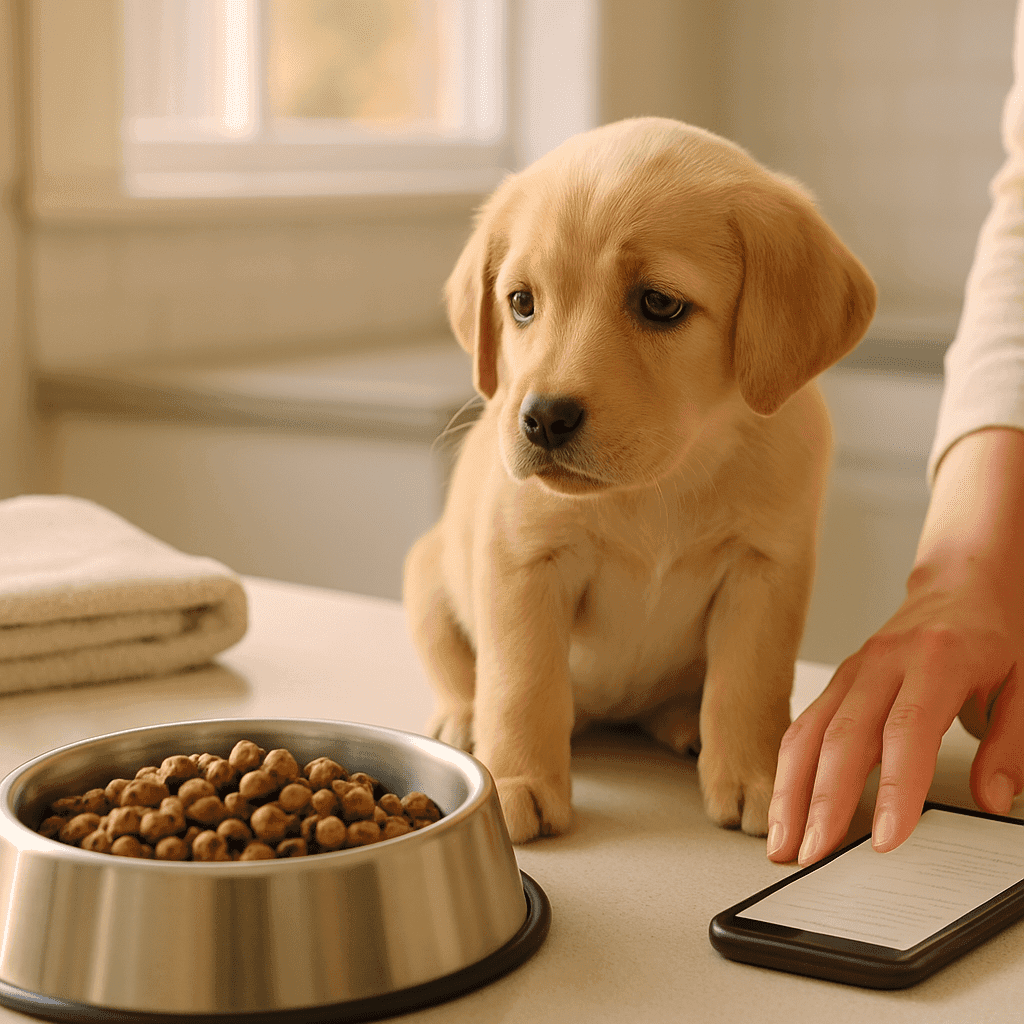
It's Day 2 with your new puppy. You've set up the crate, read all the books, and you're already exhausted. At 7 p.m., you fill the bowl with the exact food the breeder recommended, place it in the quiet corner of the kitchen, and... your puppy walks away without a second glance. Your brain immediately races: "Is she sick? Did I buy the wrong food? Wait, when did she last eat? Is this the start of something serious?"Take a breath. In the next three minutes, you'll know whether this moment belongs in the "normal new-puppy hiccup" column or the "call the vet right now" column—no guesswork, no guilt. You'll learn a simple physical check that rules out immediate danger, a traffic-light triage card that tells you which zone your puppy is in, safe home tricks to tempt a healthy but hesitant eater, and a 24-hour watch plan that prevents that awful "should I have called sooner?" regret. Let's walk through this calmly, together.Stop, Don't Panic: The 3-Minute Symptom Check
Before you try to coax a single bite, do this rapid assessment. Grabbing a treat and playing chef without checking your puppy's vitals is like Googling a cough before taking your own temperature. Get your eyes and hands on the puppy, and tick through these seven items.Before You Panic: 7 Rapid-Fire Checks
- Gum color: Lift the lip and look at the gums. Healthy gums are bubble-gum pink and moist. Pale, white, blue-tinged, or brick-red gums are a bright red flag. Press a fingertip gently on the gum—the color should return in less than two seconds (capillary refill). If it doesn't, or the gums look wrong, stop and call the vet.
- Energy level: Call your puppy's name. Does she look at you, stand up, or even walk over? A puppy who skips a meal but bounces to greet you is a completely different patient from the puppy lying in her crate who won't even lift her head. If your puppy is too weak to stand or seems unaware of you, that's an immediate concern.
- Hydration: Gently pinch a fold of skin on the back of her neck, then release it. In a well-hydrated puppy, the skin snaps back instantly. If the skin stays tented or moves back slowly, dehydration is setting in. This becomes an emergency when paired with not drinking.
- Recent vomiting or diarrhea: Think back over the last few hours. Even one vomit containing blood, or a stool with fresh blood or a foul, metallic smell (often linked to parvovirus), changes everything. Note how many times, what it looked like, and whether the puppy seemed in pain during the episode.
- How many hours since the last meal? Write down when she last ate a normal-amount meal. Less than 12 hours is very different from 24 hours without food.
- Is she drinking water? Go fill a clean bowl with fresh water and offer it. If she drinks eagerly, that's a reassuring sign. If she turns away and hasn't had water in 6 hours, you're moving toward the Yellow or Red zone.
- Scan the environment: Did something change? A new home (first 72 hours), a recent vaccination, loud noises from a party, a completely different food brand you just switched to this morning, or even teething pain can all contribute. Note it—it will help you or your vet make sense of the puzzle.
Important: If any single check reveals a red flag—pale gums, labored breathing, collapse, blood in vomit or stool, or no drinking for 6+ hours—do not continue with home tricks. Call your veterinarian right now. For anything else, you're ready to move to the next section.
What's Normal & What's Not: Age, Teething, And The Treat Trick
Most first-time puppy owners either overreact to a skipped meal or underreact to a warning sign because "she ate a treat earlier." Let's clear up what's actually normal and when a wagging tail doesn't mean the all-clear.Normal scenarios that often cause food refusal:- New-home stress (first 48–72 hours): An 8-week-old Labrador who won't touch breakfast on Day 2 but still plays, drinks, and has a firm stool is likely just overwhelmed. The transition from litter to your kitchen is a lot. Appetite typically returns within 36–48 hours. (If your puppy is brand new, a new puppy first 72 hours plan can help you structure the first days and reduce stress-induced issues.)
- Teething (12 weeks to 6 months): Sore gums can make dry kibble painful. You might see your puppy approach the bowl, mouth a few kibbles, then drop them—then eagerly lap up wet food or softened kibble. This is classic teething discomfort, not a systemic illness.
- Breed tendencies: Small and toy breeds (Chihuahuas, Yorkies, Toy Poodles) may skip an occasional meal without cause, while large-breed puppies (Labrador, Golden Retriever) rarely skip a meal unless something is off. Context matters.
- Post-vaccination lull: A mild decrease in appetite for an afternoon after shots is common. The puppy might be a little quiet, but she should bounce back within 24 hours.
- The treat trick (eats treats but not meals): A 5-month-old Beagle who wolfs down chicken strips but snubs his premium kibble has learned that holding out gets tastier options. This is behavioral pickiness, but it's only "safe" if your puppy is otherwise perky, has normal stools, and has no other symptoms. If the same puppy suddenly refuses even his favorite treat, that's a warning.
- Refusing two or more meals in a row, or ignoring food for over 12 hours while awake.
- Hiding, sleeping all day, or unable to be woken easily.
- Repeated vomiting (even just yellow bile) or diarrhea with a foul odor.
- Not drinking water after being offered multiple times.
- Pale gums or a distended belly.
Your Puppy Appetite Triage Card: Green, Yellow, Red Zones
Instead of staring at a wall of text, use this traffic-light system. Check where your puppy lands right now, and follow the action column. If you're between zones, always choose the more cautious one.Safety note: This triage card is a home assessment tool, not a substitute for a veterinarian. If any Red Zone sign appears, call your vet immediately.
| Zone | Symptoms | Action |
|---|---|---|
| ✅ Green Zone | Alert and responsive; pink moist gums; last ate < 12 hours ago; no vomiting; drinking water; normal stool within the last 24 hours. | Try safe food tricks now. Offer a warm, softened meal with a 10-minute timer. You're in "encourage, don't force" territory. |
| ⚠️ Yellow Zone | Skipped 2 meals in a row OR 12–24 hours without food; mild diarrhea once; energy slightly low but still walks and drinks; no vomiting or blood. | Start the 24-hour watch plan. Track symptoms every 6 hours using the tracker below. If anything worsens, move to Red. |
| 🛑 Red Zone | No food for > 24 hours (even less for tiny puppies under 12 weeks); repeated vomiting, especially with blood; bloody or foul-smelling stool; pale, blue, or brick-red gums; extreme lethargy (can't stand); not drinking for 6+ hours; distended, painful belly. | Stop all home attempts. Call your vet or emergency clinic immediately. Do not wait until morning. |
Green Zone: Safe Home Tricks To Encourage Eating (Without Making Things Worse)
If your puppy is clearly in the Green Zone, you have room to gently nudge her appetite. The goal is to make the meal more appealing without creating a picky monster or making her sick. Use this three-step, timed approach.Step 1: Warm it to baby-bottle temperature. Puppies find warm food more aromatic and enticing. Aim for roughly 100°F—just slightly warm to your inner wrist, like you'd test a baby bottle. Never microwave the food to hot; that can burn mouths and destroy nutrients. A quick 10–15 seconds in the microwave followed by thorough stirring and a temperature test is fine.Step 2: Soften the texture. For a teething puppy or one who seems to struggle with hard kibble, add a spoonful of warm water, low-sodium bone broth (must have no onion, garlic, or other Allium ingredients), or a teaspoon of 100% pure canned pumpkin (not pie filling). Let it soak for 5 minutes until the kibble swells and becomes a soft mash. Some owners find a slow-feeder bowl helpful because it makes eating less overwhelming, but a regular bowl works just as well.Step 3: Initiate with a dab and hand-feed just a few pieces. Put a tiny smear of wet puppy food on her nose. She'll instinctively lick it off, which often kick-starts eating. Then, hand-feed three or four pieces of the softened food to build momentum. Once she's interested, place the bowl down and step back. Set a timer for exactly 10 minutes. If she doesn't eat, pick up the bowl without any fuss, and do not offer anything else until the next scheduled meal (2–3 hours later). No treats, no table scraps, no panicked menu changes.If she eats a small amount, great—celebrate quietly and resume your normal routine. If she refuses after two tries spaced a few hours apart, or if you notice any Yellow Zone sign (even a single soft stool or slight energy dip), move to the Yellow Zone watch plan.What not to do: Resist the urge to empty the fridge. Pieces of cheese, lunch meat, or full-fat cream are risky—they can trigger pancreatitis or severe diarrhea in a young puppy. Keep it bland, warm, and predictable.Yellow Zone: Your 24-Hour Watch Plan & Symptom Tracker
When your puppy is "off" but not yet in crisis, this hour-by-hour plan replaces the dangerous "we'll just wait and see" vagueness. You'll log specific details so that if you do need the vet, you can hand them a clear history instead of a jumble of memories.Use the table below as your tracker. Grab a notebook or open your phone's notes app and copy this template.| Time window | What to do | Log these details |
|---|---|---|
| Hour 0–6 | Recheck gum color, energy, and hydration. Offer one Green Zone meal (warm, softened) for 10 minutes. | Time of offer, how much food eaten (0 pieces/a few/half/full), water intake (approx ml or "small drink"), energy score 1–5 (1=limp, 5=normal puppy zoomie), any vomit or diarrhea. |
| Hour 6–12 | Evaluate water intake. If drinking well and still bright, offer food again. If any new vomit or diarrhea appears, call the vet. | Same as above. Note stool consistency: firm, soft, runny, bloody, or none. |
| Hour 12–18 | If still not eating but puppy is alert, drinking water, and has not vomited, you can continue watching. If energy drops or she seems wobbly, call the vet. | Continue logging. Compare earlier energy scores. |
| Hour 18–24 | Unless there is clear improvement (she ate something voluntarily, energy is back, no new symptoms), call your vet for guidance. Do not push past the 24-hour mark. | Record the total hours without food, the final water intake, and any changes. |
Red flags that cancel the waiting game: New vomiting (even once), diarrhea with blood or mucus, gums turning pale, or no water for 6–8 hours. At any point, jump to the Red Zone and call the vet. The watch plan is not a punishment—it's your structured safety net.
Red Zone: When To Call The Vet Right Now
There is no gray area here. If you hit any one of the following triggers, stop everything and dial your vet. Do not rationalize it away because the puppy wagged her tail an hour ago or because "the vet is closed." Emergency clinics exist for this exact reason—and they'd far rather you call early than wait until morning.Call the vet immediately if your puppy:- Has gone more than 24 hours without eating, or for very young / tiny puppies, even less than 12–15 hours with concerning signs.
- Has vomited multiple times, especially if the vomit contains blood or looks like coffee grounds.
- Has passed bloody diarrhea or a stool with a distinct, foul, metallic odor (classic parvovirus sign).
- Shows extreme lethargy—cannot stand, won't respond to her name, or seems limp.
- Has not drunk any water in over 6 hours, and her gums feel dry or tacky.
- Has pale, blue, or brick-red gums, or is breathing shallow and fast.
- Has a swollen, hard belly and whines when picked up.
Safety note: This guide cannot diagnose or treat your puppy. If you see any of the Red Zone signs, get professional help. You're not bothering the vet; you're being a responsible owner.
The Rookie Mistakes That Make Food Refusal Worse
Good intentions can backfire. Here are five mistakes I've seen panicked owners make—mistakes that can turn a simple skipped meal into a full-blown emergency.- Force-feeding with a syringe. Without a vet's instruction, syringing food or water into a puppy's mouth can cause aspiration pneumonia if the liquid goes into the lungs. Never do this unless your vet specifically shows you how and when.
- Abruptly switching to a brand-new food. If your puppy refuses, you might be tempted to open three different cans and offer a buffet. That can trigger nasty diarrhea and severe stomach upset. Stick to one gentle variation (the same kibble, softened) for 24 hours.
- Drowning the meal in high-fat toppers. A little warm water is safe; a slosh of bacon grease or full-fat cream is not. High-fat foods can spark pancreatitis in puppies, which is painful and requires hospitalization. Low-sodium bone broth (onion/garlic-free) or pure pumpkin are the only add-ons you should use.
- Ignoring lethargy because "she's just tired." A puppy who refuses food and sleeps all day without engaging is not being lazy. Energy must be tracked with a number, not a hunch. If energy is 2 or below on the 1–5 scale, treat it as a Red Zone sign.
- Waiting 48 hours or more because "dogs can go days without eating." That advice applies to healthy adult dogs, not growing puppies. Puppies have minimal reserves; small breeds can crash fast. Never exceed 24 hours without professional input.
Quick Answers To Panic Questions (0-60 Second Read)
How many hours without eating is normal for a puppy?
Up to 12 hours overnight is safe for a healthy puppy. If a puppy refuses multiple meals while awake and the total time exceeds 24 hours, call your vet.What if my puppy drinks water but refuses food?
Drinking is a good sign that rules out severe dehydration. Try Green Zone tricks for 24 hours, but if she still won't eat or develops any other symptom, move to the Yellow or Red zone.Is teething a valid reason for appetite loss?
Yes. Sore gums can make dry kibble painful. Soften food and offer cold chew toys. If refusal continues past 48 hours or the puppy becomes lethargic, teething isn't the cause.What safe home tricks can I try first?
Warm the food to baby-bottle temperature, soften with warm water or dog-safe bone broth, hand-feed a few pieces to spark interest, and use a 10-minute offer rule. Only in the Green Zone.Which symptoms require an immediate vet visit?
Repeated vomiting, blood in stool, pale/blue gums, extreme lethargy, no drinking for 6+ hours, or no food for over 24 hours. Any single one of these means call the vet now.When should I wait and when should I act?
Use the Triage Card: Green = try safe tricks. Yellow = start the 24-hour tracker. Red = stop and call the vet. If you're unsure, default to the next-higher zone.What if my puppy eats treats but not meals?
This is common pickiness, but if it's sudden and she refuses even her favourites, rule out a health issue with the Yellow Zone plan. Don't replace meals with treats.
Still feeling uneasy? When your gut says something is off, use the Puppy Panic Button—a free, fast symptom checker that guides you through vomiting, diarrhea, not eating, and other scary symptoms and tells you whether to head to the vet now. It's built for those 2 a.m. moments when you just need a clear yes or no.
Sources And Safety References
This guide draws on established veterinary and expert resources to ensure the information is practical and safe for new puppy owners:- American Kennel Club (AKC): Puppy Not Eating? Possible Causes and What to Do — covers normal vs. concerning appetite changes in young puppies.
- PetMD: Why Is My Puppy Not Eating? — veterinary-reviewed guidance on appetite loss, dehydration signs, and when to seek care.
- VCA Animal Hospitals: Puppy Care Basics — authoritative resource on puppy nutrition, teething, and health monitoring.