Cold weather can make a puppy sick in the sense that it can lead to cold stress, frostbite, or hypothermia. The safest answer is not a universal temperature cutoff. It’s what you can see right now: shivering, paw lifting, hunched posture, slowing down, turning back, wet fur, wind, ice, or a puppy that just seems to be fading. If those signs show up, change the walk or skip it.
The simplest rule is this: go only when your puppy is moving normally and the conditions are manageable; change the plan when the weather is harsh or your puppy starts showing mild cold stress; skip outdoor time when the puppy is hard to read, clearly uncomfortable, or the conditions are too rough to make a short, safe outing realistic.
What Cold Weather Can Do to a Puppy
Puppies are less able than adult dogs to handle being cold for long stretches, especially when they are very young, small, short-coated, wet, or exposed to wind. That does not mean every chilly day is dangerous. It does mean cold exposure can become a problem faster than many first-time owners expect.
The main risks are discomfort, reduced movement, and, in more serious cases, frostbite or hypothermia. A puppy may start out looking fine and still be getting too cold. That is why this guide focuses on observable changes rather than a single weather number.
This page is about prevention and walk decisions, not treatment. If the situation is already severe or worsening, treat it as a veterinary concern.
Use the Cold Weather Decision Rule
Use what your puppy is doing, and what the environment is doing, to choose one of three actions.
Go when your puppy is walking normally, seems engaged, and the outing is brief, supervised, and on reasonably manageable ground. A dry coat, steady movement, and normal interest in the walk all point in this direction.
Change when the weather is wet, windy, icy, or slushy, or when your puppy starts to show mild cold stress. In practice, that usually means shortening the route, staying on clearer ground, or turning a planned walk into a quick potty break.
Skip when your puppy is shivering hard, repeatedly lifting paws, hunched up, reluctant to continue, unusually quiet, or trying to turn back. Skip as well when the conditions make a safe outing unrealistic, even if your puppy seems willing.
If your puppy is hard to read, choose the more cautious option. A brief change in plan is better than pushing through and missing the early signs.
First Signs Your Puppy Is Too Cold
The first signs are usually visible, not subtle.
Shivering is the most obvious. Mild shivering that stops once the puppy is moving may be a sign to shorten the outing and head home. Shivering that continues, gets stronger, or appears with other signs should move you toward skipping the rest of the walk.
Watch for paw lifting or refusing to step, especially on icy or very cold ground. One lifted paw may mean discomfort. Repeated paw lifting, stiffness, or a puppy that does not want to keep going is a clear signal to stop.
Other early warning signs include a hunched posture, tucked tail, slowing down, lagging behind, trying to turn back, or suddenly becoming quiet and less responsive than normal. A puppy that was happily walking a minute ago and now seems to be shrinking into itself is telling you the weather is too much.
Do not wait for dramatic distress. Early action is the whole point of the walk decision.
Coat or Booties: When They Help
A coat can help some puppies stay more comfortable, especially small, short-haired, or less cold-tolerant pups. Booties can help on cold, icy, salted, or rough surfaces if your puppy tolerates them.
Gear is support, not a guarantee. If a coat fits poorly, makes your puppy freeze, or changes the way your puppy moves, it is not helping enough. If booties make your puppy stumble, panic, or stand still, they may be more trouble than benefit.
Introduce new gear indoors first so your puppy can get used to the feel of it before you ask them to walk in it outside. Even then, let your puppy’s body language make the final call. If the puppy still seems cold, shorten the outing.
Snow, Ice, Wind, and Walk Length
Snow can be fine for some puppies on a brief, supervised outing. Ice and slush are different because they add slipping, wetness, and faster heat loss.
Wet fur cools a puppy down quickly. Wind does the same. A walk that seemed reasonable at the door can become the wrong call once the puppy is damp or exposed to gusts.
That is why winter outings should usually be shorter and more purposeful than warm-weather walks. If the route is slippery, cold, or exposed, stay close to home and reassess often. If your puppy is slipping, hesitating, or getting soaked, move from Go to Change right away. If the ground is too treacherous or the weather is too harsh, Skip.
Snow itself is not automatically unsafe. The real question is whether your puppy can move comfortably and stay dry enough for the outing to remain brief and controlled.
What to Do If Your Puppy Starts Shivering on a Walk
Treat shivering as a decision point, not background noise.
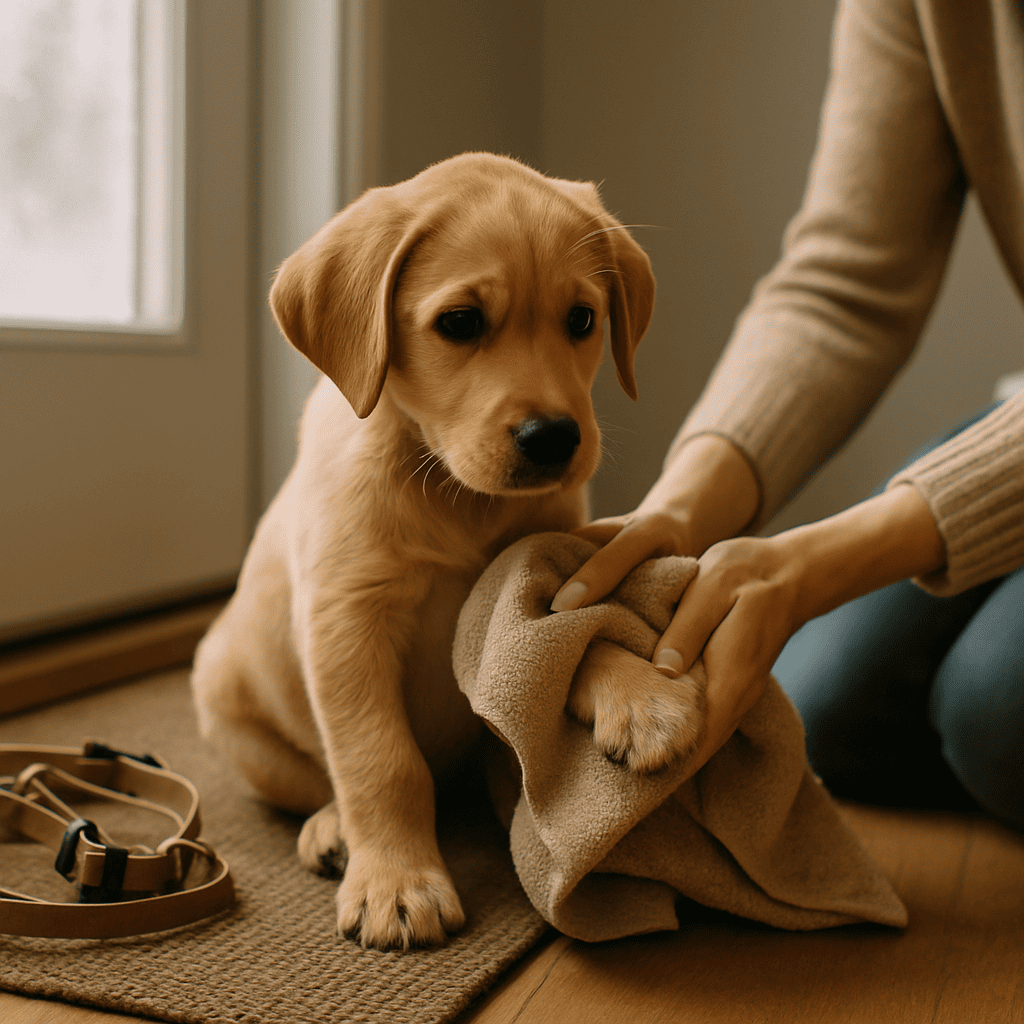
If it starts on the walk, end the outing or change it immediately. Head home, or at least move to shelter and shorten the exposure. If your puppy is wet, dry the coat as soon as you can once you are back indoors.
Keep the rewarming calm and simple. A quiet, warm place is better than forcing more activity. Watch whether your puppy returns to normal quickly. If the shivering continues, or if your puppy seems weak, unusually quiet, or off in any other way, contact your veterinarian.
Do not keep walking just because the puppy is still moving. A puppy can keep going for a while and still be getting colder.
When Cold Weather Becomes an Emergency
Cold weather can cause frostbite or hypothermia, and both can become urgent.
Be concerned if your puppy becomes very weak, very lethargic, disoriented, or unresponsive to the normal cues that would usually get a response. Visible tissue changes on the ears, tail, or paws are also concerning, especially if skin looks pale, gray, or bluish or feels unusually firm or cold.
If you see signs like these, this is no longer a walk-planning problem. Get the puppy warm, avoid rough handling, and contact a veterinarian promptly. Do not try to turn severe cold stress into a home remedy project.
The key distinction is simple: mild discomfort changes the walk. Severe or worsening signs need veterinary help.
Winter Questions New Puppy Owners Often Ask
Can cold weather cause vomiting or diarrhea?
Sometimes stress or upset routines can affect a puppy’s stomach, but persistent vomiting or diarrhea should not be assumed to come from the weather alone.
Should I change my puppy’s diet in winter?
Usually no. Winter weather is not, by itself, a reason to change food. Keep feeding according to your puppy’s age and growth plan unless your veterinarian advises otherwise.
Is a cold car safe after a walk?
A cold car is still a cold environment. Keep the trip short, supervise your puppy, and do not leave them alone in it.
Can I use a heat pad inside?
Be cautious. Puppies can chew cords, overheat, or get burned. If you use any warming device, supervision matters more than convenience.
The main decision remains the same: watch the puppy, read the conditions, and choose the safer walk plan before the signs get bigger.