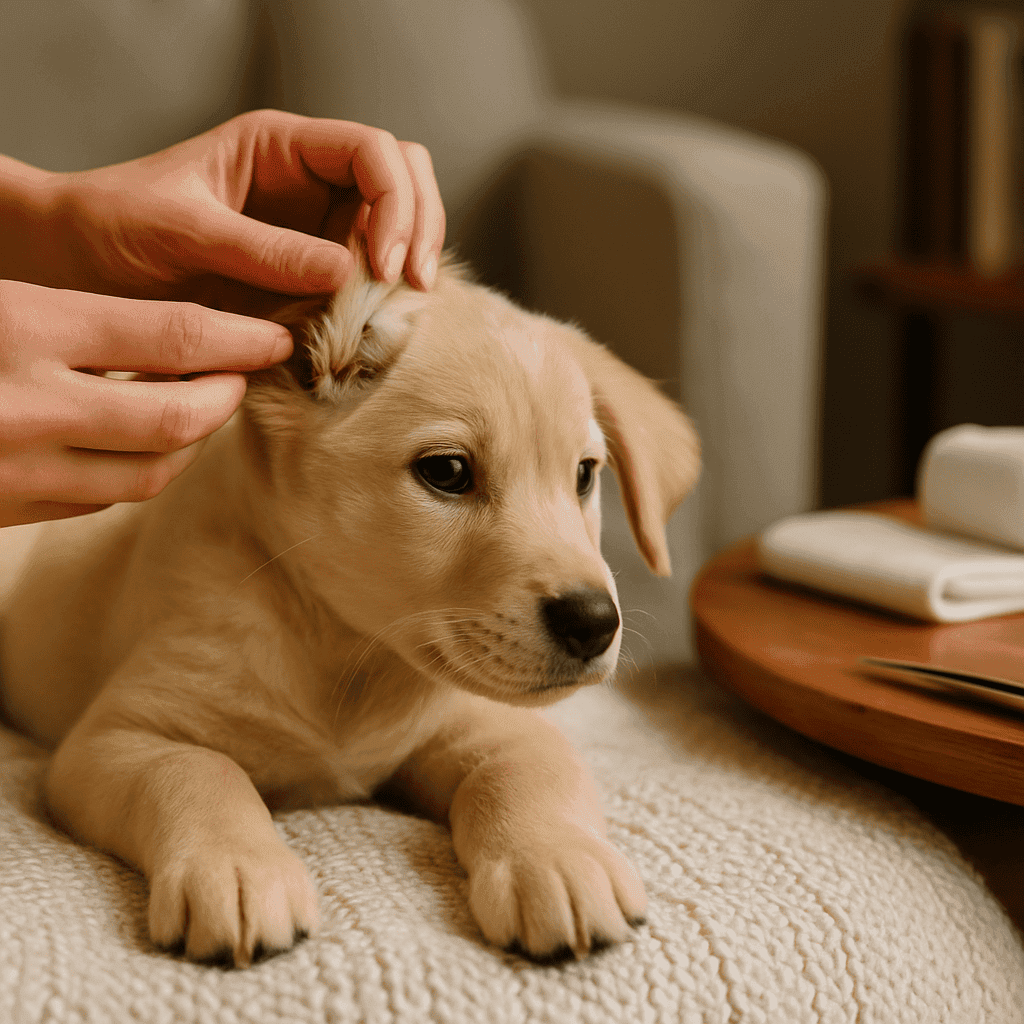
Finding a tick on your puppy can be unsettling, but the next step is simple: check the body, remove the tick safely if you can do that cleanly, then watch for changes and call the vet if anything seems off. That same calm routine also helps prevent problems in the first place.
This guide gives you one workflow for both jobs. You will learn where to check, what a tick can feel like, which prevention options need a label check, how to reduce exposure at home, and when the situation has moved past home care.
Start with the calm plan
Puppy tick safety does not have to be dramatic. The basic sequence is:
- Check your puppy after outdoor exposure and at least once a day.
- Remove any attached tick with a safe, steady method.
- Clean the area and monitor your puppy.
- Use prevention that matches your puppy’s age and your vet’s advice.
- Call the vet if the tick cannot be removed cleanly or your puppy seems unwell.
If you are anxious, do not try to solve everything at once. Start with the body check. That alone changes the situation from “I found something scary” to “I know where it is and what I’m deciding next.”
How to check your puppy for ticks every day
A real tick check uses your hands and your eyes together. Looking from above is not enough, because ticks hide in places the coat covers.
A good time to check is after walks through grass, brush, or wooded edges, and again before bed. Part the fur and feel the skin slowly. You are looking for something attached, firm, and out of place—not loose dirt or a bit of debris.
Work from head to tail and pay extra attention to these spots:
- Inside and behind the ears
- Around the collar and neck
- Under the chin and jaw
- Between the toes and on the paw pads
- Armpits and inside the upper legs
- Belly and groin
- Base of the tail
If your puppy wriggles, do the check in two short passes instead of skipping the hard-to-see areas. The goal is not a perfect performance. The goal is to notice an attached tick before it has more time on the skin.
What to do if you find a tick on your puppy
Stay calm and keep your puppy still if you can. The main decision is whether you can remove the tick cleanly with a steady method.
Use fine-tipped tweezers. Grasp the tick as close to the skin as possible, then pull upward with slow, even pressure. Do not twist, jerk, crush, or squeeze the tick’s body. If the tick comes away cleanly, clean the bite area with soap and water or rubbing alcohol and wash your hands.
Do not use petroleum jelly, heat, nail polish, or other home remedies to try to make the tick let go. Mixed methods create more risk, not less.
After removal, place the tick in a sealed bag or container only if your veterinarian wants to see it. Otherwise, monitor the puppy and the skin spot. A tiny dark speck can be a small mouthpart fragment, but do not dig at the skin trying to remove it. If the tick was not removed cleanly, or you are not sure what is left behind, stop and call the vet.
What tick prevention products are safe for puppies?
There is no single prevention product that is right for every puppy. Age, weight, breed, and label directions all matter.
That means the safest first step is reading the package before you apply anything. Some collars, topicals, and oral products are not intended for very young puppies. Others have weight limits. A product that is fine for an adult dog may not be appropriate for your puppy yet.
If you already bought something, do not use it until you have checked the age and weight directions on the label. If those directions are unclear, or if your puppy is very small or very young, call your veterinarian and ask what fits your puppy’s stage of growth.
A useful rule for new owners: labels tell you what the product is designed for, and your vet helps you judge whether it fits your puppy’s current situation.
How to reduce ticks around your home and yard
Puppy tick prevention works better when the environment supports it. You do not need a perfect yard. You need to reduce the places where ticks are easiest to pick up.
Focus on the parts of the property your puppy uses most:
- Keep grass trimmed where practical.
- Clear leaf piles, brush, and tall weeds.
- Limit access to dense vegetation or overgrown corners.
- Pay close attention to paths that cross grassy edges or leaf litter.
- Check your puppy before they come inside after outdoor play.
Think of this as general puppy-proofing for tick exposure. The same way you remove hazards from a home before a puppy explores it, you reduce the highest-risk spots outside and then inspect afterward.
After-Walk Tick Body Map
- You feel a hard, attached bump in a high-risk area, and your puppy seems normal. Remove the tick with fine-tipped tweezers, clean the skin, and watch your puppy.
- The tick comes off, but you think part of it may still be in the skin. Do not dig at it. Clean the area and call the vet for guidance.
- The bite area looks mildly pink but your puppy acts normal. Keep monitoring and continue daily checks.
- The skin becomes red, swollen, warm, or painful. Call the vet.
- Your puppy seems quiet, tired, sore, or less interested in food after a tick exposure. Call the vet the same day.
Are ticks dangerous for young puppies?
Ticks are not a reason to panic, but they are a reason to act promptly. A tick can irritate the skin, and in some areas, ticks can carry germs that may make dogs sick.
Keep this as an observation rather than a diagnosis: record what changed, watch the wider pattern, and contact a veterinarian if the puppy appears unwell or the concern persists.
A puppy that seems normal right after removal still deserves monitoring. A puppy that becomes unusually tired, sore, or less interested in food deserves more than waiting it out.
When to call the vet, and what signs to watch after a tick
Call your veterinarian if:
- You cannot remove the tick completely.
- You are not sure whether the tick came out cleanly.
- The bite area gets more irritated instead of settling down.
- Your puppy seems unwell, painful, or unusually tired.
- Your puppy refuses food for more than one meal.
- You notice stiffness, limping, or reluctance to move.
- You see vomiting, diarrhea, or another sudden change that seems out of character.
Tick-related illness signs can be vague. They are often not dramatic at first, and they can look like a general “something is off” feeling. That is why behavior matters so much.
Do not diagnose a disease from a small scab or a normal-looking pink spot alone. A tiny skin mark can simply be the place where the tick was attached. But if the spot worsens or your puppy’s behavior changes, that is the point to call.
If you are unsure, call the vet rather than waiting for certainty. In tick care, the useful decision is not whether you have a perfect explanation. It is whether your puppy needs monitoring, a cleaner removal, or professional help now.