What To Do First: Setup and Mindset Before You Close the Door
Before your puppy ever steps a paw in the crate, make thoughtful choices to prevent panic and owner guilt. A crate is not a cage—it's a den. Puppies instinctively keep their sleeping area clean, activating their natural instinct with the right setup instead of fighting it.
- Choose the Right Crate Size: Your puppy should comfortably stand, turn, and lie down stretched out but not too large that they potty in one corner and sleep in another. Use a wire crate with an adjustable divider. For example, for an 8-week-old Labrador, start with the divider set to about 18–20 inches deep.
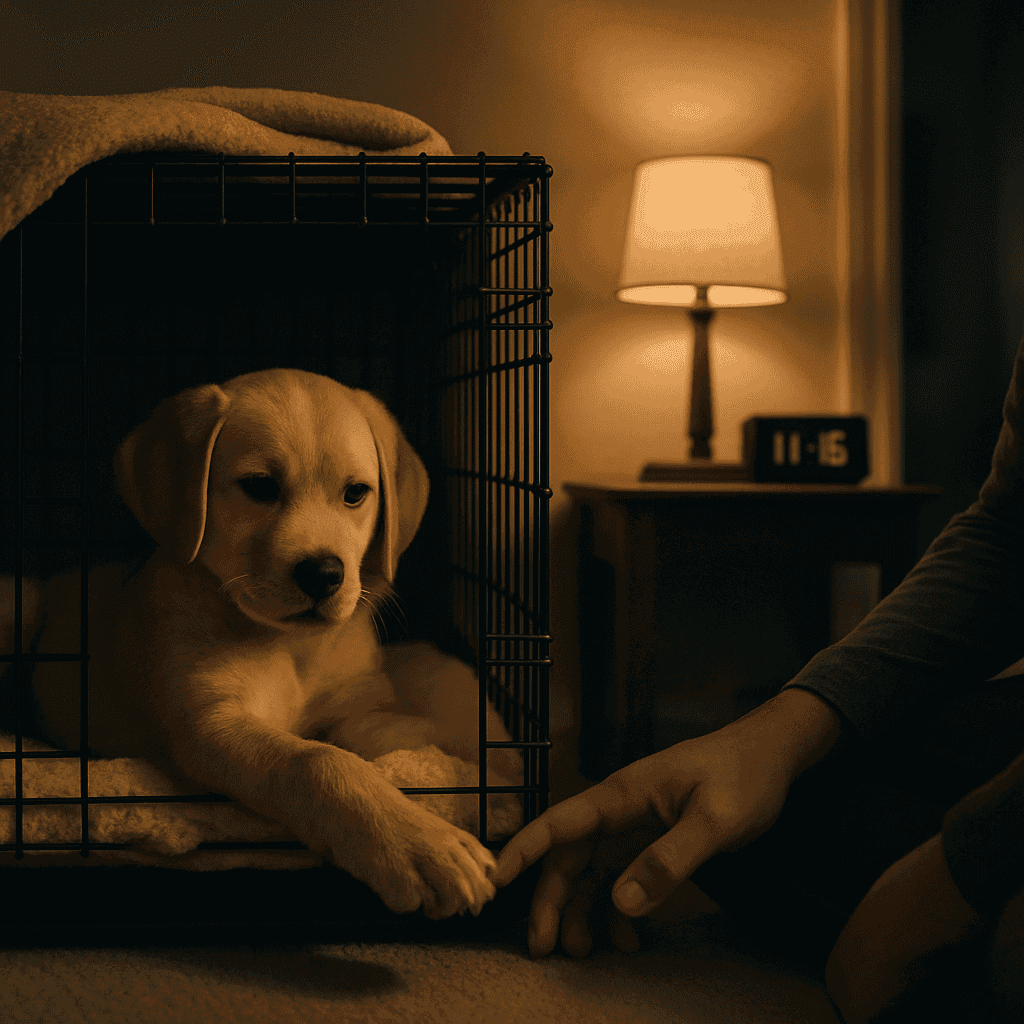
- Crate Placement: Place the crate in your bedroom, right next to the bed. This closeness allows you to comfort them without opening the crate. Contrary to intuition, isolation increases crying.
- Bed Preparation: Use a snug-fitting washable crate pad and add a worn t-shirt with your scent tucked underneath. Include a safe chew toy, like a stuffed Kong, to distract from crying.
- Mindset Preparation: Ensure you're calm and confident. Remind yourself that a crate is a safe den and not a punishment. Reputable organizations, like the American Veterinary Society of Animal Behavior, confirm this when done properly.
- Make Positive Associations: Before the first night, play "treat fairy." Toss treats progressively inside the crate to encourage voluntary entry. Feed meals near or inside the crate.
- Pre-Bedtime Routine: Take your puppy for a quiet potty break, dim the lights, and use soft vocals to guide them to the crate with a treat. A light blanket over the crate creates a den vibe, and white noise can mask startling sounds.
- Avoid Isolation Mistake: Never place the crate far away to avoid crying. This isolates them when they need comfort most.
- Address Reluctance: If your puppy hesitates, don't force them inside. Feed meals in the crate with a propped-open door, and use a treat trail to guide them naturally.
Make sure your home is puppy-proofed before you start crate training. A safe environment allows you to focus on gradual crate training.
Your First Night Survival Plan: A Step-by-Step Bedtime Routine
Ensure a confident first night with this clear hour-by-hour plan:
- Early Evening Routine: Last meal 3 hours before bed, water 1.5 hours before, and a final potty break immediately before crating.
- Bedtime Ritual: Use a low-light setting, speak in a calm voice, place a treat in the crate, and close the door gently while saying "goodnight, settle down."
- Crying Protocol: Expect vocalization—if under 10 minutes, do not open the crate. If it continues intensively for over 10 minutes, provide a quiet potty break with no stimulation.
- Overnight Potty Check: Set alarms for 2 a.m. and 5 a.m. (adjust per age: puppies 8–10 weeks need one break). Keep it quiet and calming.
- Morning Release: Only open the crate when your puppy is calm, then take them outside for a rewarding potty break.
- Comfort Techniques: Use a soft voice, place your hand near the crate for comfort, and adjust white noise as needed.
- Troubleshooting: If the puppy soils the crate, clean with an enzyme cleaner and check if adjustments are needed.
Your 3-Day Crate Training Schedule: Feeding, Potty, Crate, Sleep
Use this structured table to build comfort over the first 72 hours:
- Day 1: Short positive sessions (5–10 minutes) after potty and exercise. Include crate meals with doors open.
- Day 2: Extend sessions to 15–20 minutes. Occasionally step out of sight briefly.
- Day 3: Allow 30-minute sessions with intermittent leaving. Return only if calm.
Crate Rules: Never use the crate for punishment or long durations beyond the 1-hour-per-month of age guideline.
Checklist Activity: Potty → Short training or play → Calm with crate → Crate with stuffed Kong.
Normal vs. Not Normal: Puppy Crying, Barking, and Behavior Decoded
Understand typical behavior versus signs of distress:
- Normal Behavior: Whining for 5–15 minutes, settling with self-soothing.
- Concerning Behavior: Continuous intense crying over 30 minutes, panting, refusal to enter crate with treats for 48+ hours.
- Actionable Advice: Use a decision matrix: Cry <5 min="min">
When in doubt, consult a vet or trainer if there's no improvement after three days.
5 Common Crate Training Mistakes First-Time Owners Make (and How to Fix Them Fast)
- Crate Too Large: Correct by using dividers.
- Releasing When Crying: Wait for a pause before letting them out.
- Using Crate as Punishment: Only associate the crate with positive experiences.
- Noisy Crate Area: Find a quiet spot for peaceful rest.
- Inconsistent Schedule: Adhere to a strict routine until habits form.
Troubleshooting: What to Do If Your Puppy Won’t Go In, Cries for Hours, or Barks Nonstop
Here's how to respond effectively:
- Refusal to Enter: Use treats and meals to encourage entry, never force.
- Continuous Crying or Barking: Distinguish protest from panic and adapt your approach accordingly.
- Crate Accidents: Assess crate size and potty schedule; consult a vet if issues persist.
Utilize a quick-reference decision tree for clarity.
Your Crate Training Toolkit: Printable Checklist, Schedule, and Quick-Reference Cards
Download your complete Crate Training Success Pack to keep advice accessible at any time:
- Includes: 3-day schedule, troubleshooting flowchart, setup checklist.
- Download: Provide your email for immediate access and additional guides like our potty training tips.
Use this Puppy Schedule Generator to create the perfect routine for your puppy.
Crate Training FAQ: Quick Answers When You’re Anxious at 2 a.m.
How long will my puppy cry in the crate?
Expect 10–20 minutes of crying during the first night, with improvement in 3–4 days. This is typical and no cause for alarm.
Should I ignore my puppy’s crying or go to them?
Mild cries are generally ignored; persistent cries warrant a quiet, no-play potty break.
Is crate training cruel or damaging to my puppy?
Done correctly, crate training is not cruel. It's a natural denning and safety practice, supported by animal welfare experts.
What if my puppy refuses to go into the crate?
Encourage with treats and positive reinforcement, or try a pen setup if refusal continues.
How do I increase crate time during the day without making my puppy hate it?
Pair alone time with high-value Kongs, start short, and make the crate a place of rewards.
When can I trust my puppy to sleep through the night without a potty break?
Around 12–16 weeks for many puppies; adjust according to dry mornings and calmed behavior.
Feel free to use the Puppy Panic Button in emergencies.