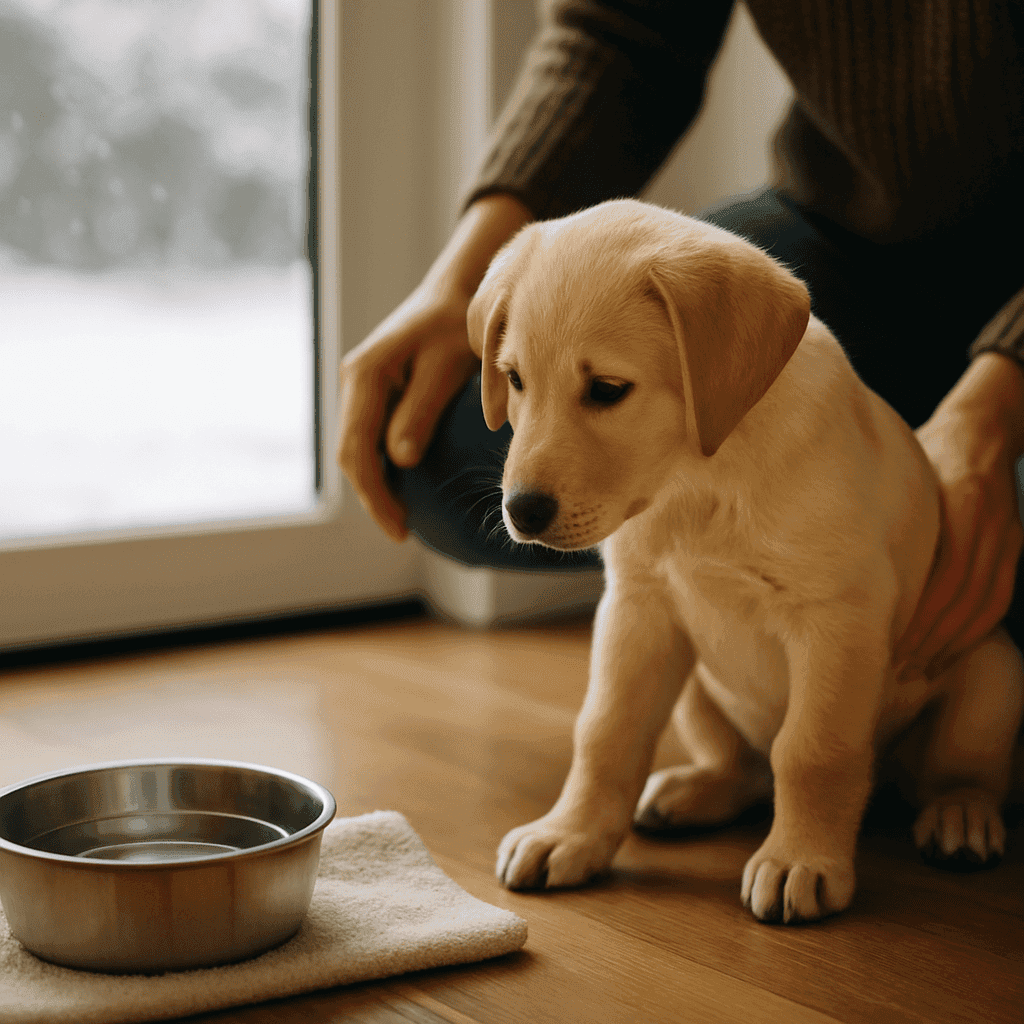
Your puppy is ignoring the water bowl, then happily chomps snow like it is the best part of the day. That pattern is common enough to have a few ordinary explanations, but it still deserves a close look because hydration is one of the few things you do not want to guess about.
The useful question is not whether snow is “better” than water in some abstract sense. The useful question is which explanation fits the puppy you have in front of you: a healthy winter habit, a preference for cold moving texture, a bowl problem, or an early sign that something is off. Once you sort that out, the next move becomes much clearer.
Why snow can win when the bowl loses
Snow is more interesting than water in ways puppies notice immediately. It is cold, crunchy, changing shape, and tied to outdoor play. Water in a bowl is still, scentless, and easy to ignore. For a young puppy, novelty matters a lot.
Cold weather also changes the picture. Many puppies pant less, run a little differently, and simply do not feel as thirsty as they do in warmer months. That means the urge to seek out a bowl may drop even when the puppy is still getting enough moisture from other sources.
There is also a learning effect. A puppy who gets excited every time she goes outside may start linking snow with fun, relief, and reward. If she discovered that snow melts on her tongue and feels refreshing, she may prefer it even when water is available. That preference can look odd, but it is often just a sensory choice, not a behavior problem.
The catch is that a preference can hide a real issue. Some puppies already drink only small amounts, and snow simply makes that pattern more obvious. So the behavior itself does not tell the whole story. You have to decide whether this is a safe preference or a hydration gap.
The cleanest split: safe snow habit or bowl problem
Compare the two explanations by watching what happens around the behavior, not by trying to force a rule.
When snow eating is probably harmless
Snow eating is usually a manageable winter habit when all of these are true:
- The snow is fresh and clean.
- Your puppy is bright, playful, and acting like herself.
- She still pees at a normal rate.
- Her urine is pale yellow, not dark.
- Her gums stay moist.
- She still drinks some water indoors, even if she does not rush to the bowl.
In that version, snow is acting more like an extra treat than a replacement for hydration. You can let her nibble it during outdoor time while still offering clean water inside.
When the bowl is probably the bigger issue
A different explanation fits if your puppy ignores water because the setup is unappealing. Common clues include:
- She drinks only when very thirsty.
- She is interested in moving water but not a still bowl.
- She prefers the yard, patio, or another place over the kitchen bowl.
- She drinks a little after play but not during the day.
That points to a preference issue more than a water refusal. The bowl may be too warm, too still, too dirty, too hard to reach, or simply less rewarding than snow.
This is the branch where you can improve the water offer instead of arguing with the puppy’s taste.
When snow is not a safe water source
Snow is only a reasonable stopgap when you know where it came from. In many places, the answer is: it is not reliable enough to trust.
Avoid letting your puppy eat snow that may contain road salt, ice melt, puddle runoff, oil, antifreeze, trash, or animal waste. Driveway edges, plowed piles, sidewalk snow, and slushy street snow are especially risky. Even if the top layer looks clean, the lower layer often is not.
Contaminated snow can cause stomach upset, but some hazards are much more serious. Antifreeze exposure is an emergency. If you suspect your puppy licked snow near a leak, a garage floor, a driveway, or a parking area where car fluid may have been present, call your vet right away.
So the practical rule is simple: fresh, controlled snow in your own clean yard is one thing; public or plowed snow is another.
How to judge hydration by behavior, not by worry alone
You do not need to turn this into a guessing contest. Watch three visible signs and let them do most of the work.
- Gum moisture: Lift the lip and feel the gums. Healthy gums should feel moist and slick, not dry or tacky. That is one of the easiest everyday clues that your puppy is still doing okay.
- Urine color and frequency: A puppy that is hydrated well enough usually produces pale yellow urine on a normal schedule. A puppy that is getting behind on fluids may pee less often, or the urine may look darker and more concentrated.
- Energy and mouth behavior: A lively puppy that wants to play, explore, and take treats is a different case from a puppy that seems flat, restless, or unusually quiet. If the mouth also looks dry, that matters more than snow preference alone.
Use the overall pattern. One detail rarely decides the whole picture; three or four together usually do.
If the puppy also has vomiting, diarrhea, collapse, trouble breathing, blood, pain, lethargy, or will not eat, treat this as more than a winter drinking quirk. Use the Puppy Panic Button for fast red-flag guidance when the symptom mix makes you unsure what is urgent.
The best ways to make water more appealing than snow
If this is a preference problem, the goal is not to win a contest of willpower. The better move is to make water easier to choose.
Start with temperature and texture
Many puppies prefer water that is cool or room temperature rather than icy cold. If your tap water comes out very cold, let it warm slightly before offering it. The point is not a precise number; the point is to make the bowl feel closer to the comfort of melted snow.
A fountain can also help. Moving water is more interesting than water that sits still, and some puppies respond to the motion immediately.
Improve the bowl itself
A dirty bowl can quietly kill interest. Wash it often. Try a different material if needed, because some puppies dislike the smell or taste of plastic, metal, or leftover soap.
Placement matters too. A bowl in a noisy path or next to a high-traffic area may be easy for you to ignore and easy for the puppy to skip. A quieter spot can make drinking feel safer and less distracting.
Add a small flavor bridge
A little low-sodium broth mixed into water can make the bowl more attractive. Keep it light; the goal is to encourage drinking, not turn every sip into a meal.
Wet food or soaked kibble can also help if your puppy is being stubborn about fluids. That gives you a hydration boost without forcing anything.
Use snow as the bridge, not the destination
For some puppies, the smoothest shift is to let them enjoy a little clean snow outside and then present water inside right afterward. You are connecting the two experiences instead of treating them as enemies. The puppy who comes in wanting that cold, crunchy feeling may be more willing to accept water if it is fresh and slightly more interesting than usual.
When to stop trying to explain it as preference
There is a point where “she likes snow better” stops fitting.
Be more concerned if your puppy:
- drinks almost nothing indoors,
- keeps eating snow but still seems thirsty or unsettled,
- has dry gums,
- pees far less than usual,
- produces very dark urine,
- vomits or has diarrhea,
- seems tired, weak, or unusually quiet.
That is the pattern that suggests a hydration problem, not just a taste preference.
If your puppy refuses both water and snow, that is a different branch again. At that point the issue is not a better flavor match; it may be nausea, pain, oral discomfort, or illness. A puppy who will not take fluids in either form deserves prompt veterinary guidance.
The decision that usually works best
Compare the two practical options side by side.
If the snow is clean, the puppy is bright, and her potty output looks normal, it is reasonable to let her eat some snow while continuing to offer water indoors.
If the snow is questionable, the puppy is drinking too little, or her behavior suggests dehydration, shift away from snow and make the bowl more attractive right away.
That is the part many owners miss: the answer is often not “allow snow” or “ban snow” in general. It is choosing the safer path for the version of the puppy you are watching today.
What progress looks like over the next few days
A good outcome is not dramatic. It usually looks boring in the best way.
Your puppy starts to visit the bowl more often indoors. She still enjoys the snow outside, but she does not depend on it. Her urine stays pale. Her energy stays normal. The bowl stops being a battleground because it becomes just another place she drinks from.
If you change the water temperature, bowl type, location, or flavor and her drinking improves, that is useful information. It means the issue was more about presentation than refusal.
If nothing improves and her output still looks low, treat that as a signal to get help rather than as a training challenge.
A puppy that picks snow over water is usually telling you one of two things: the snow feels better, or the water setup is not worth the effort. The rare third option is the one to take seriously—she may not be well enough to drink normally. Your job is to tell those apart by what her body is doing, not by how surprising the behavior looks.