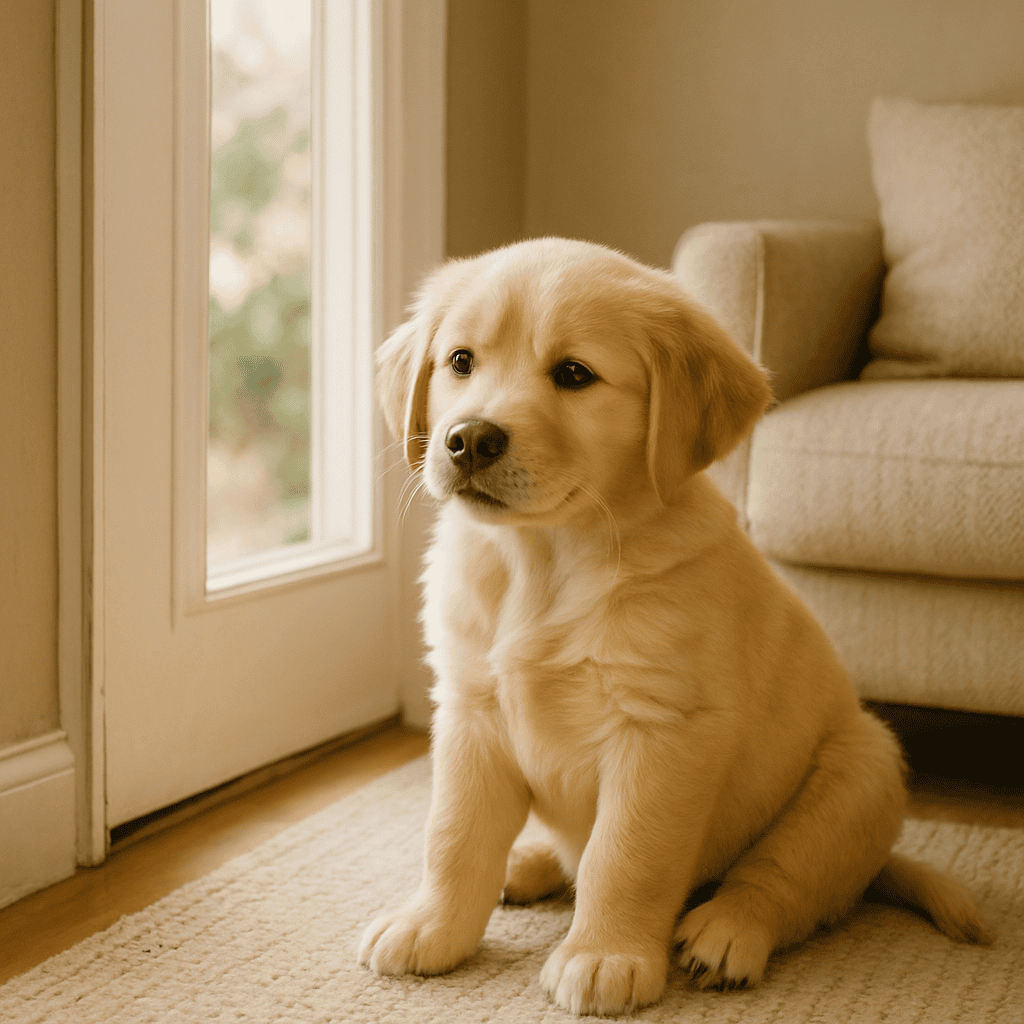
Puppy Refusing to Come Inside After a Walk
You are standing at the front door with a puppy who has just finished a walk, and suddenly the simple part is not simple anymore. The leash is on, your hand is on the handle, and your puppy has turned into a tiny anchor on the step, the landing, or the sidewalk. He may sit, freeze, pull backward, spin, grab the leash, or look at you like he has never heard the word “inside” in his life.
That moment is frustrating, but it is also common. The first job is not to “win.” The first job is to keep the situation calm enough that your puppy can learn something useful instead of learning that the doorway is scary or that refusing makes a big game.
Fast answer: do not chase, yank, or repeat the cue over and over. First make sure your puppy is safe and cannot bolt. Then look at the body language and choose the lowest-stress next step. If he looks frightened, back away and lower the pressure. If he looks playful or overstimulated, remove the chase energy and guide him in with food or calm movement. If he is a brand-new puppy, treat this as a settling-in issue first, not a discipline problem.
This article gives you a first-24-hours plan for the exact moment a puppy refuses to come inside after a walk, without turning it into a punishment battle.
What Triggers Refusing to Come Inside After a Walk?
Refusing to come inside is not one single behavior. It can look like sitting, backing up, freezing, pulling away, leaping sideways, or turning the leash into a tug toy. The reason behind the behavior matters because the next step changes depending on what the puppy is telling you.
The most common triggers are:
- Fear or overwhelm: The doorway, hallway, stairs, floor surface, or sounds inside may feel like too much. A puppy might tuck his tail, lower his body, pin his ears back, tremble, lip-lick, or try to back out of the harness.
- Overstimulation: The walk was exciting, and the puppy still wants to move, sniff, chase, or play. You may see bouncing, play bows, leash mouthing, darting, or silly bursts of energy.
- Learned resistance: The puppy has figured out that going inside ends fun, leads to something unpleasant, or brings a lot of attention. He may stiffen and wait for you to keep engaging.
- Physical discomfort: The harness may rub, the collar may be too tight, paws may hurt, or the puppy may need a potty break. You may notice repeated sitting, paw licking, or reluctance to step on a certain surface.
- Newness or confusion: A very young puppy may simply not understand the threshold yet. This is especially common in the first days at home.
Example: A 9-week-old puppy stops at the front step after a short walk. If his tail is down and his body is low, he may be unsure about the threshold or the inside space. If his front paws are bouncing and he keeps grabbing the leash, he may be overexcited and asking for more play. Both can look like “refusing,” but they need different responses.
A common mistake is to call the puppy stubborn and pull harder. That can turn a small pause into a bigger struggle. Instead of trying to force a decision, narrow the problem to one question: is this fear, excitement, discomfort, or a learned habit?
The Next Practical Step for Refusing to Come Inside After a Walk
Before you do anything else, do a quick safety check. Is the puppy secured by a leash? Are you away from traffic, stairs, or an open gate? If there is any chance of bolting, keep the leash short enough to guide but not so tight that it increases panic.
Then pause for about 10 seconds and gather three observations:
- Is the puppy panicked or just not moving? Panic may include hard panting, wide eyes, trembling, frantic attempts to escape, or refusing even tiny rewards. A puppy who is simply not moving may be confused, overstimulated, or resistant.
- Can you touch the harness or collar without making things worse? If yes, you have more options. If no, do not keep reaching for the puppy.
- Is this a first-time event or a repeating pattern? A one-off refusal after an exciting walk may be overstimulation. A repeated pause at the same doorway may mean the return home has become a loaded routine.
Why these factors matter: they stop you from using the same response for every version of the problem. A treat trail may help a playful puppy, but it may not help a panicked one. Pulling a silly puppy may accidentally turn the doorway into a tug game. Backing away may help fear more than it helps excitement.
Example: You live in an apartment and your puppy freezes in the hallway outside your door. Instead of pulling him forward, move a few feet away from the door and let him sniff. Toss a few tiny treats near the floor. If he still will not move, and he is small enough to carry safely, carry him in calmly and do doorway practice later. If he is too large to carry, shorten the leash, reduce pressure, and approach from a less direct angle.
Fallback: If you cannot tell whether the puppy is frightened, tired, or just resisting, choose the safer conservative path. That means no chasing, no dragging, and no loud repeated commands. Use food or gentle movement to reduce pressure, then work on the doorway at a calmer time.
What to Do When Refusing to Come Inside After a Walk Starts
For a puppy that is hesitant but not panicking, use this sequence:
- Stop pulling. Let the leash go slack for a moment. Pulling against a puppy who is bracing often makes the brace stronger.
- Turn your body slightly sideways. A direct front-on stance can feel like pressure.
- Toss three to five tiny, high-value treats in a line from the puppy’s nose toward the door. Keep them small so you are not filling him up.
- Say “inside” once in a calm voice. If he steps forward, praise quietly and place another treat at the threshold.
- When he crosses inside, give one small jackpot and pause for a few seconds before touching the harness again. That helps the doorway feel like a reward zone, not a trap.
If the puppy looks frightened or panicked, change the order. Do not try to bribe him through a scary doorway with excited energy. Instead, turn away from the door, walk in a small arc, let him sniff the ground, and wait for his breathing to slow. Once he looks a little calmer, approach the door again from a less direct angle or place a treat a few feet outside first.
If the puppy is small and you must carry him, do it calmly and support his body. Then place a treat on the floor inside so the arrival is not only about being lifted.
If the puppy is overstimulated and wants to play, do not chase him. Stand still and boring, keep the leash short, and wait for two seconds of calmer behavior. Then scatter a few tiny treats on the ground near your feet and say “find it.” That gives his brain a different job and lowers the chase energy.
Example: A 4-month-old puppy bounces at the front step, grabs the leash, and play-growls. The owner stops moving, holds the leash low and still, waits for a brief quiet moment, then scatters a few treats on the step and another few just inside. The puppy follows the food instead of turning the doorway into a game.
Mistake to avoid: Saying “inside, inside, inside” while pulling or gesturing can add noise and frustration. If the first two calm attempts fail, get the puppy inside safely, then practice the doorway later when the walk is not ending.
Use the Refusing to Come Inside After a Walk Progress–Pause–Simplify Grid
This is a copyable decision card you can use in the moment. Choose the row that best matches what you see. Do not try to use more than one row at once.
| Closest pattern | What it might look like | Try this next step | Fallback |
|---|---|---|---|
| Progress — puppy moves partly, but stalls at the doorway or does not fully enter | Nose points toward home, steps forward, stops before the threshold, glances back, but no panic | Toss a treat trail toward the door, walk inside yourself, then toss one more treat just inside and say “inside” once | If he stalls, do not pull. Practice the doorway later without ending a walk there. |
| Pause — puppy is still, hesitant, but not panicking | Soft body, sniffing the ground, looking between you and the door, tail neutral or low, no hard pulling | Stop leash pressure, crouch side-on, wait 10 seconds, then toss a treat near his feet | If he freezes for more than 30 seconds, back away from the door and shorten the walk-end for today. |
| Simplify — puppy is overstimulated, playful, mouthing the leash, or darting | Play bows, zoomies, bouncing, leash grabbing, darting side to side | Hold the leash short, stand boring, wait for 2 seconds of calm, then use a “find it” scatter toward the door | If he is too aroused to focus, get inside safely without chasing, and shorten the next walk. |
This grid is meant to stop guessing between “he is scared,” “he is playing,” and “this has become a habit.” It is not a diagnosis tool. It is a practical way to choose a lower-pressure next step.
Why Refusing to Come Inside After a Walk Keeps Coming Back
If the refusal keeps coming back, something about the return home has become a pattern. That does not mean your puppy is bad or that you have failed. It usually means one part of the walk or doorway routine is reinforcing the pause.
Common reasons include:
- The door ends fun too abruptly. If every walk ends with the harness being removed, paws being wiped, and then being left alone, the doorway can start predicting an unpleasant finish.
- The walk is too long or too stimulating. An overtired puppy may melt down at the transition.
- The endpoint is too busy. Loud streets, barking dogs, or a chaotic sidewalk can leave the puppy too wound up to switch gears.
- The cue “inside” has been used while dragging. The word may have become background noise or a warning.
- The puppy gets extra attention when he refuses. Even frustrated attention can accidentally reward the stop.
Change one variable at a time. If your puppy refuses three evenings in a row after a 45-minute walk, shorten the walk to 25 minutes for a few days and watch what happens. Do not also switch treats, routes, harnesses, and threshold routines all at once. If you change everything, you will not know what helped.
Example: A puppy refuses at the front door after a long park walk. The owner shortens the walk by 10 minutes and returns home before the puppy gets wiggly and overexcited. The first night, the puppy still pauses, but follows a treat trail inside. By the third shorter walk, the refusal is much smaller.
You can also practice the doorway separately from the walk. Put the leash on inside, step outside for 10 seconds, come back in, and give a treat. Repeat five times during a calm part of the day. This teaches the word and the threshold away from the pressure of the walk ending.
Fallback: If you change one thing and the behavior stays the same or gets worse after several days, stop guessing and get outside help.
When Refusing to Come Inside After a Walk Needs Professional Help
Most doorway refusal is a training and management issue, but there are times when professional help is the right next step.
Contact a veterinarian if you see signs of pain, limping, yelping, stiffness, shivering, lethargy, or a sudden change in mobility. A puppy who refuses to move because his body hurts is not the same as a puppy who is avoiding a scary door.
Safety note: If your puppy is showing signs of pain, distress, difficulty breathing, collapse, or any sudden change in movement, or if you are unsure whether the behavior is medical or behavioral, call your veterinarian first. For persistent fear or panic, work with a certified trainer or veterinary behavior professional who uses reward-based methods.
Also seek professional help if:
- The puppy panics every time, even after you lower the walk intensity and practice doorway entries.
- The refusal is paired with growling, snapping, or hard staring when you reach for the collar or harness.
- The puppy has bolted or tried to bolt into a dangerous area.
- The behavior is getting worse despite calm, consistent management.
- You feel you cannot safely manage the puppy’s size or strength at the door.
When you contact a professional, bring a short video of the refusal, the time of day, the route and walk length, what your puppy’s body looks like, how he responds to treats, and what you have already tried. That is much more useful than the word “stubborn.”
FAQ: Puppy Refusing to Come Inside After a Walk
Do I need to change my walking route?
Possibly. If the current route consistently ends in overstimulation, loud noises, or a stressful entrance, change the last five minutes so the puppy returns home on a quieter, less exciting stretch. If that does not help after a few days, adjust one other variable, such as walk length or the post-walk routine.
Why won’t my puppy come inside after a walk?
It depends on what you are seeing. Fear, overstimulation, learned resistance, physical discomfort, and simple newness can all create the same pause at the door. Check the body language before choosing your response.
Is it normal for a new puppy to refuse to come in?
Yes, especially in the first days at home. A new puppy has to learn thresholds, floors, sounds, and routines. Keep the first few days low-key and pair the doorway with food and calm movement. If the behavior is extreme or paired with panic, get help.
Should I drag him inside or pick him up?
Do not drag him. Dragging can increase fear and make the doorway more loaded. If the puppy is small enough and you can safely carry him without forcing him into a panic, you can use carrying as a short-term management step. Pair the carry with a treat inside, then practice the threshold separately.
What if he runs away when I approach?
Stop approaching. Running away often means fear or that the approach has become a game. Keep the leash short enough to prevent bolting, turn your body sideways, avoid direct staring, and toss treats near your feet. In open or risky areas, use safer handling and practice recall and threshold skills before the problem happens again.
How do I make coming inside positive?
Keep a small jar of treats by the door, end walks with a calm final sniff, and place a treat scatter or small chew just inside. Avoid making the moment after the door a big handling event. The puppy should learn that crossing the threshold predicts good things, not a fight.
What if he just wants to keep playing?
Then treat it as overstimulation, not disobedience. Stand still, remove chase energy, wait for a brief calm moment, and reward a quiet step toward the door. If needed, shorten the walk next time so he does not arrive home at the peak of excitement.
Next step for a brand-new puppy: If your puppy is in the first days at home, doorway refusal may be part of a bigger settling-in picture. A simple plan for the first 72 hours can help you set up calm thresholds, potty trips, sleep spots, and low-pressure wins. Build your first 72-hour puppy plan.