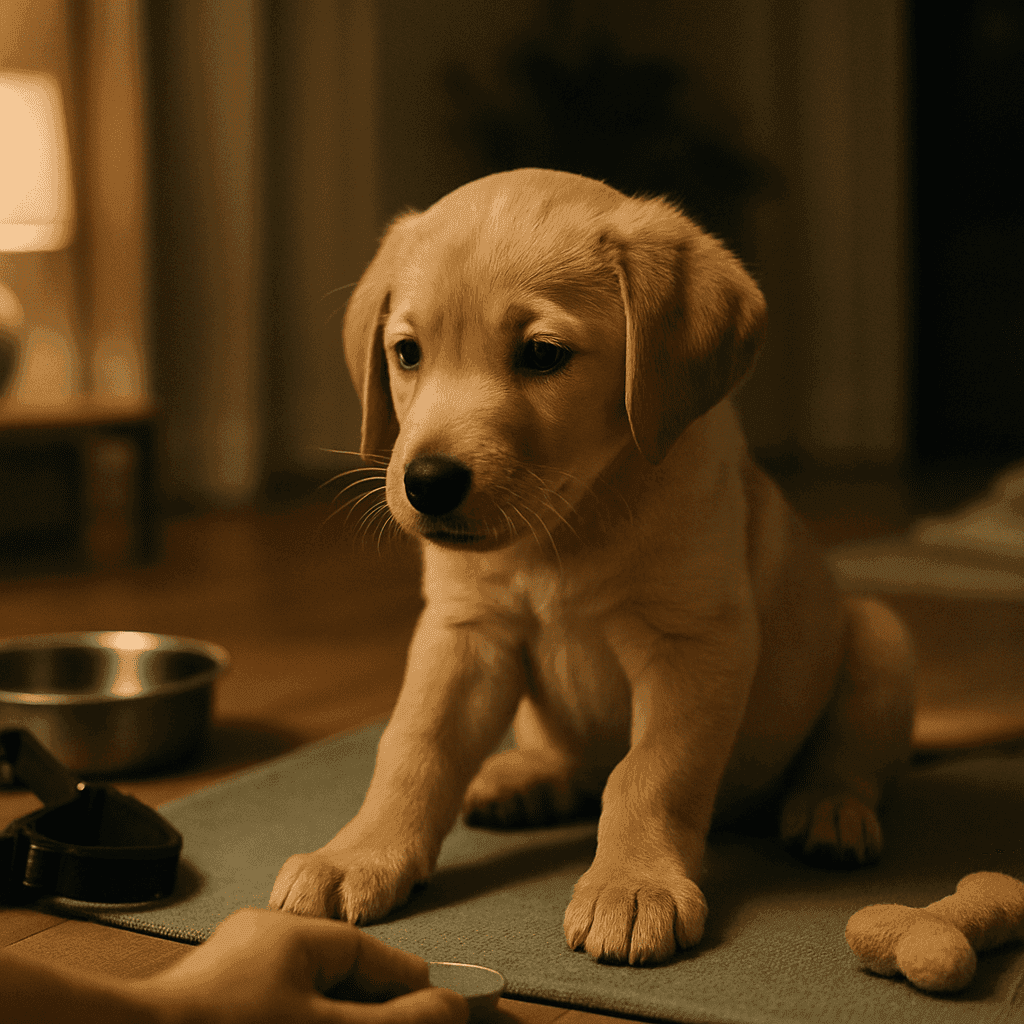
If your puppy won't nap during the day, the problem often isn't that they need more activity. In many cases, the puppy is already overtired, and the issue is that the nap window was missed, the room is too stimulating, or the settle attempt keeps changing before the puppy has time to relax.
That creates a frustrating loop: short naps, cranky behavior, more biting, more barking, more pacing, and then another failed attempt to get them to rest. The good news is that you do not need a perfect schedule to improve this. You need a simple daytime routine, a few reliable anchors, and a way to decide whether to keep going, adjust, or reset.
This article gives you that routine. It is built for the moment your puppy refuses to settle during the day, not for an idealized schedule that only works in a quiet, dog-free house.
Prepare for the Routine
Before you try to make an overtired puppy nap, check the basics. The biggest reason daytime naps fail is not because the puppy is “being difficult.” It is because one of the routine anchors is missing.
Use your puppy's age as context, but do not turn it into a rigid rule. Younger puppies usually need shorter wake windows than older puppies, and a missed nap or a busy morning can make the next nap come sooner than expected. If your puppy had visitors, a training session, a long car ride, or a noisy house, they may need a quieter and shorter lead-in to rest.
A good nap setup usually includes:
- A safe nap space such as a crate, pen, or small puppy-proofed room
- Dim light or a less stimulating area
- Low foot traffic
- A potty break before the nap attempt
- Something calm to do for a minute or two, such as a chew or a few scattered kibble pieces
- A plan for who is responsible during the attempt
What matters most is readiness versus missing prerequisites. If the puppy is already frantic, if the crate is in the middle of a loud room, or if you only have two minutes before a work call, you are not really ready for the routine yet. In that case, delay or simplify the first stage until the essentials are in place.
A simple readiness check can sound like this:
- Potty is done
- Nap space is ready
- I can stay calm for the first 10 minutes
- I know what I'll do if the puppy fusses
If one of those is missing, do not force the full nap attempt. A calmer, smaller start is better than an all-or-nothing effort.
Safety note: A puppy who won't nap during the day is often overtired, but not every refusal to settle is just fatigue. If the puppy also has vomiting, diarrhea, refusal to eat or drink, breathing trouble, unusual weakness, coughing, collapse, obvious pain, or behavior that looks like panic rather than ordinary protest, stop the routine and call your veterinarian. If you are not sure whether the problem is routine-related or a safety issue, ask a veterinarian rather than trying to push through it.
What to Expect at the Start
The first nap attempts may look messy. That is normal.
Your puppy may whine, paw, circle, mouth the bedding, or bark for a short time before settling. They may also flop down for a moment, pop back up, and seem unsure whether they can actually sleep. That does not automatically mean the routine is failing. It often means the puppy is tired enough to struggle with settling but not yet calm enough to switch off.
A common mistake is expecting every puppy to follow the same clock. Some puppies can settle after a short wake window. Others need a slower ramp-down because they become overstimulated quickly. The same puppy may also do well in the morning but struggle in the afternoon, especially if the day has already been busy.
A realistic opening block might look like this:
- Potty break
- A very short calm transition
- Into the nap zone
- Lights down and noise reduced
- You stay nearby without hovering
That is enough. You do not need a long ritual. You do not need a perfect, minute-by-minute plan. You just need a gentle transition into rest.
Expected adjustment can look like mild whining that fades, a few minutes of moving around, then a real nap. A sign the plan is failing is repeated panic, nonstop climbing, frantic scratching, or the puppy getting more wound up each minute instead of less.
If you only remember one thing here, remember this: a difficult start does not automatically mean the routine is wrong. It may simply mean the nap attempt started too late.
Follow the Recommended Sequence
The order of the routine matters more than exact times. When you change too many things at once, it becomes impossible to tell what helped and what hurt.
Use this sequence first:
1. Potty first
Take the puppy out before the nap attempt, even if they just went a little while ago. A puppy with a full bladder will not settle well, and you do not want to confuse potty discomfort with nap resistance.
2. Move into a calm transition
Bring the puppy from activity into a lower-energy space. This is where many owners accidentally keep the puppy excited by talking too much, moving too fast, or offering a little too much attention.
3. Offer a settle anchor
A settle anchor is something low-key that helps the puppy shift from motion to quiet. That might be a safe chew, a stuffed food toy, or a few pieces of kibble scattered in the pen. The point is not to entertain the puppy. The point is to slow the pace.
4. Place the puppy in the nap zone
Use the crate, pen, or room that is most likely to help the puppy relax. Keep the space boring and comfortable, not exciting.
5. Stay nearby without overdoing it
If you keep saying “settle,” “quiet,” or “go to sleep,” you may accidentally keep the puppy mentally engaged. A calm presence is better than repeated instructions.
6. Watch the first 5 to 10 minutes
This is where you decide whether the routine is working.
- If the whining is soft and decreasing, stay out of the way.
- If the puppy is still escalating, pause and assess.
- If the puppy is panicked or unable to calm, end the attempt and reset.
7. End the attempt if it stalls
If there is no sleep after about 15 to 20 minutes, do not keep pushing forever. End the nap attempt, take a quiet potty break, and return to a lower-energy reset.
That order helps you avoid the common failure pattern: changing the whole routine after one bad moment. One rough nap does not prove the plan is wrong. It only tells you to look at the next transition.
Use the Routine Timeline
Use this simple decision tool when your puppy won't nap during the day. It helps you choose the next step instead of guessing.
| What you see | What it may mean | What to do next |
|---|---|---|
| Settles within 5 to 15 minutes | The wake window and setup were close enough | Keep the same anchors next time |
| Soft whining that fades | Normal settling protest | Stay quiet and give it time |
| Continuous crying, climbing, or scratching | The puppy may be over threshold, need a potty break, or feel unsettled | Pause, reset, and check the space |
| Falls asleep briefly, then pops up again | The puppy may still be overtired or overstimulated | Shorten the next wake window and reduce noise |
| Zoomies or bitey behavior before the nap attempt | The nap started too late | Use a shorter wind-down and begin earlier next time |
| Wakes in a panic after 20 to 30 minutes | Something about the setup may be off | Check potty, comfort, and noise before retrying |
You can use the timeline like this:
- Continue if the puppy is settling gradually
- Adjust if the pattern is improving but still uneven
- Pause if the puppy is escalating
- Prepare if a prerequisite was missing
Keep it simple. This is not meant to be a rigid universal schedule. It is a one-screen decision guide for the next nap attempt.
A tiny log can help a lot:
- Time of day
- How long the puppy was awake
- Potty before nap: yes/no
- Nap space used
- First 5 minutes: calm, whining, or panic
- Time they settled
- Time they woke
- What you will change next time
That note only takes a few seconds, but it helps you spot patterns that are hard to see in the moment.
If you want to turn those anchors into a full daily rhythm, the next useful step is the Puppy Routine Builder: Build your puppy routine.
Adjust the Plan From the Puppy's Response
The best adjustment is the smallest one that matches the pattern.
If the puppy fights sleep at the same transition every day, change that part first. For example:
- If they settle in the morning but not in the late afternoon, the afternoon wake window may be too long
- If they settle only when the room is quiet, noise may be the issue
- If they settle in a pen but not a crate, the crate may need slower conditioning
- If they only panic when the house is active, the environment may be too stimulating
A normal day and a compressed day may look different, and that is okay.
Example: a normal day
A puppy may do well with a calm potty break, a short play or sniff break, then a nap in a dim area. After waking, they may be able to handle a little more activity before the next nap attempt.
Example: a compressed day
If the puppy missed a nap, keep the next wake window shorter. Skip exciting play. Go straight from potty to a calm settle anchor to the nap space. In a compressed day, the goal is not to “make up” for lost sleep by forcing the puppy to stay awake longer. The goal is to reduce the overload and get back to a calmer rhythm.
Useful adjustment means you change one thing and watch what happens. Constant improvisation means you change the room, the timing, your voice, the toy, and the nap space all at once. That usually makes it harder for the puppy to settle because nothing stays familiar long enough to become a cue for rest.
If the day has gone badly, return to the anchors instead of trying to rescue the schedule with something extreme. A shorter, calmer nap attempt is usually better than pushing for a perfect one.
Review the First Cycle and Plan the Next Step
After a few nap cycles, step back and look at the pattern rather than the emotion of one hard afternoon.
Ask yourself:
- Did shorter wake windows help?
- Did the puppy settle faster after potty first?
- Was one nap space better than another?
- Was there a sound, person, or activity that made settling harder?
- Did the puppy recover after sleep, or stay cranky and wired?
A stable routine is one where the puppy may still protest a little, but they usually recover and nap. A plan that needs support is one where the same issue keeps showing up at the same transition.
If the same problem repeats, do not keep repeating the exact same setup and hoping for a different result. Change the first thing that seems most likely to matter. If the crate is the issue, work on crate comfort and use the pen for naps in the meantime. If the afternoon is always rough, shorten that wake window instead of pretending the puppy can hold out longer.
If your puppy is new to your home, a larger reset may help more than tweaking one nap. Arrival stress, new sounds, new people, and a new sleep space can all make daytime rest harder at first. In that case, it helps to focus on the first few days as a whole instead of trying to perfect one nap in isolation. You can build your first 72-hour puppy plan if you need a broader reset for the arrival period.
Frequently Asked Questions
Will a longer nap during the day make my puppy wake up more at night?
It can affect the overall rhythm, but there is no simple one-to-one rule. Some puppies sleep better at night when they are not overtired during the day. The bigger question is whether daytime sleep is helping the puppy stay calmer and more balanced overall.
Why won't my puppy nap during the day even when they seem exhausted?
Because exhausted and settled are not the same thing. An overtired puppy can act wired, bitey, or noisy instead of sleepy. The routine may need a shorter wake window, a quieter nap space, or a calmer transition.
How do I know if my puppy is overtired?
Look for a pattern such as zoomies, hard biting, barking, restless pacing, glazed eyes, or flopping down and popping back up. If the behavior gets more intense as the day goes on, that is another clue the puppy may need rest sooner.
What should I do right now when my puppy refuses to settle for a nap?
Keep it simple. Potty first, then a calm transition, then the nap space. Stay nearby, do not overtalk, and give it 10 to 15 minutes. If the puppy escalates instead of calming, reset and try again later.
How many daytime naps should an overtired puppy get, and how long should a nap attempt last?
That depends on age, but many young puppies need several daytime sleep periods. Instead of chasing a perfect number, focus on what the puppy can actually handle right now. A nap attempt that lasts 10 to 20 minutes without progress usually needs a reset.
How do I reset the day after a failed nap attempt?
Do not overcorrect. Use a quiet potty break, a low-energy activity, and then try again with a shorter wake window or a calmer nap space. The goal is to return to the anchors, not to force the puppy to stay awake until bedtime.
When should I worry that the refusal is something more than ordinary puppy overtiredness?
If refusal to settle comes with vomiting, diarrhea, refusal to eat or drink, breathing trouble, coughing, weakness, obvious pain, or a sudden change in responsiveness, call your veterinarian. Also get help if the distress looks like panic or keeps repeating despite a calm, consistent routine.
Final takeaway
When your puppy won't nap during the day, the answer is usually not more excitement. It is a calmer setup, a shorter and better-timed wake window, and a routine that gives the puppy a fair chance to settle.
Start with the anchors: potty, calm transition, quiet nap space, and a low-key settle cue. Watch the first few minutes closely, use the decision grid to decide whether to continue or reset, and adjust only one variable at a time.
Next step: pick one nap attempt today, write down what happened, and keep the simplest version of the routine that works.